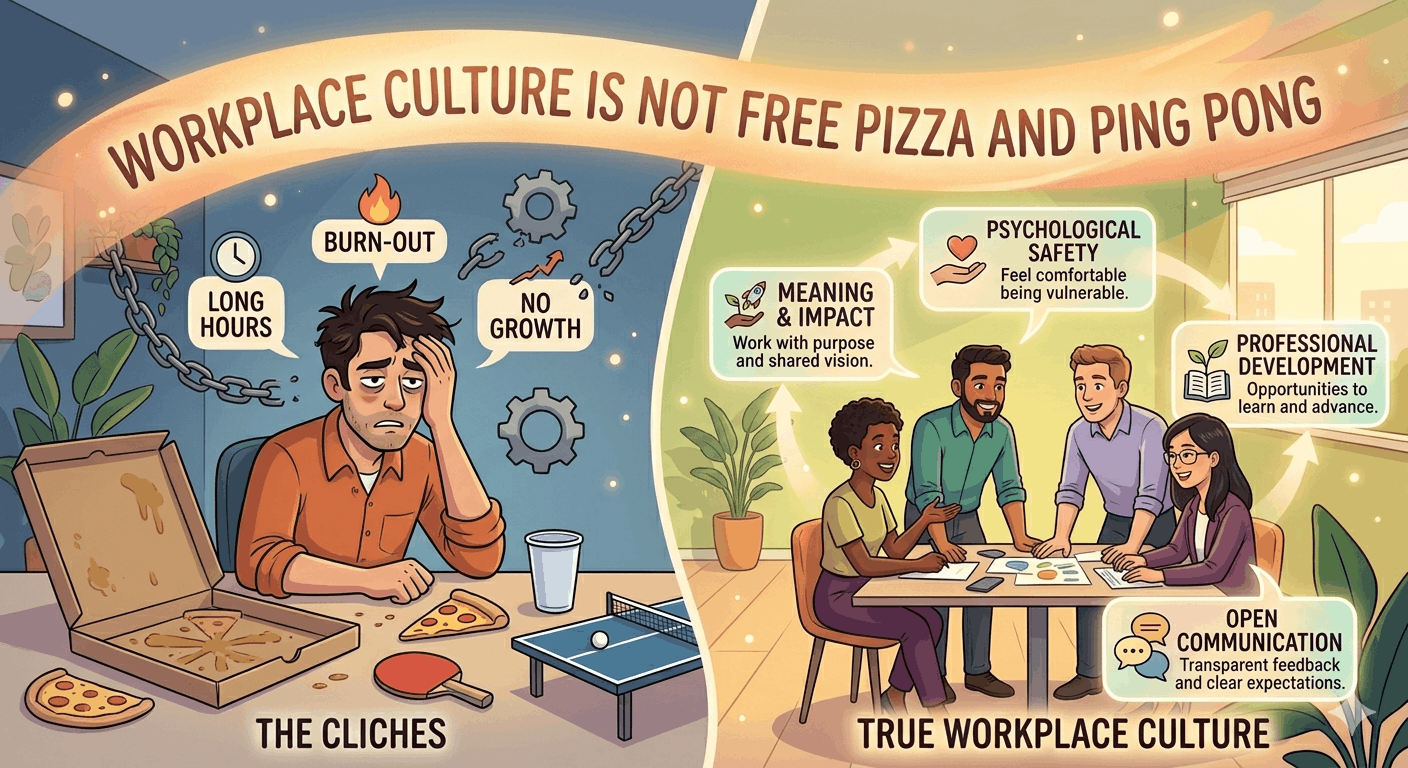
Workplace Culture Is Not Free Pizza and Ping Pong
In today's fast-paced corporate world, many companies attempt to mask a toxic or uninspired environment with superficial perks. A foosball table in the breakroom, a well-stocked snack bar, or a weekly pizza party are often presented as proof of a great workplace culture.
However, these tangible benefits do not reflect the true health of an organization.
True workplace culture runs much deeper than free food and office games. It is defined by how employees are treated during difficult times, the level of trust they share with their managers, and the opportunities they have for professional growth.
When an organization relies solely on surface-level perks, it fails to address the foundational elements that truly drive engagement, satisfaction, and retention.
The Illusion of Superficial Perks
Perks are enjoyable, but they are not the foundation of a sustainable culture.
When a company highlights a ping-pong table as its main attraction, it often signals a lack of substance in the actual work environment.
Employees may enjoy snacks and games, but they value the following far more:
- Respect
- Fair treatment
- Recognition
- Career growth
If employees feel overworked, underpaid, or micromanaged, perks like free pizza will not solve deeper issues. In some cases, they may even feel disconnected or superficial.
Additionally, perks are easy to replicate. Any company can provide them. Culture, however, is unique and built over time through shared values and behaviors.
Defining True Workplace Culture
If culture is not perks, what is it?
Workplace culture is the shared system of values, beliefs, attitudes, and behaviors that shape how an organization operates.
It is reflected in:
- How leaders respond to mistakes
- How transparent decisions are
- The level of autonomy employees have
- Daily interactions between team members
Culture is the living expression of a company’s mission and ethics.
Strong organizations focus on creating an environment where employees feel:
- Safe
- Heard
- Empowered
The Foundation of Psychological Safety
A key pillar of strong workplace culture is psychological safety, a concept introduced by Harvard professor Amy Edmondson.
It refers to an environment where employees feel safe to:
- Share ideas
- Ask questions
- Admit mistakes
- Challenge the status quo
Without fear of embarrassment or punishment.
In contrast, unsafe environments lead to:
- Silence in meetings
- Fear of speaking up
- Lack of innovation
- High employee turnover
Empathetic Leadership
Leadership defines the emotional tone of an organization.
Great leaders practice empathy and emotional intelligence. They:
- Listen actively
- Understand employee challenges
- Provide meaningful support
- Recognize burnout early
Empathetic leadership builds deep trust, which is essential for long-term employee commitment.
Purpose and Meaning in the Workplace
Modern professionals want more than a paycheck—they seek meaningful work.
A strong culture connects everyday tasks to a larger mission.
When employees understand their impact, they experience:
- Higher motivation
- Greater engagement
- Stronger emotional connection
This transforms work from a job into a purpose-driven experience.
Open Communication and Transparency
Transparency is a cornerstone of trust.
Organizations with strong cultures:
- Share successes and failures openly
- Communicate business decisions clearly
- Encourage feedback at all levels
When employees are informed, they feel respected and involved.
On the other hand, secrecy creates distrust and disengagement.
Work-Life Balance and Flexibility
A healthy culture recognizes employees as complete individuals.
Top organizations support:
- Flexible work schedules
- Remote or hybrid work
- Paid time off
- Mental health support
Work-life balance ensures sustainable productivity and prevents burnout.
Flexibility also demonstrates trust—something far more valuable than office perks.
Opportunities for Continuous Growth
Career stagnation is a major reason employees leave.
Strong cultures invest in growth through:
- Training programs
- Mentorship
- Skill development initiatives
- Leadership pathways
Organizations that act as career incubators retain talent longer.
Employees stay when they see a future within the company.
Recognizing and Rewarding Talent
Recognition is essential for retention.
Employees should feel valued through:
- Regular appreciation
- Performance rewards
- Peer recognition
- Fair compensation
A simple acknowledgment can significantly boost morale and motivation.
Fair pay and benefits reinforce that employees are respected and valued.
Designing a Culture That Endures
Building a lasting culture requires intentional effort.
Organizations must move beyond superficial perks and focus on:
- Psychological safety
- Empathetic leadership
- Career development
- Transparent communication
A strong culture is not built overnight—it evolves through consistent actions and values.
The cost of high employee turnover is far greater than the investment required to build a meaningful workplace.
Start building a culture today where employees don’t just show up—but truly belong, grow, and thrive.