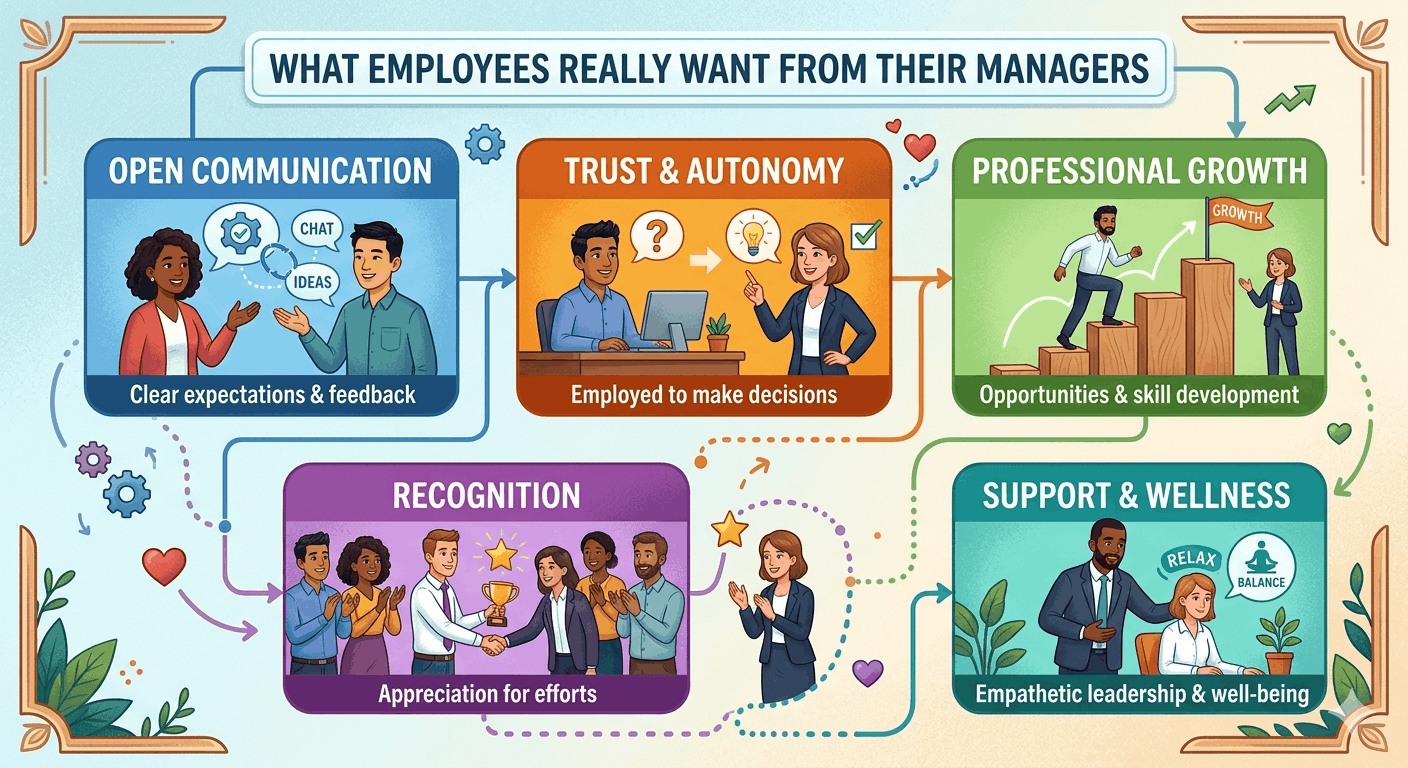
What Employees Really Want From Their Managers
In the modern corporate world, the relationship between a manager and an employee defines the workplace experience. Effective leadership goes beyond simply assigning tasks and tracking daily deliverables. It involves understanding what motivates your team and providing the necessary support for them to thrive.
Many organizations focus on perks, such as free coffee or ping-pong tables, but neglect the human element of management. Employees do not leave bad jobs; they leave bad bosses. Therefore, understanding what employees truly want from their managers is crucial for building a high-performing and loyal team.
A manager acts as the bridge between employees and leadership. Their daily interactions, feedback, and support shape how employees perceive their careers and workplace environment.
1. Clear and Transparent Communication
Clear communication is the foundation of a successful team. Employees want clarity on:
- Job expectations
- Company goals
- Their role in the bigger picture
Transparency builds trust. Keeping employees informed—even during difficult times—ensures alignment and motivation.
Great communication is always two-way. Managers should:
- Actively listen to team members
- Encourage feedback
- Welcome diverse perspectives
Regular one-on-one meetings help maintain open communication and address concerns proactively.
2. Empathy and Emotional Intelligence
Modern leadership requires empathy. Employees want to be treated as humans first and professionals second.
Empathetic managers:
- Recognize stress and burnout
- Offer flexibility and support
- Create a safe and understanding environment
Emotional intelligence builds loyalty. When employees feel valued, they naturally become more engaged and productive.
3. Opportunities for Professional Growth
Career growth is a top priority for employees. Stagnation leads to disengagement and job changes.
Employees expect managers to:
- Provide learning opportunities
- Assign challenging projects
- Support career advancement
Regular feedback and career discussions help employees understand their progress and future path.
Stretch assignments are especially valuable as they build confidence and skillsets.
4. Constructive and Consistent Feedback
Feedback should be continuous—not limited to annual reviews.
Employees value:
- Actionable suggestions for improvement
- Timely guidance
- Recognition for achievements
Balance is key: constructive criticism combined with appreciation boosts morale and performance.
Personalized feedback ensures that each employee grows in a way that suits their individual strengths.
5. Psychological Safety and Trust
Employees want to feel safe sharing ideas, asking questions, and admitting mistakes without fear.
Managers can build trust by:
- Being consistent and reliable
- Supporting team decisions
- Avoiding micromanagement
Trust empowers employees and creates a sense of ownership, leading to better results.
6. Work-Life Balance and Well-being Support
Work-life balance is essential in today’s fast-paced environment.
Employees expect managers to:
- Respect personal time
- Avoid unnecessary after-hours communication
- Promote mental health and well-being
Flexible work options such as remote work or flexible hours improve satisfaction and productivity.
A healthy employee is a productive employee.
7. Advocacy and Support Within the Organization
Employees want managers who advocate for them.
This includes:
- Supporting promotions and salary growth
- Providing necessary resources
- Removing obstacles to success
Great managers also protect their teams from unnecessary pressure and take responsibility when challenges arise.
Advocacy builds loyalty and trust.
8. Collaboration and Team Building
A strong team culture is essential for success.
Managers should encourage:
- Team collaboration over competition
- Knowledge sharing
- Open brainstorming sessions
Team-building activities strengthen relationships and improve overall performance.
A collaborative environment drives innovation.
9. Fostering Diversity and Inclusion
Diversity and inclusion are key to a healthy workplace.
Employees expect managers to:
- Respect all backgrounds and perspectives
- Ensure equal opportunities
- Create an inclusive environment
Diverse teams bring fresh ideas and better problem-solving capabilities.
Inclusivity strengthens organizational culture.
Conclusion: Elevating Leadership for Better Retention
Understanding what employees truly want from their managers is essential for building a strong workplace.
Great leadership is not about authority—it is about:
- Empathy
- Support
- Empowerment
By focusing on communication, growth, trust, and well-being, managers can create a motivated and loyal workforce.
Start investing in your employees today, and you will build a future-ready, high-performing organization.