Introduction
It is one of the most baffling scenarios for modern managers and human resources professionals. A talented team member, performing exceptionally well and receiving a highly competitive salary, suddenly hands in their resignation.
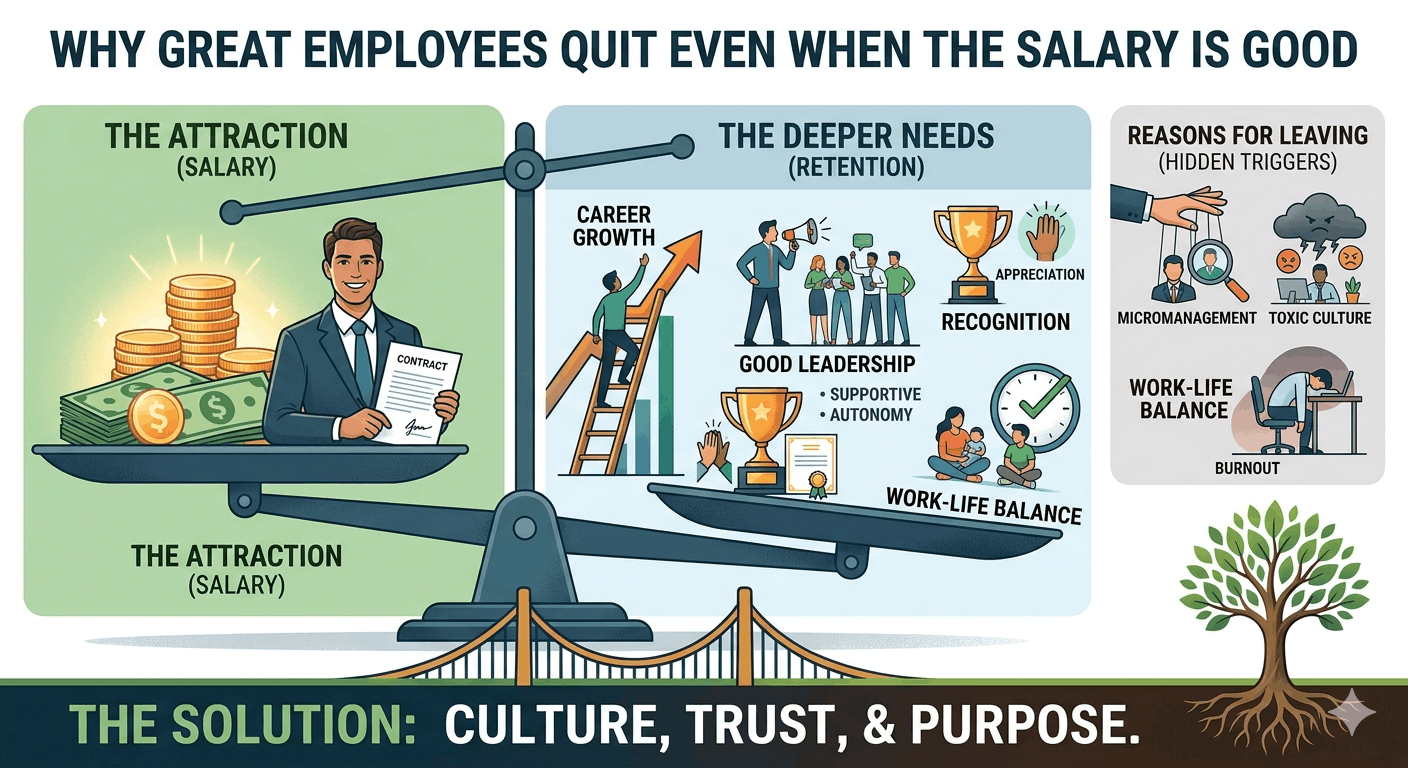
Organizations frequently make the mistake of assuming that financial compensation is the ultimate cure for turnover. While a generous paycheck satisfies the basic need for financial security, it fails to address deeper psychological and professional needs.
When employees choose to walk away from excellent compensation packages, it signals that the workplace environment is failing to meet their intrinsic motivations.
The Illusion of Compensation as a Retention Tool
Compensation operates primarily as a hygiene factor rather than a true motivator. According to classic motivational theories, fair pay prevents dissatisfaction, but it does not inspire long-term loyalty or engagement.
When an employee's financial needs are met, their focus shifts toward the quality of their work life, their relationship with their superiors, and their opportunities for personal growth.
If a company relies solely on high salaries to retain talent, it creates a transactional relationship. The moment a more fulfilling opportunity arises, the employee is likely to leave regardless of the pay difference.
1. Lack of Career Advancement and Growth
Ambitious professionals are inherently driven by progress and development. If an employee realizes that their current role offers no future pathway for advancement, they will inevitably look for opportunities elsewhere.
Stagnation is one of the quickest ways to lose top-tier talent. When employees feel that their skills are no longer being challenged or expanded, they begin to lose interest in their daily tasks.
To mitigate this issue, organizations must build clear, accessible career pathways. This approach should involve regular mentorship programs, constructive feedback sessions, and opportunities to lead new initiatives.
Creating Continuous Learning Opportunities
Employees value organizations that invest in their professional growth. Providing access to certification programs, workshops, and advanced training shows that the company cares about the individual's long-term success.
When a business supports continuous learning, it builds a loyal workforce. Employees are far less likely to leave when they know their current employer is the best place to develop their capabilities.
2. Toxic Leadership and Micromanagement
The old adage holds true across industries: people leave managers, not companies. A toxic supervisor or a culture of micromanagement can quickly erode even the most enthusiastic employee's morale.
Great employees desire autonomy and trust. They want to be empowered to make decisions and take ownership of their projects. When a manager constantly hovers, questions every decision, or undermines their authority, it creates a frustrating work environment.
Incredible pay cannot compensate for the daily stress of dealing with an unsupportive or overly demanding leader. Organizations must prioritize leadership training to ensure managers act as mentors rather than controllers.
Fostering a Culture of Trust
Establishing trust requires transparency and open communication. When leaders communicate their expectations clearly and provide their teams with the necessary resources, productivity and morale soar.
Empowering employees leads to higher job satisfaction and lower turnover rates. It transforms the workplace from a place of pressure into a space of collaboration and mutual respect.
3. Absence of Recognition and Appreciation
Everyone needs validation for their hard work. When an employee consistently goes above and beyond, putting in extra hours and achieving high results, they expect their efforts to be acknowledged.
If these achievements are met with silence or taken for granted, the employee begins to feel undervalued. Financial compensation is expected, but recognition is emotional compensation.
Implementing an effective employee recognition program can dramatically improve retention. Simple gestures of appreciation can make a massive difference in how an employee perceives their value to the company.
Recognizing Both Small and Large Wins
Appreciation should not be reserved only for major milestones. Acknowledging daily contributions and effort reinforces positive behavior and fosters a supportive work culture.
Whether through public praise, digital shout-outs, or performance-based bonuses, regular recognition reminds employees that they are a vital part of the organization's mission.
4. Poor Work-Life Balance and Burnout
No amount of money can repair the physical and mental damage caused by chronic burnout. When an organization expects employees to be available at all hours or demands an unsustainable workload, it pushes them to the brink.
The modern workforce places a high premium on work-life balance and personal well-being. A high-paying job that leaves no time for family, health, or personal interests quickly loses its appeal.
Companies must establish healthy boundaries to protect their employees. Encouraging time off, respecting off-hours communication, and supporting flexible working arrangements are critical steps in combating burnout.
Prioritizing Employee Well-being
A healthy workforce is a productive workforce. By offering wellness initiatives, mental health support, and realistic deadlines, organizations show that they view their staff as human beings rather than mere resources.
Creating a balanced environment ensures that employees can sustain their high performance over the long term without sacrificing their personal lives.
5. The Impact of Micromanagement on Employee Morale
Another critical reason great employees leave even well-paying positions is a lack of autonomy. When talented professionals are subjected to excessive oversight or micromanagement, it damages their confidence and motivation.
Highly skilled individuals want to be trusted to execute their tasks effectively. They thrive when they are given the freedom to innovate and propose creative solutions to complex problems.
When management steps in to dictate every small detail, it signals a lack of trust. This environment can make even the most lucrative role feel stifling and unpleasant over time.
Fostering a Culture of Autonomy
To keep top performers engaged, leaders should focus on results rather than the specific processes used to achieve them. Setting clear goals and allowing employees to determine their own methods builds a sense of ownership.
This shift from control to empowerment not only improves job satisfaction but also drives innovation within the team. Trusting your team is an essential component of an outstanding workplace culture.
6. Lack of Alignment with Company Vision
Today's professionals want to find meaning and purpose in their work. They want to know that their daily efforts contribute to a greater good or align with their personal ethical values.
If an employee feels that the company's goals are contradictory to their own beliefs, the financial reward loses its charm. Alignment of purpose is a powerful retention factor that goes beyond the paycheck.
Organizations must clearly articulate their core values and demonstrate them through their actions. When a company acts with integrity and social responsibility, it attracts and retains like-minded talent.
Building a Shared Mission
When employees understand how their work impacts the bigger picture, they feel a sense of ownership and belonging. Communicating the company's mission clearly helps keep the team motivated and engaged.
Shared values create deep emotional bonds between the employer and the employee, making it much harder to leave for a different organization simply based on salary.
Conclusion
Salaries will always be a critical component of attracting talent, but they are not the only piece of the retention puzzle. To keep great employees, companies must offer a holistic approach to the workplace experience.
By addressing leadership issues, offering clear career growth, preventing burnout, and showing genuine appreciation, organizations can build an environment where talented individuals want to stay.
True employee loyalty is earned through culture, trust, and purpose. When a company invests in these areas, it ensures that its best people remain committed for the long haul.