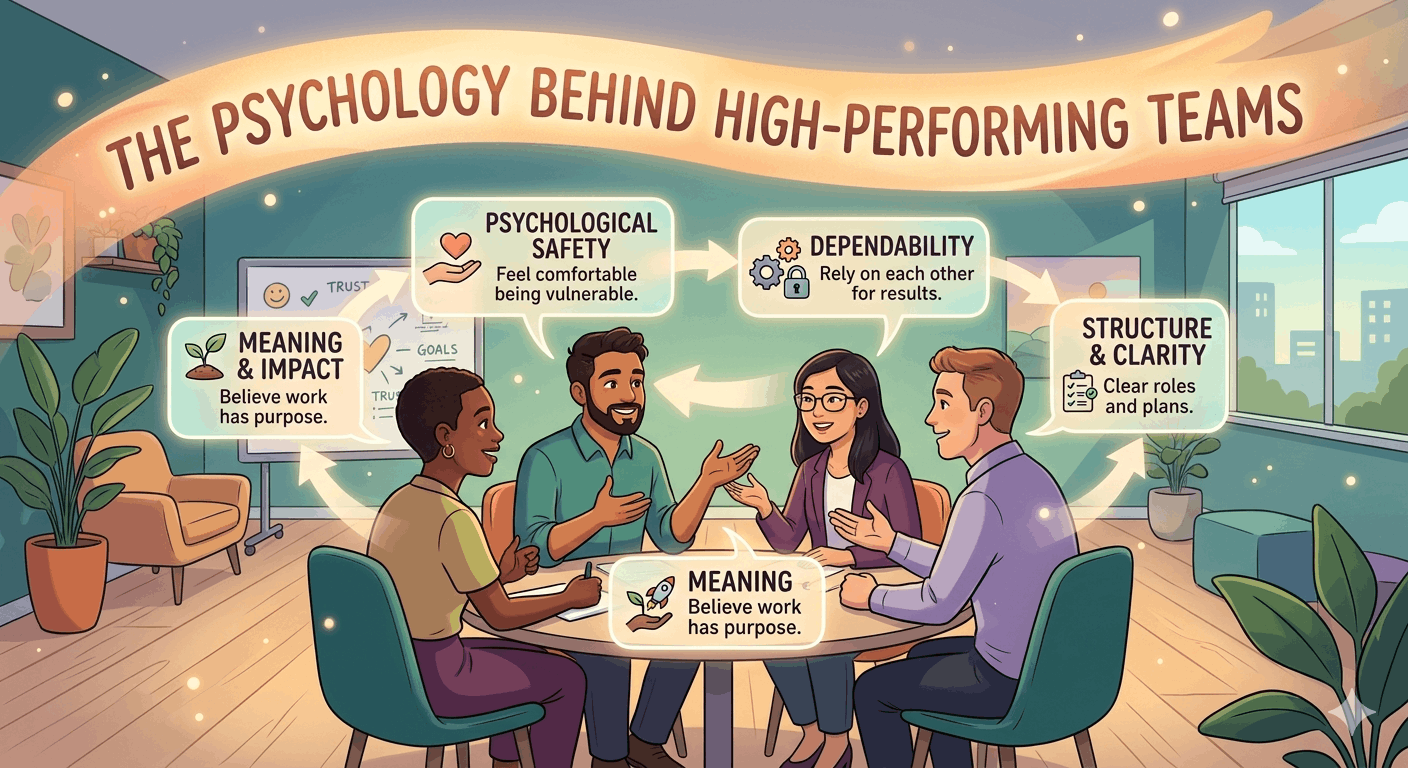
The Psychology Behind High-Performing Teams
In the modern corporate world, organizations constantly search for the secret ingredient that transforms an average group of individuals into an unstoppable force. The answer does not lie in advanced software or expensive office perks alone. Instead, it is rooted in the complex and fascinating realm of psychology.
Understanding the psychological underpinnings of high-performing teams is essential for any leader who wants to drive innovation, improve productivity, and retain top talent. When a team operates at its peak, it functions much like a synchronized organism, where every member understands their role, trusts their colleagues, and works toward a unified vision.
The psychology of high performance encompasses a variety of factors, ranging from cognitive diversity to emotional intelligence. By examining these elements, business leaders can deconstruct what makes a team successful and replicate these conditions across their entire organization.
The Foundation of Psychological Safety
At the very heart of any high-performing team is a concept known as psychological safety. Pioneered by Harvard Business School professor Amy Edmondson, psychological safety refers to the shared belief that the team is safe for interpersonal risk-taking.
When psychological safety is present in a workplace, team members feel comfortable speaking their minds, asking questions, and admitting mistakes without fear of being ridiculed or punished. They know that their ideas will be heard and respected, even if they challenge the status quo.
In contrast, environments lacking psychological safety are characterized by silence and fear. Employees hide their mistakes, avoid taking risks, and withhold creative ideas, leading to stagnation. Therefore, building a culture of safety is the first and most critical step in unlocking the psychological potential of your team.
To cultivate this safety, leaders must:
- Model vulnerability
- Practice active listening
- Respond to failures with curiosity instead of blame
When a manager admits their own mistakes, it gives permission for the rest of the team to do the same.
Cognitive Diversity and Collective Intelligence
High-performing teams do not consist of people who think exactly alike. Instead, they thrive on cognitive diversity, which refers to differences in perspectives, thinking styles, and problem-solving approaches.
When a team is cognitively diverse, it becomes more capable of tackling complex challenges. Different members notice different angles of a problem, enabling innovative solutions that homogeneous teams might overlook.
However, diversity alone is not enough. It must be paired with an inclusive environment where every voice is valued. Otherwise, the benefits of diversity are lost.
Collective intelligence emerges when diverse minds collaborate effectively. Research shows it is influenced more by:
- Social sensitivity
- Equal participation in discussions
- Collaboration quality
Intrinsic Motivation and Shared Purpose
External rewards like bonuses matter, but they are not the primary drivers of sustained high performance. The strongest teams are powered by intrinsic motivation and a shared purpose.
When employees understand how their work contributes to a bigger mission, their role becomes meaningful rather than routine.
Leaders should:
- Clearly communicate the organization’s vision
- Connect individual contributions to larger goals
- Celebrate meaningful progress
Additionally, autonomy plays a key role. When employees are trusted to decide how to achieve goals, it enhances:
- Confidence
- Ownership
- Self-efficacy
Emotional Intelligence as a Leadership Catalyst
Leadership sets the psychological tone of a team. High-performing teams are often led by individuals with strong emotional intelligence (EQ).
EQ includes:
- Self-awareness
- Emotional regulation
- Empathy
Leaders with high EQ can understand team emotions and adjust their communication style accordingly.
An emotionally intelligent leader:
- Recognizes burnout early
- Provides support and flexibility
- Builds trust and loyalty
When employees feel genuinely valued, they are more willing to go the extra mile.
Fostering Trust and Team Cohesion
Trust is the invisible glue that holds teams together. Without it, collaboration breaks down.
Trust is built through:
- Consistency
- Transparency
- Reliability
Team cohesion strengthens when members:
- Support each other
- Celebrate wins together
- Collaborate openly
To build cohesion, organizations can invest in:
- Team-building activities
- Workshops
- Social interactions
Navigating Conflict with Psychological Resilience
Conflict is inevitable in any team. The key difference lies in how it is handled.
Low-performing teams:
- Take conflict personally
- Avoid difficult conversations
- Develop toxic environments
High-performing teams:
- View conflict as an opportunity
- Focus on ideas, not individuals
- Encourage open dialogue
This requires psychological resilience and structured communication.
Key Traits of Psychological Resilience
- Optimism: Belief in overcoming challenges
- Adaptability: Ability to pivot strategies
- Support Systems: Strong peer relationships
- Reflection: Learning from past experiences
Designing an Environment for High Performance
High-performing teams are not accidental. They are built intentionally through strong systems and environments.
Organizations should focus on:
- Encouraging collaboration
- Supporting continuous learning
- Prioritizing employee well-being
Work environments should include:
- Collaborative spaces
- Quiet focus areas
- Flexible work options
Recognizing team achievements is equally important. Celebrating collective success strengthens unity and motivation.
Leadership training also plays a crucial role in sustaining high performance.
Conclusion: Empowering Your Team for Success
The psychology behind high-performing teams highlights the importance of human-centric leadership. By focusing on psychological safety, diversity, motivation, and trust, organizations can unlock their team’s full potential.
Building such teams requires time, patience, and a deep understanding of human behavior. But the results are worth it.
Start applying these principles today and transform your team into a resilient, innovative, and high-performing unit.