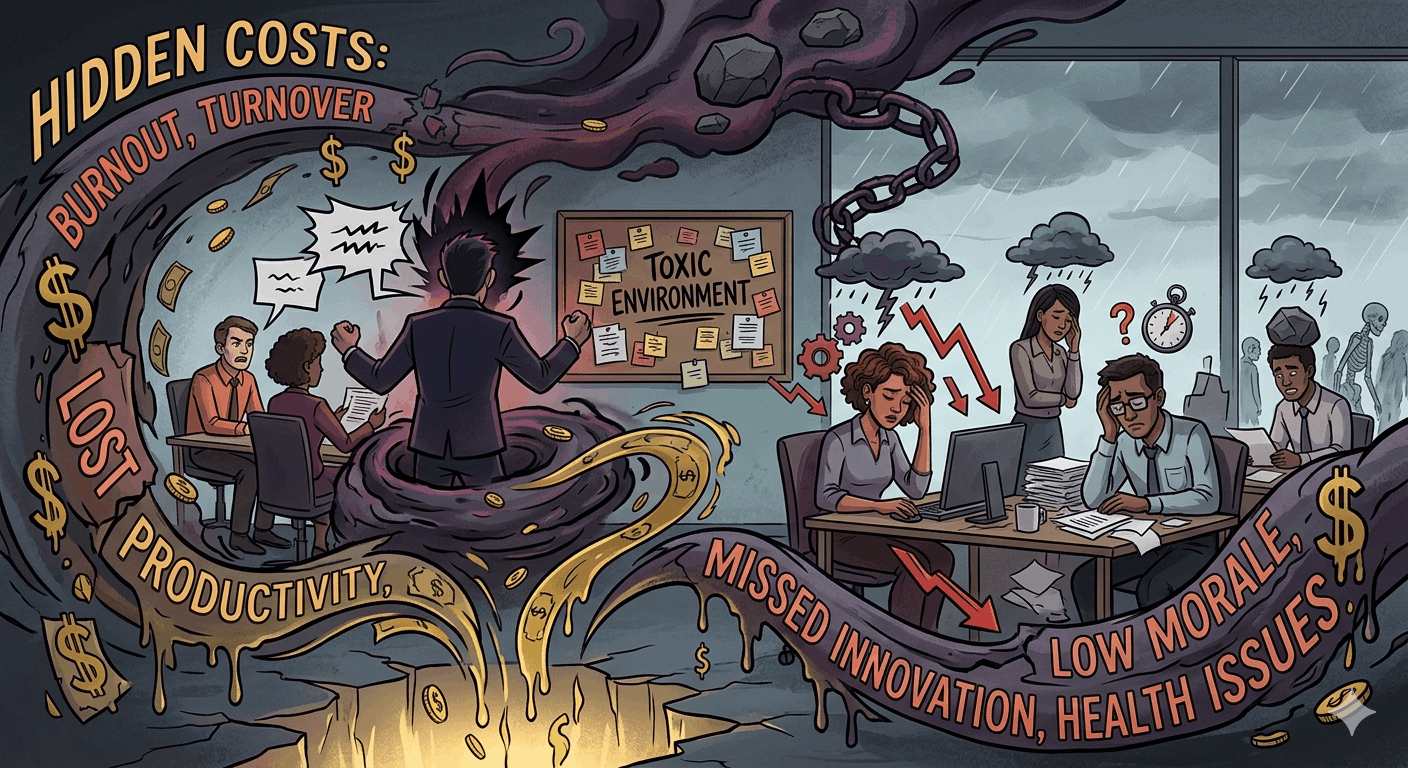
The Hidden Cost of a Toxic Workplace: Why Negativity Destroys Value
A toxic workplace is far more than just a minor inconvenience or a string of bad days at the office. It represents a deep-seated organizational dysfunction that permeates every level of the company, eroding trust, stifling creativity, and draining the energy of your most valuable assets.
While companies often focus on financial metrics such as revenue and profit margins, they frequently overlook the hidden cost of a toxic workplace.
When negativity takes root, it creates a domino effect that impacts everything from employee morale to the bottom line. Understanding these hidden costs is the first step toward building a healthier, more productive, and more resilient organization.
What Exactly Defines a Toxic Workplace?
To understand the cost of a toxic environment, we must first define what makes a workplace toxic. It is characterized by:
- Persistent negativity
- Lack of respect
- Unethical behavior
- Poor communication
- Lack of support from leadership
In such an environment, employees feel undervalued, unheard, and constantly under pressure without the necessary resources or guidance.
Common red flags include:
- Excessive office gossip
- Rampant favoritism
- Lack of work-life balance
- Unrealistic expectations
These conditions lead to high stress and anxiety, directly affecting performance and overall job satisfaction.
Additionally, the absence of psychological safety forces employees into self-preservation mode rather than collaboration, creating silos within the organization.
The Massive Financial Impact of High Turnover
One of the most significant hidden costs of a toxic workplace is employee turnover.
Replacing employees involves multiple expenses:
- Recruitment costs
- Onboarding and training expenses
- Lost productivity during vacancies
The departure of experienced staff also leads to a loss of institutional knowledge and critical skills, disrupting workflows and team collaboration.
Key Insight: The cost of replacing an employee can range from 50% to 200% of their annual salary.
The Devastating Toll on Mental Health
A toxic culture significantly impacts employee well-being, often leading to:
- Chronic stress
- Burnout
- Depression
This results in increased absenteeism and presenteeism (being physically present but mentally disengaged).
Employees in such environments cannot perform at their best, and the lack of safety prevents innovation and collaboration.
Decreased Productivity and Diminished Innovation
Toxic workplaces severely reduce productivity. Employees spend more time dealing with:
- Office politics
- Job insecurity
- Internal conflicts
This creates a culture of compliance instead of commitment.
Innovation suffers because employees fear criticism or retaliation, preventing them from sharing new ideas.
Poor communication leads to:
- Duplicated efforts
- Frequent errors
- Inefficient workflows
Erosion of Employer Brand and Reputation
In the digital era, employer reputation is highly visible through platforms like Glassdoor and social media.
A toxic workplace leads to negative reviews, which:
- Drive away top talent
- Increase hiring costs
- Damage brand credibility
Companies may need to offer higher salaries just to attract candidates, increasing financial strain.
Additionally, poor reputation can deter clients and investors, impacting overall business growth.
Key Warning Signs to Look Out For
Organizations should proactively identify toxicity through:
- Anonymous employee surveys
- Declining team performance
- Frequent conflicts and complaints
- High absenteeism rates
- Low customer satisfaction scores
Early detection allows leadership to take corrective action before the situation worsens.
Actionable Strategies to Transform the Culture
Improving workplace culture requires consistent effort and leadership commitment.
- Open Communication: Encourage transparent and honest feedback.
- Leadership Development: Train managers in empathy and emotional intelligence.
- Work-Life Balance: Promote realistic deadlines and respect personal time.
- Recognition and Rewards: Acknowledge employee contributions regularly.
- Conflict Resolution: Implement fair and structured grievance handling systems.
Conclusion: Building a Thriving Work Environment
The hidden cost of a toxic workplace extends far beyond finances. It damages the foundation of an organization by affecting its people.
By prioritizing employee well-being, fostering a positive culture, and promoting strong leadership, companies can unlock true potential.
A thriving workplace is built through continuous effort and commitment. When employees feel valued and supported, they deliver loyalty, high performance, and innovation.
Start today—build a positive culture and watch your organization grow.