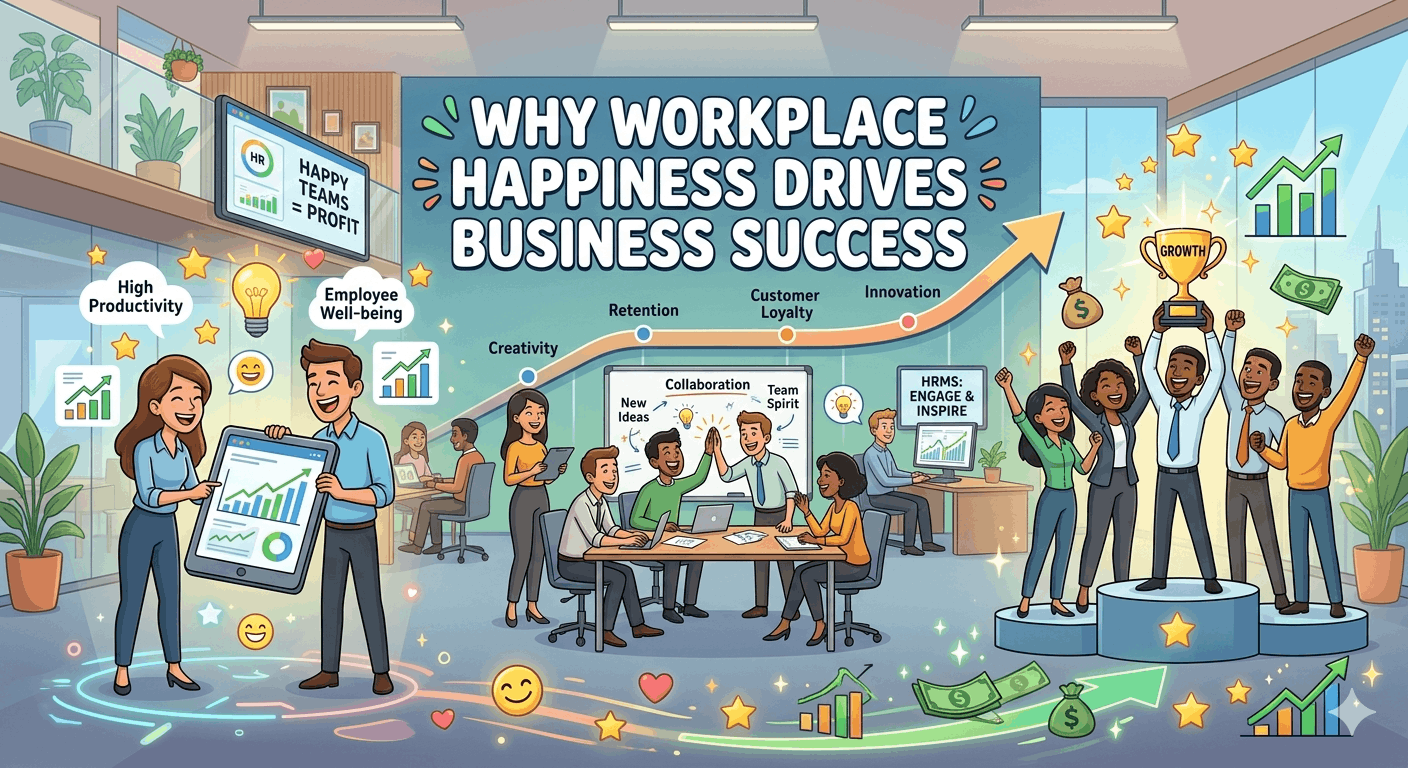
Why Workplace Happiness Drives Business Success
In today's competitive business environment, organizations are beginning to realize that workplace happiness is not just a feel-good factor—it is a strategic advantage. Happy employees are more productive, more engaged, and more committed to achieving company goals.
As businesses evolve, the focus is shifting from traditional metrics to employee well-being, satisfaction, and engagement. Companies that prioritize happiness are not only improving their workplace culture but also driving long-term success.
Understanding Workplace Happiness
Workplace happiness goes beyond occasional perks or celebrations. It is about creating an environment where employees feel valued, supported, and motivated to perform their best.
Key Elements of Workplace Happiness
- Positive work environment and culture
- Recognition and appreciation
- Opportunities for growth and learning
- Work-life balance and flexibility
- Strong leadership and communication
When these elements are in place, employees are more likely to feel connected to their work and the organization.
The Link Between Happiness and Productivity
Numerous studies show a direct correlation between employee happiness and productivity. Happy employees are more focused, creative, and efficient in their roles.
How Happiness Boosts Performance
- Increases motivation and enthusiasm
- Enhances creativity and innovation
- Reduces stress and burnout
- Improves collaboration and teamwork
- Encourages proactive problem-solving
When employees enjoy their work, they naturally invest more effort and energy into achieving better results.
Impact on Employee Retention
Employee turnover is a costly challenge for organizations. Workplace happiness plays a crucial role in retaining top talent.
Why Happy Employees Stay
- They feel valued and appreciated
- They see growth opportunities
- They enjoy a healthy work environment
- They trust leadership and management
- They experience work-life balance
Organizations that invest in employee happiness reduce turnover rates and build a more stable workforce.
Key Insight: Happy employees are not just more productive—they are more loyal, creative, and committed to organizational success.
The Role of Leadership in Workplace Happiness
Leadership plays a significant role in shaping workplace happiness. Managers and leaders influence how employees feel about their work and the organization.
What Great Leaders Do
- Communicate openly and transparently
- Recognize and reward achievements
- Support employee development
- Encourage collaboration and inclusivity
- Lead with empathy and understanding
Strong leadership creates a culture of trust and positivity, which directly impacts employee satisfaction.
How HRMS Supports Workplace Happiness
Modern HRMS systems are essential tools for improving employee experience and happiness. They provide insights and solutions that help organizations create a better work environment.
Key HRMS Features
- Employee feedback and survey tools
- Performance management systems
- Recognition and rewards programs
- Learning and development platforms
- Analytics for employee engagement
By leveraging HRMS technology, companies can identify issues, track engagement, and implement effective strategies to enhance happiness.
Strategies to Improve Workplace Happiness
Creating a happy workplace requires consistent effort and a people-first approach. Organizations must focus on building a supportive and engaging environment.
Effective Strategies
- Promote work-life balance through flexible policies
- Recognize and celebrate achievements
- Encourage open communication and feedback
- Invest in employee development programs
- Create a positive and inclusive culture
These strategies help employees feel valued and motivated, leading to better performance and satisfaction.
The Business Impact of Workplace Happiness
Workplace happiness is not just beneficial for employees—it has a direct impact on business outcomes. Companies with happy employees often outperform their competitors.
Key Business Benefits
- Higher productivity and efficiency
- Improved employee retention
- Stronger employer branding
- Better customer satisfaction
- Increased profitability
Investing in happiness is not an expense—it is a strategic investment in long-term success.
Conclusion: Happiness as a Business Strategy
Workplace happiness is no longer optional—it is essential for sustainable growth. Organizations must prioritize employee well-being, engagement, and satisfaction to stay competitive.
By leveraging HRMS tools and adopting a people-first approach, companies can create a thriving workplace where employees feel motivated and valued.
Happiness at work is not just about feeling good—it is about performing better, staying longer, and contributing more. Businesses that understand this will lead the future of work.
Ultimately, a happy workplace is a productive workplace, and a productive workplace is the foundation of business success.