Why the Best Talent Doesn’t Apply to Job Posts
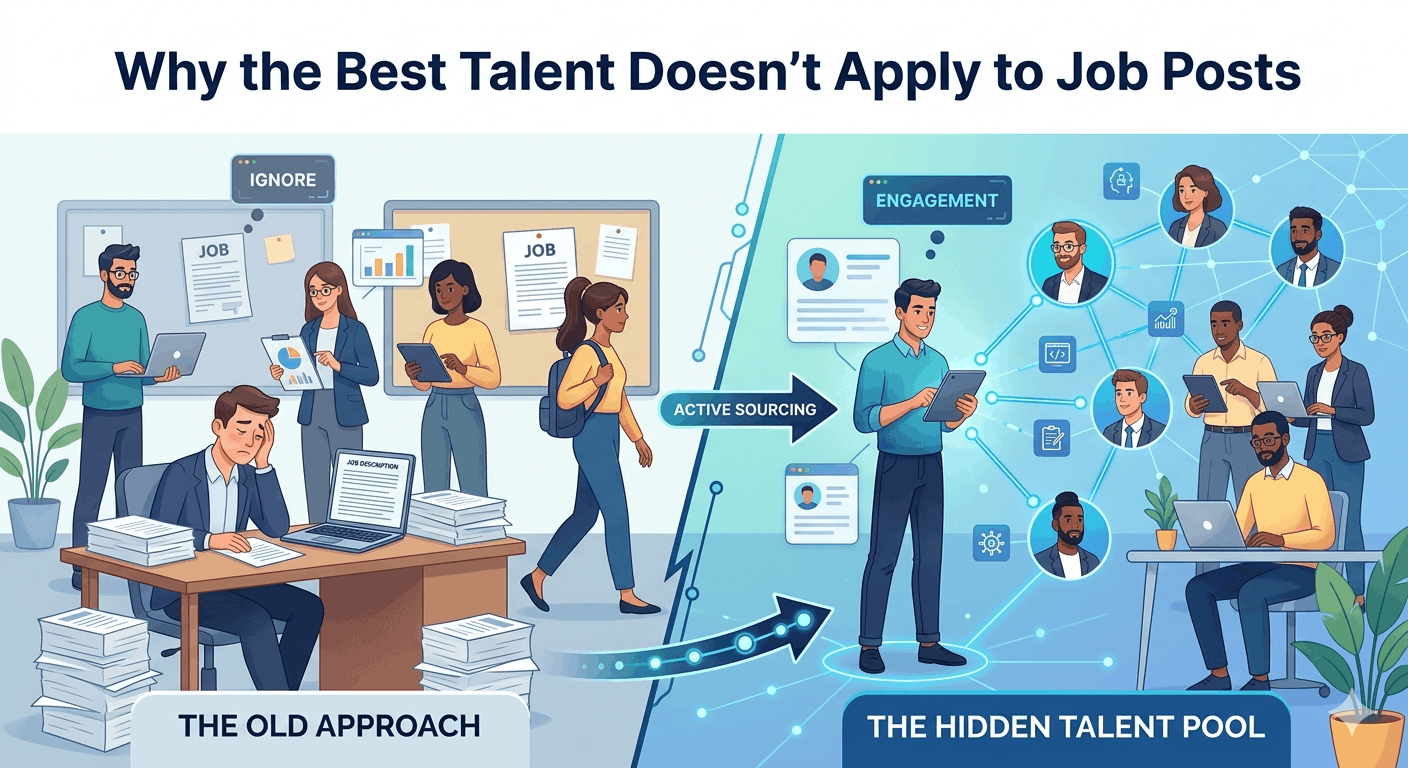
In today's competitive hiring landscape, many organizations struggle to attract top-tier candidates despite posting jobs across multiple platforms. The truth is simple yet often overlooked: the best talent rarely applies to job posts. Instead, they are either already employed, selectively exploring opportunities, or being approached directly by recruiters.
This shift in behavior requires companies to rethink traditional hiring strategies and adopt more proactive, data-driven recruitment approaches supported by modern HRMS systems.
The Myth of Job Postings
For years, job postings have been the primary method of recruitment. However, relying solely on them limits access to a large portion of high-quality candidates.
Why Job Posts Fall Short
- They attract active job seekers, not passive talent
- High competition among applicants reduces visibility
- Generic descriptions fail to inspire top performers
- Lengthy application processes discourage candidates
- Lack of personalization creates low engagement
While job postings are still relevant, they are no longer sufficient for attracting high-performing professionals.
Understanding Passive Candidates
Passive candidates are individuals who are not actively searching for jobs but are open to the right opportunity. This group represents some of the most skilled and experienced professionals in the market.
Characteristics of Passive Talent
- Currently employed and performing well
- Selective about new opportunities
- Motivated by growth, not desperation
- Less likely to browse job boards regularly
- Responsive to personalized outreach
To attract these candidates, companies must shift from waiting for applications to actively engaging talent.
Why Top Talent Avoids Job Applications
There are several reasons why high-performing professionals choose not to apply through traditional channels.
Top Reasons for Avoidance
- Time-Consuming Processes: Lengthy forms and repetitive data entry.
- Lack of Transparency: Unclear salary, role, or expectations.
- Poor Employer Branding: Weak or unknown company reputation.
- Low Personalization: Generic job descriptions fail to connect.
- Better Opportunities Elsewhere: Direct offers from recruiters.
Top candidates value efficiency and clarity. If the hiring process feels outdated or impersonal, they simply move on.
Key Insight: The best talent doesn't chase jobs—great opportunities find them.
The Role of Employer Branding
Employer branding plays a crucial role in attracting passive talent. Candidates are more likely to engage with companies that have a strong, positive reputation.
How to Build a Strong Employer Brand
- Showcase company culture and values
- Highlight employee success stories
- Maintain an active online presence
- Share transparent information about roles
- Promote work-life balance and flexibility
A strong brand not only attracts talent but also builds trust and credibility in the job market.
Proactive Recruitment Strategies
To reach top talent, companies must adopt proactive hiring methods that go beyond job postings.
Effective Talent Acquisition Strategies
- Direct sourcing through professional networks
- Employee referral programs
- Talent pipeline development
- Personalized outreach campaigns
- Engagement through social media platforms
These strategies allow organizations to connect with candidates before they even start looking for a job.
How HRMS Enhances Talent Acquisition
Modern HRMS systems are essential for managing proactive recruitment efforts. They provide tools to track, engage, and nurture potential candidates effectively.
Key HRMS Features for Better Hiring
- Centralized candidate database
- Automated communication and follow-ups
- Advanced analytics for hiring decisions
- Integration with job portals and social platforms
- Talent pipeline management
By leveraging HRMS technology, companies can move from reactive hiring to a more strategic and efficient approach.
Improving the Candidate Experience
Even when top talent engages with your company, the experience must be seamless and engaging. A poor process can still drive candidates away.
Ways to Enhance Candidate Experience
- Simplify the application process
- Communicate clearly and consistently
- Provide timely feedback
- Respect candidates' time
- Offer a personalized recruitment journey
Creating a positive experience ensures that candidates remain interested and engaged throughout the hiring process.
Conclusion: Rethinking Modern Recruitment
The hiring landscape has changed, and companies must evolve with it. Relying solely on job postings is no longer enough to attract the best talent.
Organizations must focus on proactive engagement, strong employer branding, and advanced HRMS tools to stay competitive.
The best talent is not actively looking—it is waiting to be discovered. Companies that understand this will gain a significant advantage in building high-performing teams.
By adopting modern recruitment strategies, businesses can unlock access to top talent and drive long-term success.