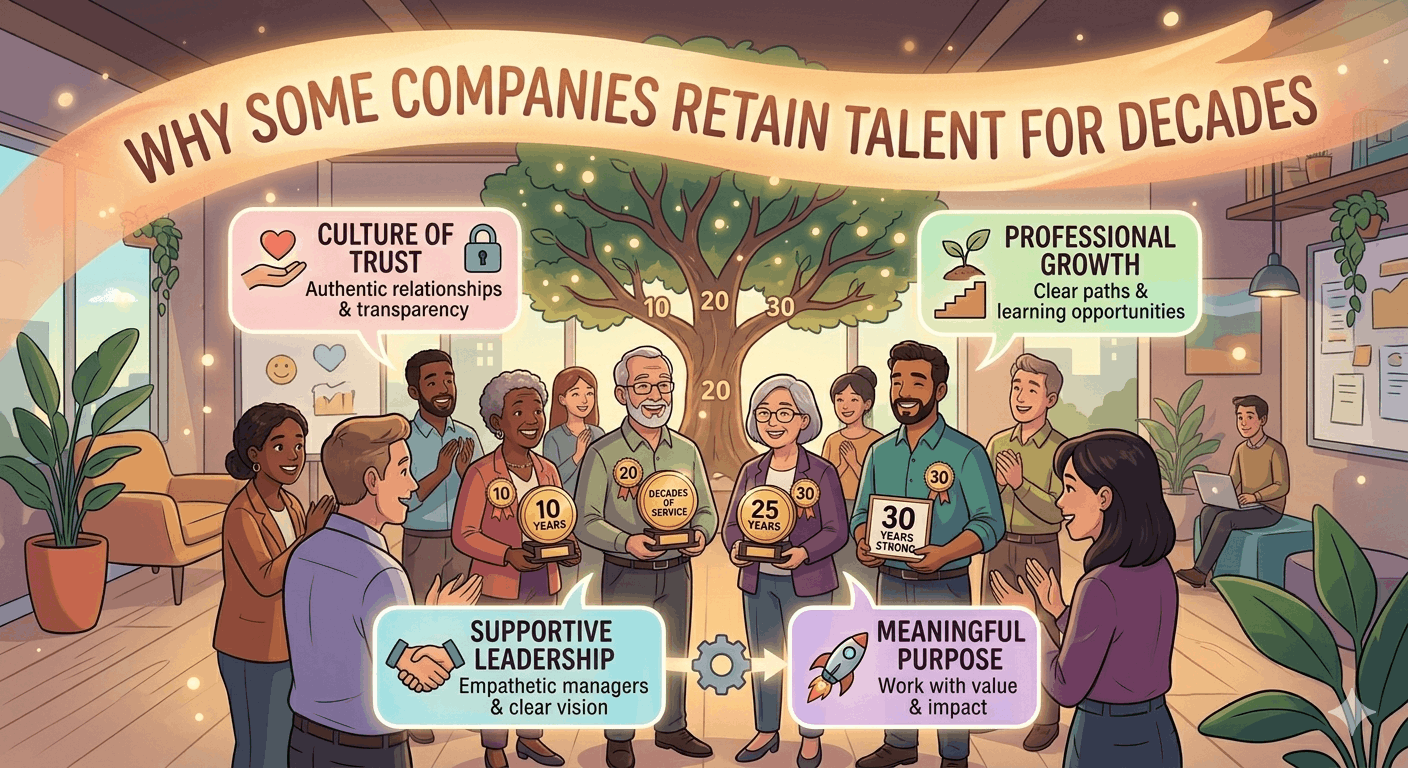
Why Some Companies Retain Talent for Decades
In today's fast-paced corporate environment, high turnover rates have become a common challenge for many organizations. Employees frequently change jobs, seeking better opportunities, higher compensation, or improved work-life balance.
However, there are elite companies that manage to retain their top talent for decades, building a loyal and dedicated workforce.
Understanding the secrets behind long-term employee retention is crucial for business leaders, human resources professionals, and managers who want to build a stable and prosperous organization.
It is not merely about offering high salaries or extravagant perks; it is about creating a comprehensive ecosystem where professionals feel valued, supported, and connected to a larger purpose.
This article explores the core strategies, cultural foundations, and leadership practices that enable companies to build a legacy of loyalty.
1. A Foundation of Core Values and Purpose
The most enduring companies are built on strong, authentic core values that go beyond a simple mission statement.
Employees want to work for organizations that demonstrate:
- Integrity
- Social responsibility
- Commitment to customers and community
When a company’s actions align with its values, it builds deep trust. Employees feel proud to be part of such organizations.
This shared purpose creates a strong emotional connection, making employees less likely to leave.
How to Strengthen This:
- Embed values in hiring processes
- Align leadership decisions with values
- Communicate purpose regularly
2. Opportunities for Lifelong Career Growth
One of the biggest reasons employees leave is career stagnation.
Companies that retain talent invest heavily in continuous learning and development.
They offer:
- Internal mobility programs
- Cross-functional training
- Leadership development paths
- Mentorship opportunities
These organizations act as career incubators, helping employees evolve over time.
When employees see a clear future within the company, they stay and grow instead of leaving.
3. Prioritizing Employee Well-being and Work-Life Balance
Modern employees value well-being as much as salary.
Companies with strong retention prioritize employees as whole individuals.
They provide:
- Flexible working hours
- Remote or hybrid work options
- Generous paid leave
- Mental health support
By preventing burnout and respecting personal time, organizations create a sustainable work culture.
This builds loyalty and emotional connection.
4. A Culture of Recognition and Appreciation
Employees leave when they feel undervalued. Recognition is critical.
Top companies practice appreciation daily through:
- Formal reward systems
- Peer recognition programs
- Leadership acknowledgment
Additionally, they ensure:
- Fair compensation
- Performance bonuses
- Profit-sharing opportunities
When employees feel seen and valued, engagement increases significantly.
5. Transparent and Empathetic Leadership
Leadership plays a crucial role in retention.
Great leaders demonstrate:
- Transparency
- Empathy
- Emotional intelligence (EQ)
They:
- Communicate openly about company direction
- Support employees during challenges
- Act as mentors and advocates
This builds trust and strengthens long-term relationships between employees and the organization.
6. Fostering a Collaborative and Inclusive Environment
Employees stay where they feel they belong.
Companies with high retention encourage:
- Cross-team collaboration
- Inclusive decision-making
- Diversity and equal opportunity
They also invest in:
- Team-building activities
- Social events
- Collaborative projects
This creates strong interpersonal bonds and a sense of community.
7. Providing Stability and Job Security
Job security is a powerful retention factor.
Stable companies:
- Communicate clearly during change
- Maintain strong financial strategies
- Avoid sudden layoffs
Employees who feel secure can focus on growth instead of fear.
This stability builds long-term loyalty.
8. Continuous Innovation and Adaptability
Top companies evolve constantly.
They encourage:
- Innovation
- Creative thinking
- Experimentation
Employees stay longer when they:
- Work on exciting projects
- Learn new technologies
- Stay intellectually challenged
Innovation keeps the workplace dynamic and engaging.
9. Measuring and Improving the Employee Experience
Successful companies continuously improve workplace experience.
They use:
- Employee feedback surveys
- Open communication channels
- HR analytics tools
This helps them:
- Identify retention risks
- Improve engagement
- Adapt to employee needs
A data-driven approach ensures long-term success.
Conclusion: Building a Legacy of Loyalty
Retaining talent for decades is not luck—it is a strategic, human-centered effort.
Companies that succeed focus on:
- Strong values
- Career growth
- Employee well-being
- Recognition
- Empathetic leadership
The cost of losing talent is far greater than investing in people.
Start building a culture today where employees don’t just work—they stay, grow, and thrive for decades.