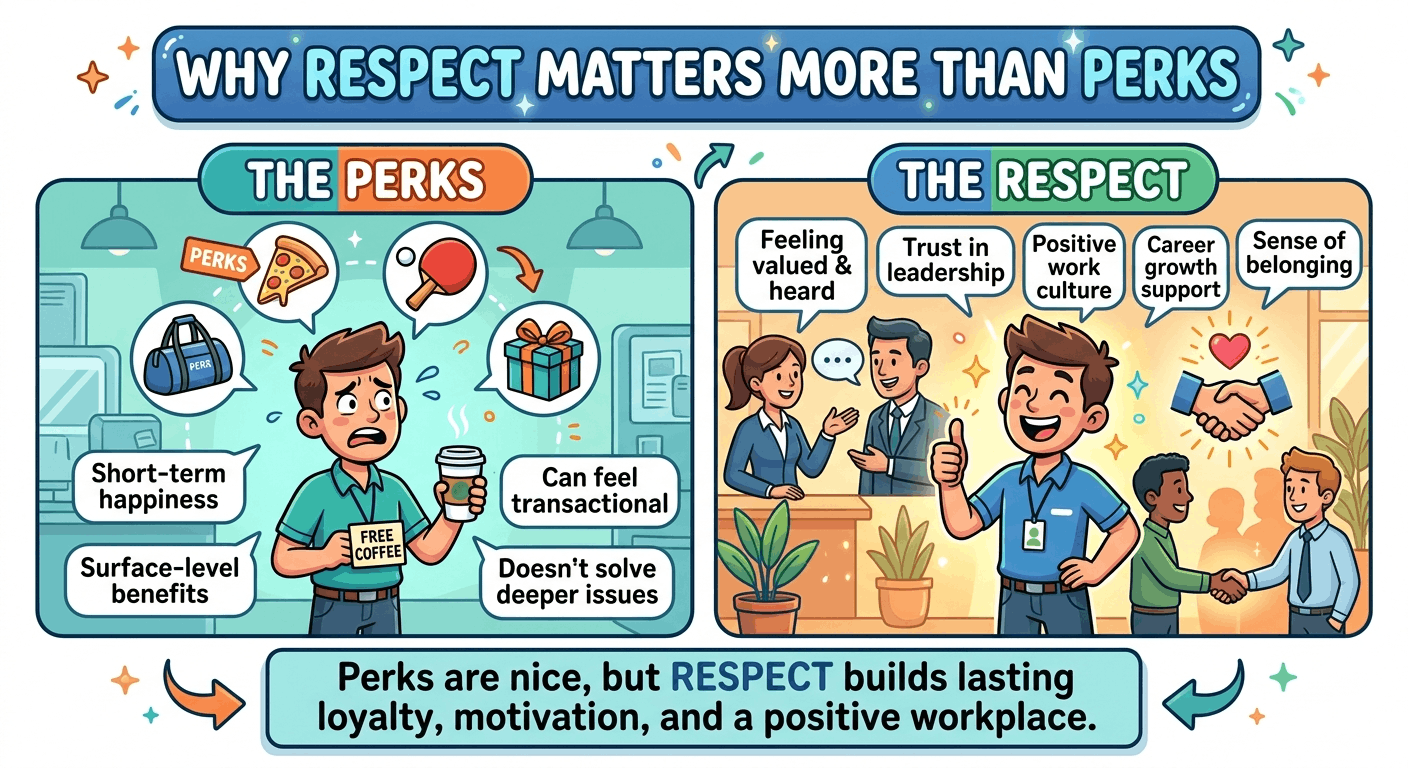
Why Respect Matters More Than Perks
In the evolving landscape of the corporate world, organizations have spent the last decade trying to outdo one another with flashy office environments and superficial perks. From game rooms and snack bars to free lunches and social events, the focus has often been on making the office feel like a playground.
However, beneath these perks, a quiet shift is happening. Talented professionals now understand that no amount of free pizza or ping-pong can replace a respectful workplace.
Workplace respect has become the most valuable currency in today’s employment ecosystem.
When employees feel respected, they become more engaged, loyal, and productive. This article explores why respect is the true foundation of a strong organizational culture.
The Illusion of the Fun Office
The trend of workplace perks gained popularity during the early 2010s, especially in tech companies.
While perks may improve short-term satisfaction, they fail to address deeper issues such as:
- Micromanagement
- Lack of growth opportunities
- Disrespectful leadership
An employee who feels undervalued will not feel better because of office games or free food.
In fact, excessive focus on perks can sometimes hide deeper cultural problems.
Defining True Respect in the Workplace
Respect is the recognition of an individual’s value, dignity, and professional capability.
It shows up in everyday actions such as:
- Listening to ideas regardless of hierarchy
- Giving credit where it is due
- Providing constructive feedback privately
When respect exists, employees feel like valued individuals—not just resources.
Respect Drives Employee Retention
Many employees leave organizations not because of salary, but due to lack of respect.
A respectful culture leads to:
- Higher employee retention
- Lower hiring costs
- Stronger emotional connection
Respect builds long-term loyalty that competitors cannot easily replicate.
Psychological Safety and Respect
Psychological safety, introduced by Amy Edmondson, is deeply tied to respect.
In respectful environments, employees feel safe to:
- Speak openly
- Share ideas
- Admit mistakes
This openness leads to innovation and growth.
Disrespect, on the other hand, creates fear and silence.
The Role of Empathetic Leadership
Leadership defines the culture of respect.
Empathetic leaders:
- Understand employee challenges
- Respect personal boundaries
- Avoid micromanagement
They build trust through consistent, respectful behavior.
Recognizing and Rewarding Talent
Recognition is a key part of respect.
Employees should feel valued through:
- Regular appreciation
- Meaningful feedback
- Fair compensation
A simple “thank you” can significantly improve motivation.
Respecting Work-Life Balance
True respect extends beyond the workplace.
Organizations should support:
- Work-life balance
- Flexible schedules
- Remote work options
This shows trust and respect for employees’ personal lives.
Transparency as a Form of Respect
Transparency builds trust and accountability.
Respectful organizations:
- Communicate openly
- Share company updates honestly
- Encourage feedback from employees
Secrecy leads to distrust, while openness builds confidence.
Opportunities for Continuous Growth
Growth is a form of respect.
Organizations should invest in:
- Training programs
- Mentorship
- Career development paths
Employees stay when they see a future within the company.
The Cost of Disrespect
A toxic environment leads to:
- High turnover
- Burnout
- Low productivity
Disrespect is not just a cultural issue—it is a business risk.
Designing a Culture That Endures
Building a lasting culture requires focusing on what truly matters:
- Respect
- Trust
- Growth
- Open communication
Organizations that prioritize these values create environments where employees thrive.
The cost of turnover is far greater than investing in people.
Start building a culture of respect today and create a workplace where employees stay, grow, and succeed long-term.