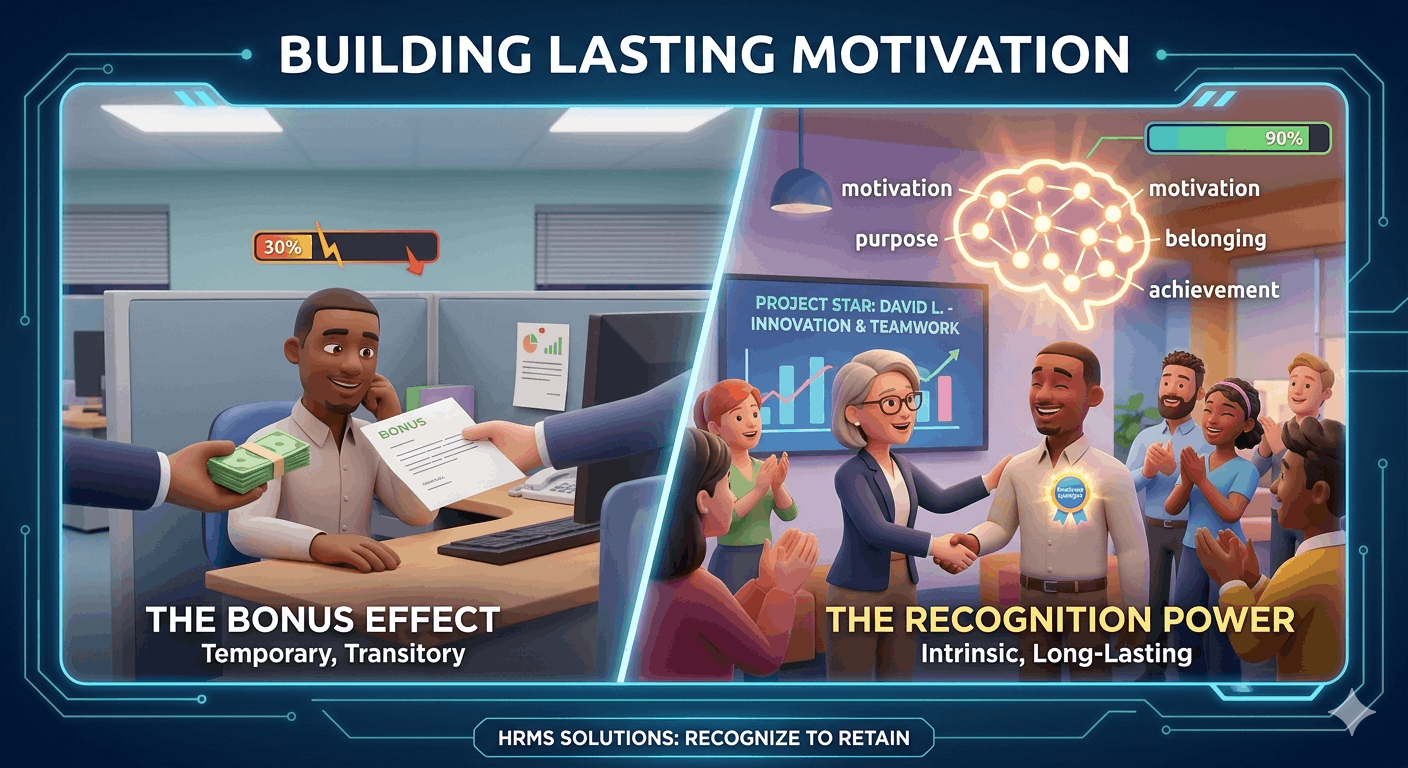
Introduction: Beyond Money in Motivation
For decades, organizations have relied on financial incentives to motivate employees. While bonuses and rewards have their place, they are no longer the most effective way to drive engagement. In today's workplace, recognition has emerged as a far more powerful motivator.
Employees are not just looking for paychecks—they seek appreciation, respect, and acknowledgment for their contributions. When organizations prioritize recognition, they unlock a deeper level of commitment and productivity. Feeling valued often matters more than being paid extra.
What Is Employee Recognition?
Employee recognition refers to acknowledging and appreciating an individual's efforts, achievements, and contributions within the workplace. It can be formal or informal, monetary or non-monetary.
Types of Employee Recognition
- Public appreciation during meetings
- Peer-to-peer recognition programs
- Managerial praise and feedback
- Awards and certificates
- Personalized appreciation messages
Why Recognition Outperforms Bonuses
While bonuses provide temporary satisfaction, recognition creates lasting emotional connections and motivation.
1. Builds Emotional Connection
Recognition makes employees feel valued and respected, strengthening their bond with the organization.
2. Drives Intrinsic Motivation
Unlike bonuses, which are external rewards, recognition fuels internal motivation and pride in one's work.
3. Encourages Consistent Performance
Regular appreciation reinforces positive behavior, leading to sustained productivity.
4. Strengthens Workplace Culture
A culture of recognition fosters positivity, collaboration, and mutual respect among employees.
The Limitations of Monetary Bonuses
Bonuses are effective in the short term but often fail to create long-lasting impact.
Temporary Satisfaction
Financial rewards provide immediate ???? but do not sustain long-term engagement.
Expectation Cycle
Employees may begin to expect bonuses regularly, reducing their motivational value over time.
Lack of Personal Connection
Money does not always convey appreciation or emotional acknowledgment.
Potential Inequality
Perceived unfair distribution of bonuses can lead to dissatisfaction and conflict.
People may forget the bonus they received, but they will never forget how appreciated they felt.
Recognition vs Bonuses: Key Differences
Understanding the difference between recognition and bonuses helps organizations design better engagement strategies.
Comparison Overview
- Recognition is emotional; bonuses are financial
- Recognition is continuous; bonuses are occasional
- Recognition builds culture; bonuses drive short-term results
- Recognition is inclusive; bonuses may be selective
- Recognition strengthens loyalty; bonuses influence transactions
The Role of HRMS in Employee Recognition
Modern HRMS platforms are transforming how organizations implement and manage recognition programs.
Automated Recognition Programs
HRMS tools enable structured recognition systems that ensure consistent appreciation across teams.
Real-Time Feedback
Managers and peers can provide instant recognition, increasing its impact and relevance.
Performance Integration
Recognition can be linked with performance metrics, ensuring fairness and transparency.
- Improved employee engagement
- Stronger team collaboration
- Higher retention rates
- Enhanced workplace satisfaction
- Better performance tracking
How to Build a Culture of Recognition
Creating a recognition-driven workplace requires intentional strategies and consistent effort.
1. Make Recognition Frequent
Appreciation should be a regular part of workplace interactions, not limited to special occasions.
2. Personalize Appreciation
Tailor recognition to individual preferences to make it more meaningful.
3. Encourage Peer Recognition
Allow employees to recognize each other, fostering a supportive environment.
4. Align Recognition with Values
Ensure that recognition reflects organizational values and goals.
5. Train Leaders to Appreciate
Managers should be trained to recognize and acknowledge employee contributions effectively.
The Impact of Recognition on Business Success
Recognition is not just about employee satisfaction—it directly influences business outcomes.
Higher Productivity
Employees who feel valued are more motivated to perform at their best.
Improved Retention
Recognition reduces turnover by creating a positive work environment.
Stronger Employer Brand
Organizations known for appreciating employees attract top talent.
The Future of Employee Motivation
As workplaces evolve, recognition will continue to play a central role in employee engagement strategies.
Integration with Technology
Advanced HRMS systems will make recognition more accessible and data-driven.
Focus on Employee Experience
Organizations will prioritize holistic employee experiences, with recognition at the core.
Shift Toward Human-Centric Workplaces
Companies will increasingly value emotional connections and well-being.
Conclusion: Recognition as a Strategic Advantage
While bonuses may provide short-term motivation, recognition creates lasting impact. By focusing on appreciation, respect, and acknowledgment, organizations can build a more engaged and productive workforce.
In the end, employees remember how they are treated more than how much they are paid. Recognition is not just a gesture—it is a powerful strategy for long-term success.