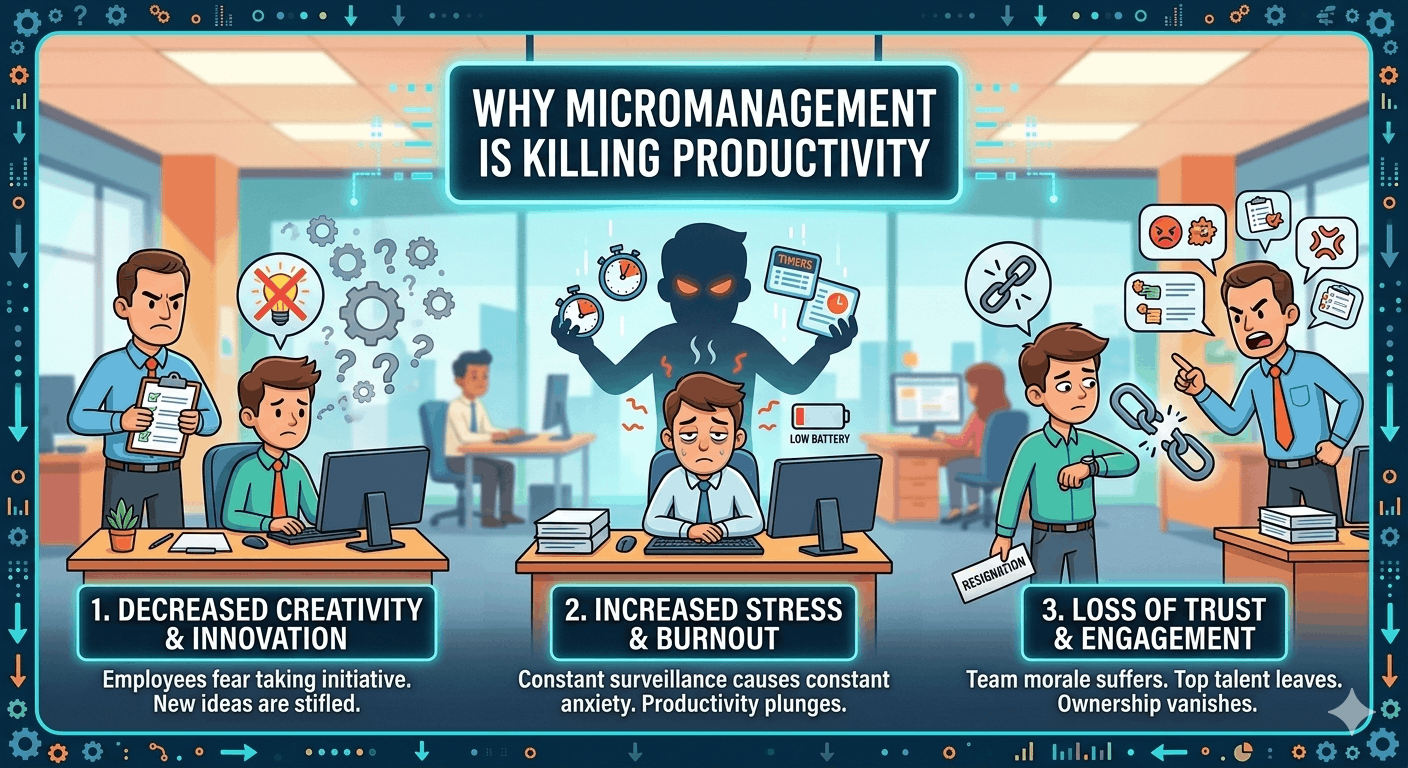
Introduction: The Hidden Cost of Control
In many workplaces, leaders believe that closely monitoring every task ensures better outcomes. However, micromanagement often does the opposite. Instead of improving performance, it creates bottlenecks, reduces employee morale, and slows down progress.
Organizations striving for growth must understand that productivity thrives in autonomy, not control. When employees feel trusted, they perform better, think creatively, and take ownership of their work.
What Is Micromanagement?
Micromanagement is a management style where a leader excessively controls or closely observes every detail of an employee's work. While oversight is necessary, excessive intervention disrupts workflow and reduces efficiency.
Common Signs of Micromanagement
- Constantly asking for updates on minor tasks
- Rewriting or redoing employees' work unnecessarily
- Not allowing independent decision-making
- Over-monitoring time and activity
- Lack of trust in team capabilities
Why Micromanagement Destroys Productivity
At first glance, micromanagement might appear to ensure accuracy. In reality, it slows down processes and discourages initiative.
1. It Creates Bottlenecks
When every decision requires approval, work comes to a halt. Employees wait for feedback instead of moving forward, resulting in delays and missed deadlines.
2. It Kills Employee Confidence
Constant oversight signals a lack of trust. Over time, employees begin to doubt their abilities, leading to decreased performance and motivation.
3. It Reduces Innovation
Innovation requires freedom. When employees are restricted, they stop suggesting ideas and simply follow instructions, limiting organizational growth.
4. It Increases Stress Levels
Being constantly monitored creates anxiety. Employees feel pressured, which affects mental health and reduces overall efficiency.
The Psychological Impact on Teams
Micromanagement doesn't just affect output—it deeply impacts workplace culture and employee psychology.
Loss of Ownership
Employees who are not trusted stop taking responsibility. They become dependent on instructions instead of acting proactively.
Burnout and Frustration
Continuous monitoring leads to emotional exhaustion. Employees feel undervalued, which increases turnover rates.
Great leaders don't control every step—they empower others to take them.
Micromanagement vs Effective Leadership
Understanding the difference between control and guidance is key to building a productive environment.
Key Differences
- Micromanagers focus on tasks; leaders focus on outcomes
- Micromanagers dictate; leaders guide
- Micromanagers limit creativity; leaders encourage innovation
- Micromanagers create dependency; leaders build independence
- Micromanagers monitor constantly; leaders trust strategically
How to Avoid Micromanagement
Shifting from control to empowerment requires conscious effort and strategic thinking.
1. Set Clear Expectations
Define goals, deadlines, and responsibilities clearly. When employees understand what is expected, they don't need constant supervision.
2. Focus on Results, Not Process
Allow employees to choose how they complete their work. What matters is the outcome, not every step taken.
3. Build Trust Gradually
Trust is built over time. Start by delegating smaller tasks and gradually increase responsibility.
4. Encourage Open Communication
Create an environment where employees feel comfortable sharing updates and challenges without fear of criticism.
5. Provide Feedback, Not Control
Constructive feedback helps employees grow. Avoid interfering constantly; instead, guide them periodically.
The Benefits of Letting Go
When leaders step back, teams step up. Empowered employees become more engaged, creative, and productive.
Improved Efficiency
Workflows become faster when employees don't need constant approvals.
Higher Employee Satisfaction
Trust fosters a positive work environment, increasing morale and retention.
Stronger Innovation
Freedom allows employees to experiment and bring fresh ideas to the table.
Conclusion: Trust Drives Productivity
Micromanagement may provide short-term control, but it damages long-term productivity. Organizations must shift towards trust-based leadership to unlock their team's full potential.
By empowering employees, encouraging independence, and focusing on results, leaders can create a culture where productivity thrives naturally.