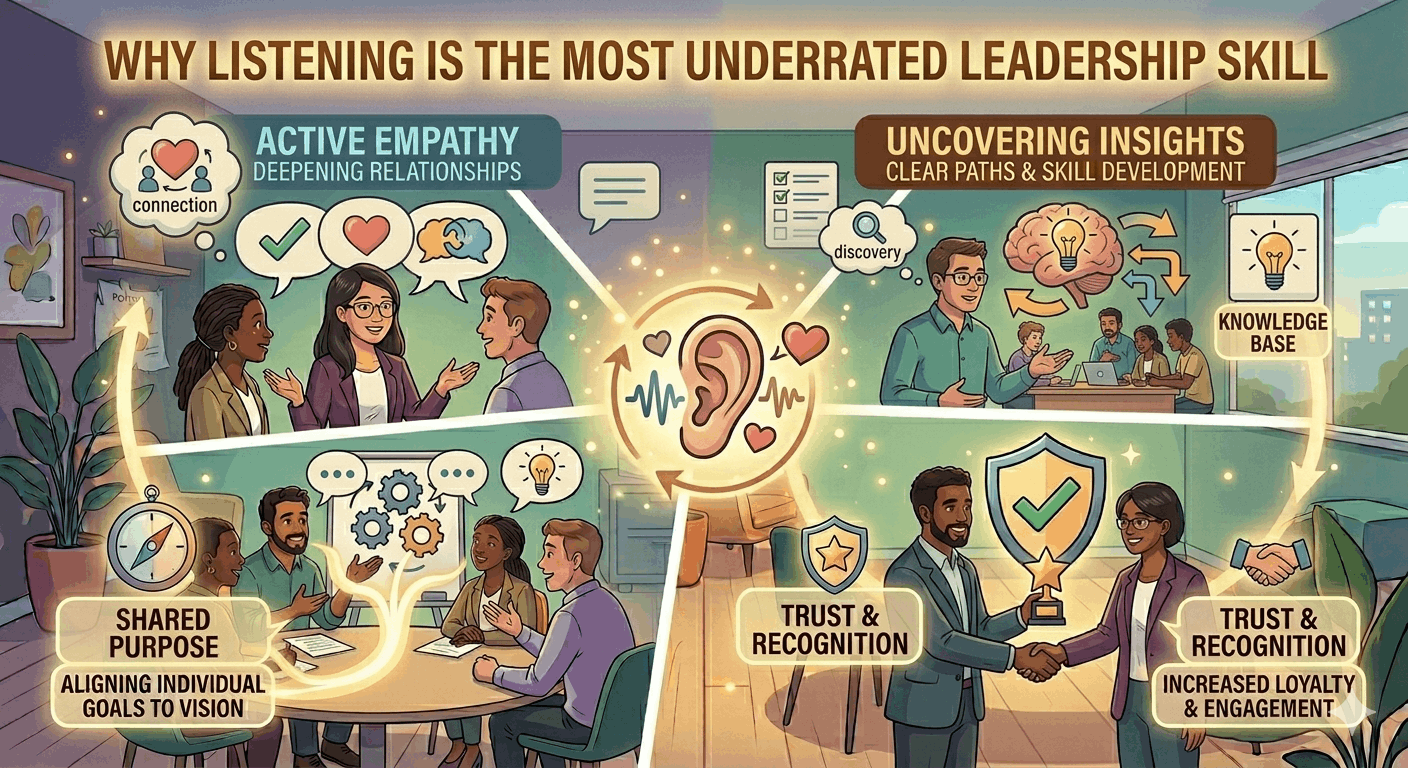
Introduction: The Silent Power of Listening
In the modern workplace, leadership is often associated with speaking, directing, and making decisions. However, one of the most powerful yet overlooked skills is listening. Leaders who listen effectively create stronger teams, foster trust, and make better decisions.
While many focus on being heard, truly impactful leaders understand that listening is the foundation of meaningful leadership. It is not just about hearing words but understanding intent, emotions, and perspectives.
What Does It Mean to Truly Listen?
Listening goes beyond simply hearing what someone says. It involves attention, empathy, and interpretation. Active listening requires presence and a genuine desire to understand others.
Key Elements of Effective Listening
- Attention: Being fully present in conversations
- Empathy: Understanding emotions behind words
- Clarity: Asking questions to avoid misunderstandings
- Patience: Allowing others to express themselves fully
- Feedback: Responding thoughtfully and constructively
Why Listening Is Critical for Leadership Success
Leaders who prioritize listening gain valuable insights that others often miss. This ability strengthens relationships and improves overall team performance.
1. Builds Trust and Respect
When leaders listen, employees feel valued. This builds trust and encourages open communication across teams.
2. Improves Decision-Making
Listening allows leaders to gather diverse perspectives, leading to more informed and balanced decisions.
3. Enhances Employee Engagement
Employees who feel heard are more engaged and motivated to contribute meaningfully.
4. Reduces Conflict
Active listening helps identify issues early and resolve misunderstandings before they escalate.
The Cost of Poor Listening in Leadership
Ignoring or dismissing input can have serious consequences for organizations and teams.
Miscommunication and Errors
Poor listening leads to misunderstandings, resulting in mistakes and inefficiencies.
Low Morale
Employees who feel ignored often disengage, leading to reduced productivity and satisfaction.
Missed Opportunities
Great ideas often come from team members. Without listening, leaders may overlook valuable insights.
The most effective leaders are not the ones who speak the most, but the ones who listen the best.
Listening vs Hearing: Understanding the Difference
Many leaders confuse hearing with listening. While hearing is passive, listening is an active and intentional process.
Key Differences
- Hearing is automatic; listening requires effort
- Hearing focuses on words; listening focuses on meaning
- Hearing is passive; listening is active
- Hearing ignores emotions; listening understands them
- Hearing reacts quickly; listening responds thoughtfully
How Leaders Can Improve Their Listening Skills
Listening is a skill that can be developed with practice and awareness.
1. Eliminate Distractions
Give full attention during conversations. Avoid multitasking or interrupting others.
2. Practice Active Listening
Engage with the speaker by nodding, summarizing, and asking relevant questions.
3. Be Open-Minded
Approach conversations without judgment. Be willing to consider different viewpoints.
4. Reflect Before Responding
Take time to process information before giving feedback or making decisions.
5. Encourage Feedback
Create a culture where employees feel comfortable sharing ideas and concerns.
The Long-Term Benefits of Listening Leadership
Leaders who master listening create stronger, more resilient organizations.
Stronger Team Relationships
Listening fosters trust and mutual respect, strengthening team dynamics.
Better Innovation
Open communication encourages idea-sharing, leading to creative solutions.
Higher Retention Rates
Employees are more likely to stay in environments where they feel heard and valued.
Conclusion: Listening as a Leadership Superpower
Listening is not just a soft skill—it is a strategic advantage. Leaders who prioritize listening can unlock their team's full potential and drive meaningful results.
By embracing active listening, leaders can build trust, improve communication, and create a workplace where everyone thrives.