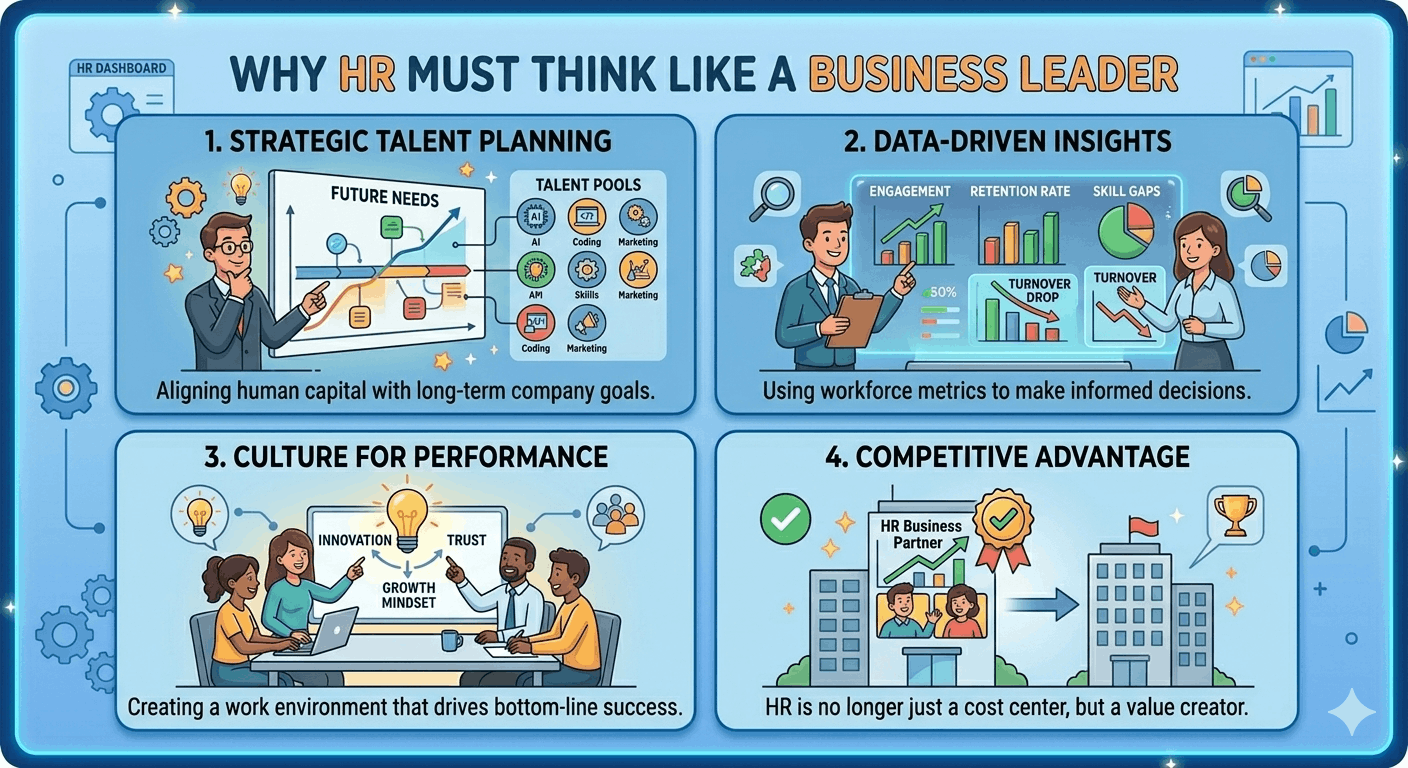
Why HR Must Think Like a Business Leader
Human Resources has evolved far beyond administrative tasks and policy management. In today's dynamic business environment, HR professionals are expected to play a strategic role in shaping the future of organizations. To succeed, HR must adopt a business-first mindset and align people strategies with organizational goals.
Thinking like a business leader means understanding not just employees, but also revenue, performance, growth, and competitive advantage. This shift is essential for driving meaningful impact.
The Evolution of HR: From Support to Strategy
Traditionally, HR focused on hiring, payroll, and compliance. While these functions remain important, the modern workplace demands more. HR is now a key driver of organizational performance and culture.
Key Changes in HR Roles
- From administrative tasks to strategic planning
- From reactive problem-solving to proactive decision-making
- From employee management to talent optimization
- From isolated function to business integration
- From policy enforcement to culture building
This transformation requires HR professionals to think beyond traditional boundaries and contribute to business success.
Understanding Business Goals and Metrics
To think like a business leader, HR must understand the organization's goals, challenges, and performance metrics. This includes revenue targets, market positioning, and operational efficiency.
Important Business Metrics for HR
- Revenue per Employee: Measures workforce efficiency.
- Employee Turnover Rate: Indicates retention challenges.
- Productivity Levels: Reflects team performance.
- Cost per Hire: Evaluates recruitment efficiency.
- Employee Engagement Scores: Shows workforce satisfaction.
By analyzing these metrics, HR can make data-driven decisions that align with business objectives.
Aligning HR Strategy with Business Growth
HR strategies must directly support organizational growth. This means ensuring that the right talent, skills, and culture are in place to achieve business goals.
How HR Drives Business Growth
- Hiring talent that aligns with company vision
- Developing leadership and future-ready skills
- Improving employee engagement and retention
- Enhancing workplace productivity
- Building a strong organizational culture
When HR aligns its initiatives with business priorities, it becomes a powerful driver of success.
Key Insight: HR is not just about managing people—it is about maximizing their impact on business outcomes.
The Role of Data and HRMS in Strategic HR
Modern HRMS systems enable HR teams to operate with a business mindset by providing data, analytics, and insights.
Key HRMS Capabilities
- Real-time workforce analytics
- Performance tracking and reporting
- Predictive insights for talent management
- Automated recruitment and onboarding
- Employee engagement monitoring
With these tools, HR can move from intuition-based decisions to data-driven strategies that deliver measurable results.
Building Leadership Skills in HR
To think like business leaders, HR professionals must develop leadership capabilities. This includes strategic thinking, decision-making, and communication skills.
Essential Skills for Modern HR Leaders
- Strategic planning and vision
- Financial and business acumen
- Data analysis and interpretation
- Effective communication and influence
- Change management and adaptability
These skills empower HR to contribute meaningfully to executive discussions and business strategies.
Driving a Culture of Accountability and Performance
Business leaders focus on results, and HR must do the same. Creating a culture of accountability ensures that employees understand their roles in achieving organizational success.
Ways to Build a Performance-Driven Culture
- Set clear goals and expectations
- Implement regular performance reviews
- Provide continuous feedback
- Recognize and reward achievements
- Encourage ownership and responsibility
This approach helps align individual performance with overall business objectives.
Challenges HR Faces in Becoming Strategic
Despite its evolving role, HR often faces challenges in transitioning to a business-focused approach.
Common Challenges
- Lack of access to business data
- Limited involvement in decision-making
- Resistance to change within the organization
- Skill gaps in analytics and strategy
- Over-reliance on traditional practices
Overcoming these challenges requires a commitment to continuous learning and collaboration with leadership teams.
Conclusion: HR as a Business Partner
The future of HR lies in its ability to act as a true business partner. Organizations need HR professionals who can think strategically, analyze data, and drive performance.
By adopting a business leader mindset, HR can move beyond administrative functions and become a key contributor to organizational success.
HR is no longer just about managing people—it is about shaping the future of the business. Companies that recognize this will gain a significant competitive advantage.
Ultimately, when HR thinks like a business leader, it creates a stronger, more agile, and more successful organization.