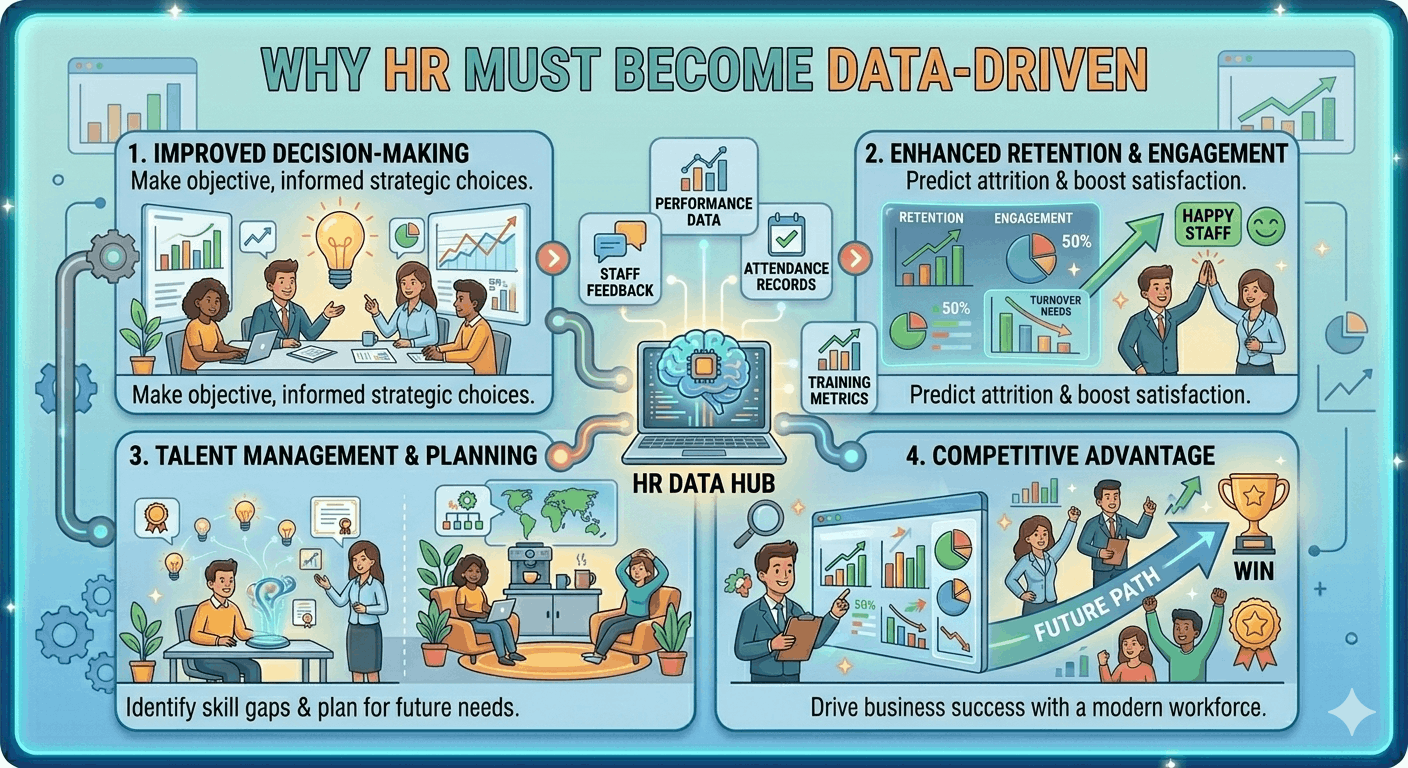
The Evolution of HR in the Digital Age
Human Resources has undergone a significant transformation over the past decade. Traditionally, HR decisions were based on intuition, experience, and limited data. Today, however, organizations are embracing data-driven HR strategies to improve efficiency and outcomes.
With the rise of advanced technologies and analytics tools, HR professionals now have access to valuable insights that can guide better decision-making. This shift is not just a trend—it is a necessity for staying competitive in the modern business landscape.
What Does Data-Driven HR Mean?
Data-driven HR involves using metrics, analytics, and insights to make informed decisions about workforce management.
- Analyzing employee performance data
- Tracking recruitment metrics
- Monitoring employee engagement
- Predicting workforce trends
- Improving HR processes through insights
Why Traditional HR Approaches Are No Longer Enough
Relying solely on intuition and manual processes limits the ability of HR teams to make accurate and timely decisions.
Lack of Visibility
Without proper data, organizations struggle to understand employee behavior and performance trends.
Inefficient Decision-Making
Manual processes can lead to delays and inconsistencies, impacting overall productivity.
Inability to Predict Trends
Traditional methods do not provide the insights needed to anticipate future workforce challenges.
Key Insight: Data-driven HR empowers organizations to move from reactive problem-solving to proactive workforce planning.
The Role of HRMS in Data-Driven HR
A modern HRMS (Human Resource Management System) is the foundation of data-driven HR strategies. It centralizes data and provides tools for analysis and reporting.
Centralized Data Management
HRMS platforms store all employee information in one place, making it easy to access and analyze.
Real-Time Analytics
With dashboards and reporting tools, HR teams can monitor key metrics and make informed decisions instantly.
Automation of HR Processes
Automation reduces manual errors and frees up time for strategic initiatives.
Benefits of HRMS for Data-Driven HR
- Improved accuracy in decision-making
- Enhanced employee performance tracking
- Better recruitment and retention strategies
- Increased operational efficiency
- Stronger compliance and reporting
Key Areas Where Data-Driven HR Makes an Impact
Data-driven approaches can transform multiple aspects of HR and workforce management.
Recruitment and Talent Acquisition
Analyzing hiring metrics helps identify the most effective sourcing channels and improve candidate selection.
Employee Engagement
Surveys and feedback data provide insights into employee satisfaction and areas for improvement.
Performance Management
Data-driven evaluations ensure fair and objective performance assessments.
Workforce Planning
Predictive analytics help organizations anticipate future needs and plan accordingly.
Steps to Implement Data-Driven HR
- Invest in modern HRMS technology
- Define key performance metrics
- Train HR teams on data analysis
- Integrate data across systems
- Continuously monitor and improve processes
Challenges in Adopting Data-Driven HR
While the benefits are clear, organizations may face challenges when transitioning to data-driven practices.
Data Privacy and Security
Handling sensitive employee data requires strict compliance with privacy regulations.
Skill Gaps
HR teams may need training to effectively analyze and interpret data.
Resistance to Change
Shifting from traditional methods to data-driven approaches can be met with resistance.
The Future of Data-Driven HR
The future of HR lies in leveraging advanced analytics, artificial intelligence, and automation to create smarter and more efficient workplaces.
Emerging Trends
Several trends are shaping the evolution of data-driven HR practices.
Key Trends to Watch
- AI-powered recruitment tools
- Predictive workforce analytics
- Personalized employee experiences
- Real-time performance tracking
- Advanced HR dashboards
Conclusion
HR must become data-driven to meet the demands of today's dynamic business environment. Organizations that embrace data and analytics gain a competitive edge in managing their workforce.
By leveraging HRMS solutions and adopting a data-first mindset, companies can make smarter decisions, improve employee experience, and drive long-term success.
Ultimately, data-driven HR is not just about numbers—it is about using insights to create a more effective, engaged, and future-ready workforce.