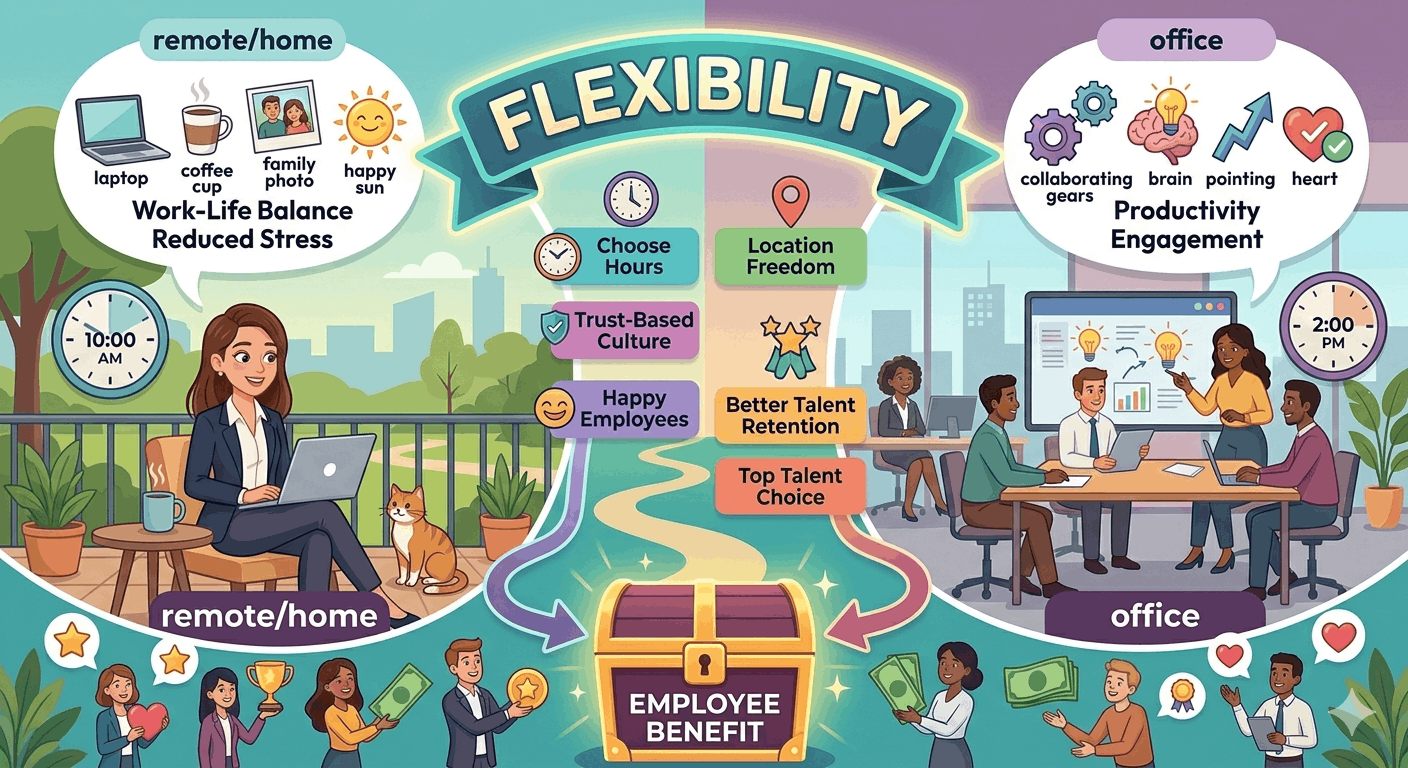
Why Flexibility Is the New Employee Benefit
In today's rapidly evolving workplace, flexibility has emerged as the most desirable employee benefit. Gone are the days when salary and perks alone defined job satisfaction. Modern professionals now prioritize freedom, balance, and autonomy in how they work.
As organizations adapt to changing expectations, flexibility is no longer a luxury—it is a necessity. But what makes flexibility so powerful, and why is it shaping the future of work?
The Shift in Employee Expectations
Employees today seek more than just financial rewards. They want a work environment that supports their personal lives, mental health, and overall well-being. This shift has pushed companies to rethink traditional work structures.
What Employees Value Today
- Control over their schedules
- Ability to work remotely or hybrid
- Work-life balance and reduced stress
- Opportunities for personal growth
- Supportive and inclusive work culture
This change reflects a broader transformation where employees are no longer willing to sacrifice their well-being for rigid work systems.
Understanding Workplace Flexibility
Workplace flexibility goes beyond working from home. It includes a variety of arrangements that allow employees to choose how, when, and where they work.
Types of Workplace Flexibility
- Remote Work: Working from any location outside the office.
- Flexible Hours: Adjusting start and end times.
- Compressed Workweeks: Fewer working days with longer hours.
- Job Sharing: Splitting responsibilities between employees.
- Results-Only Work Environment: Focus on output, not time spent.
These models empower employees to align work with their personal priorities, leading to higher satisfaction and engagement.
The Business Case for Flexibility
While flexibility benefits employees, it also delivers significant advantages for organizations. Companies that embrace flexible work models often experience higher productivity, better retention, and stronger employer branding.
How Flexibility Benefits Businesses
- Improved employee performance and focus
- Reduced absenteeism and burnout
- Access to a broader talent pool
- Lower operational and office costs
- Enhanced employee loyalty and retention
When employees feel trusted and empowered, they are more likely to take ownership of their work and deliver exceptional results.
Key Insight: Flexibility is not about working less—it is about working smarter and living better.
Flexibility and Productivity: Myth vs Reality
One of the biggest concerns about flexibility is its impact on productivity. However, research and real-world experiences show that flexible employees are often more productive than those in rigid environments.
Why Flexible Work Boosts Productivity
- Employees work during their peak energy hours
- Reduced commute leads to more available time
- Better mental health improves focus
- Fewer workplace distractions
- Greater sense of autonomy increases motivation
Instead of tracking hours, companies are shifting toward measuring outcomes, which aligns better with modern work dynamics.
The Role of Leadership in Flexible Work
Implementing flexibility requires a shift in leadership mindset. Managers must move from control-based approaches to trust-based leadership.
How Leaders Can Support Flexibility
- Set clear goals and expectations
- Encourage open communication
- Provide the right tools and technology
- Focus on results rather than hours worked
- Promote a culture of trust and accountability
Strong leadership ensures that flexibility does not lead to confusion but instead drives clarity and performance.
Challenges of Flexible Work and How to Overcome Them
Despite its benefits, flexibility comes with challenges. Without proper structure, it can lead to miscommunication, isolation, and blurred boundaries.
Common Challenges
- Difficulty in collaboration
- Lack of routine and discipline
- Overworking or underworking
- Communication gaps
- Feeling disconnected from the team
Solutions to Stay Balanced
- Create a structured daily routine
- Use collaboration tools effectively
- Schedule regular team check-ins
- Set clear work boundaries
- Prioritize mental health and breaks
By addressing these challenges proactively, both employees and employers can maximize the benefits of flexibility.
The Future of Employee Benefits
As we move forward, flexibility will continue to redefine employee benefits. It represents a shift toward human-centric workplaces where individuals are valued for their contributions rather than their presence.
What the Future Holds
Organizations that fail to adapt risk losing top talent to competitors who prioritize flexibility. On the other hand, companies that embrace this trend will build stronger, more resilient teams.
Flexibility is no longer optional—it is the foundation of modern work culture. It empowers employees, drives innovation, and creates a healthier, more sustainable approach to work.
Ultimately, the success of flexibility lies in balance. When implemented thoughtfully, it benefits both individuals and organizations, shaping a future where work fits into life—not the other way around.