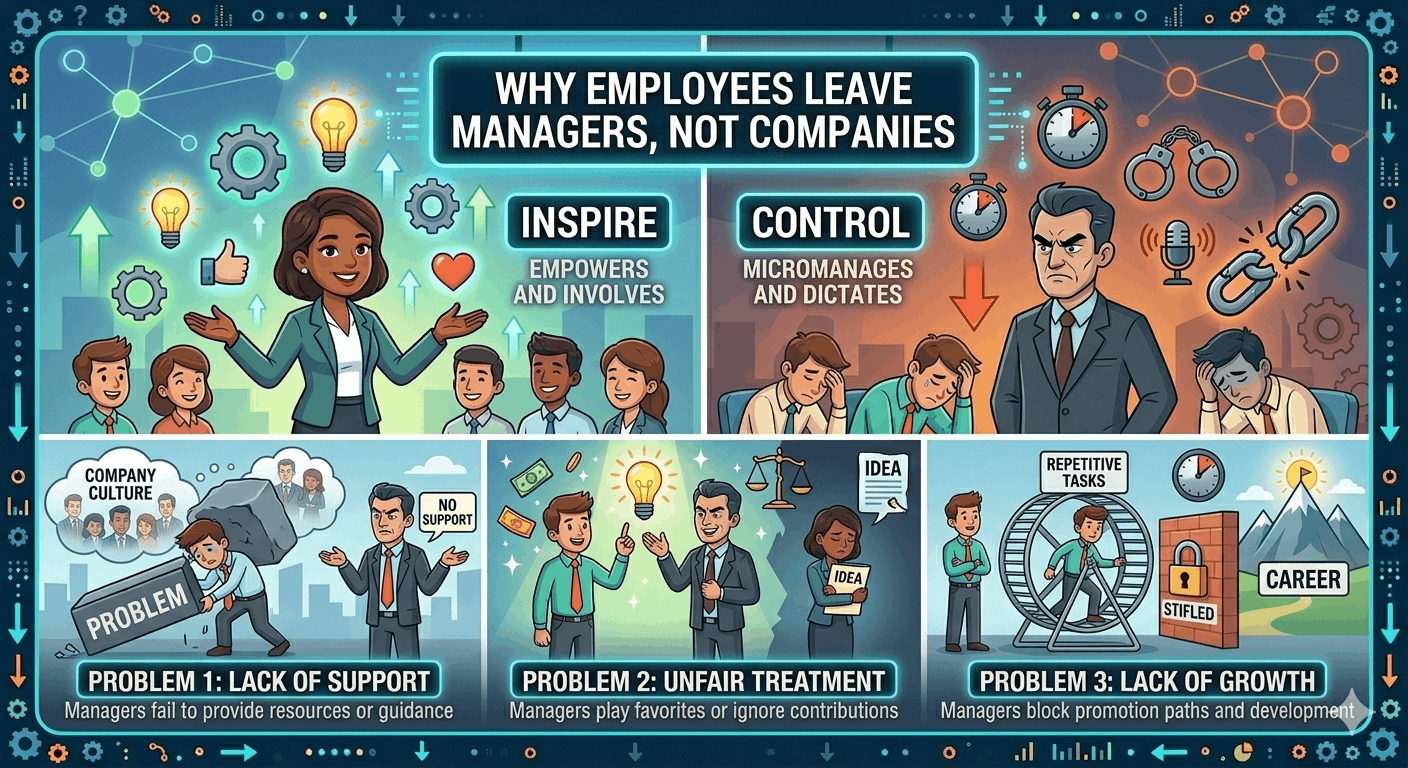
Why Employees Leave Managers, Not Companies
It is a common belief that employees leave jobs in search of better opportunities, higher salaries, or improved benefits. While these factors do play a role, the deeper truth is that most employees leave because of their managers. Leadership behavior significantly influences employee satisfaction, engagement, and long-term commitment.
When managers fail to provide support, respect, and clear direction, employees begin to disengage. Over time, this disengagement leads to frustration and ultimately resignation. Understanding why this happens is essential for building stronger, more resilient teams.
The Real Reason Behind Employee Turnover
Organizations often invest heavily in perks, benefits, and workplace amenities. However, these efforts can fall short if leadership quality is lacking. Employees value how they are treated on a daily basis more than occasional rewards.
The Emotional Impact of Poor Management
Managers have a direct impact on employees' emotional well-being. A negative leadership style can create stress, anxiety, and dissatisfaction.
- Lack of appreciation reduces motivation
- Poor communication creates confusion
- Unfair treatment damages trust
- Micromanagement lowers confidence
The Disconnect Between Leadership and Employees
When managers fail to connect with their teams, employees feel isolated. This disconnect weakens collaboration and reduces overall productivity.
Top Reasons Employees Leave Managers
There are several recurring patterns that explain why employees choose to leave their managers rather than the company itself. Identifying these issues can help leaders make meaningful improvements.
Lack of Recognition and Appreciation
Employees want to feel valued for their contributions. When managers overlook achievements, it creates a sense of invisibility.
People may join companies for opportunities, but they leave when they feel unappreciated.
Poor Communication Skills
Communication is the foundation of effective leadership. Managers who fail to communicate clearly create uncertainty and frustration.
- Unclear expectations lead to mistakes
- Delayed feedback slows growth
- Inconsistent messaging causes confusion
- Lack of transparency reduces trust
- Silence creates disengagement
Micromanagement and Lack of Trust
Micromanaging employees sends a message that they are not trusted. This behavior limits creativity and reduces job satisfaction.
Limited Growth Opportunities
Employees seek continuous development. Managers who fail to support growth risk losing ambitious and talented individuals.
The Role of Leadership Style in Employee Retention
Different leadership styles can either strengthen or weaken employee relationships. The most effective leaders adopt a balanced approach that combines direction with empathy.
Authoritative vs. Supportive Leadership
Authoritative leadership focuses on control, while supportive leadership emphasizes guidance and collaboration. Employees thrive under leaders who empower rather than dictate.
The Importance of Emotional Intelligence
Emotional intelligence enables managers to understand and respond to employee needs effectively. Leaders who demonstrate empathy build stronger connections and foster loyalty.
- Improves conflict resolution
- Enhances communication
- Builds trust and respect
- Encourages open dialogue
How Managers Can Improve Employee Retention
Improving retention starts with self-awareness and a commitment to better leadership practices. Managers must actively work to create a positive work environment.
Practical Strategies for Better Management
- Recognize and celebrate achievements
- Communicate clearly and consistently
- Encourage feedback and listen actively
- Provide opportunities for growth
- Build trust through transparency
Creating a Positive Work Environment
A supportive workplace culture encourages employees to stay and grow within the organization. Managers play a key role in shaping this environment.
Key Elements of a Healthy Workplace
- Open and honest communication
- Fair and consistent policies
- Opportunities for collaboration
- Recognition and appreciation
The Long-Term Benefits of Strong Leadership
Organizations that prioritize effective management see significant long-term benefits. Employees are more engaged, productive, and loyal.
Higher Employee Engagement
Engaged employees are more committed to their work and contribute positively to the organization's success.
Reduced Turnover Costs
Replacing employees is expensive. Strong leadership reduces turnover, saving both time and resources.
Improved Team Performance
Teams led by supportive managers perform better, collaborate more effectively, and achieve their goals more consistently.
Conclusion: Leadership Is the Key to Retention
The idea that employees leave managers, not companies, highlights the critical role of leadership in workplace satisfaction. Managers who fail to connect, communicate, and support their teams risk losing valuable talent.
Great leadership is not about authority—it is about building relationships, fostering trust, and creating an environment where employees feel valued.
By focusing on respect, communication, and growth, managers can transform their teams and significantly improve retention. In the end, it is not the company that employees leave—it is the experience created by their leaders.