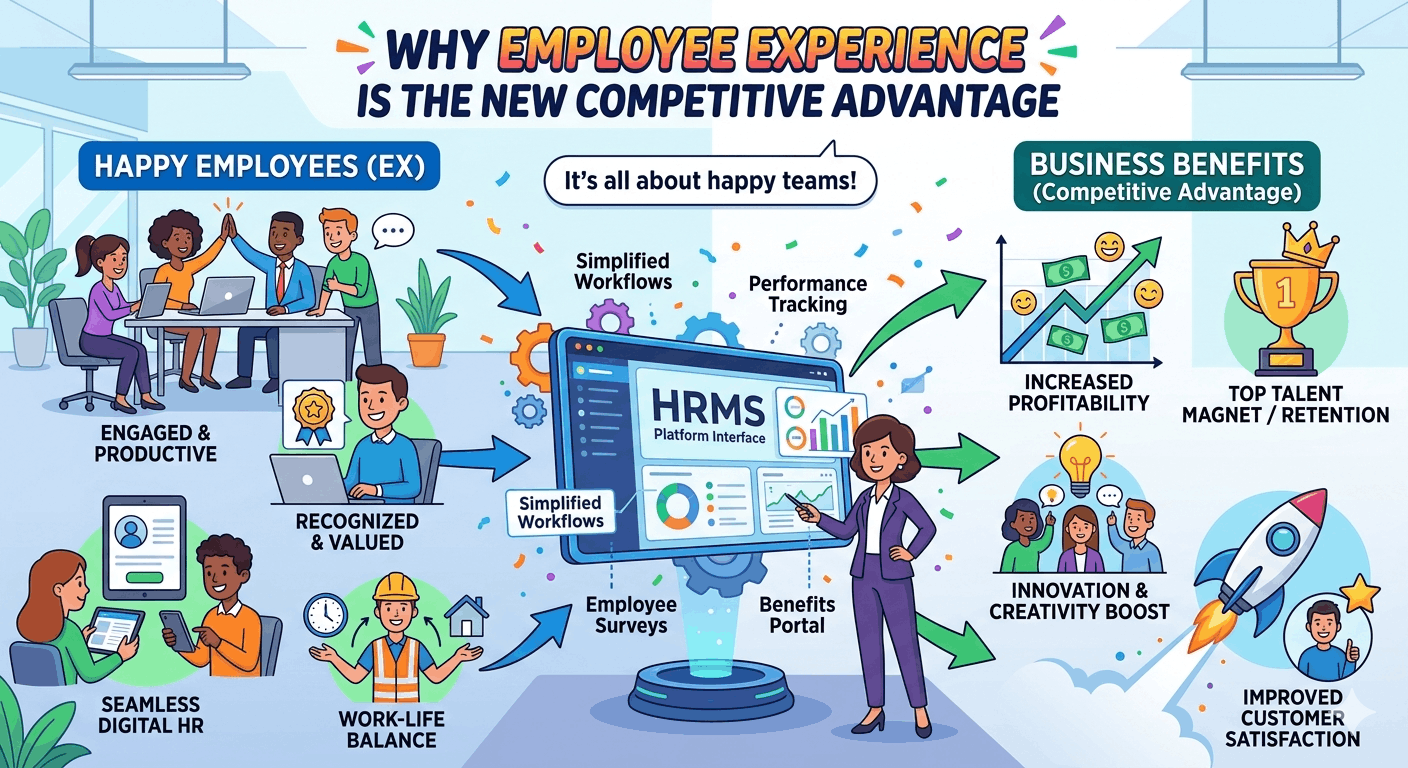
The Shift Toward Employee Experience
In today's fast-evolving workplace, employee experience has emerged as a defining factor for organizational success. Companies are no longer competing solely on products or services; they are competing on how they treat their people.
Employee experience encompasses every interaction an employee has with an organization, from recruitment to exit. A positive experience leads to higher engagement, productivity, and retention, making it a true competitive advantage.
What Is Employee Experience?
Employee experience refers to the overall journey employees go through within an organization, including their perceptions, emotions, and interactions.
- Work environment and culture
- Leadership and management style
- Technology and tools provided
- Growth and development opportunities
- Recognition and rewards
Why Employee Experience Matters More Than Ever
The modern workforce expects more than just a paycheck. Employees seek purpose, flexibility, and a supportive environment that enables them to thrive.
Impact on Employee Engagement
A positive experience drives higher engagement levels, leading to increased productivity and innovation.
Improved Retention Rates
Organizations that invest in employee experience see lower turnover, reducing recruitment and training costs.
Stronger Employer Branding
Companies known for great employee experiences attract top talent and build a strong reputation in the market.
Key Insight: Companies that prioritize employee experience outperform competitors by creating a motivated, loyal, and high-performing workforce.
The Role of HRMS in Enhancing Employee Experience
A modern HRMS (Human Resource Management System) plays a crucial role in shaping and improving employee experience across the organization.
Streamlined HR Processes
HRMS platforms automate tasks such as payroll, attendance, and leave management, reducing administrative burden and improving efficiency.
Self-Service Portals
Employees can access information, submit requests, and track updates independently, enhancing convenience and transparency.
Data-Driven Insights
Analytics tools help HR teams understand employee needs and make informed decisions to improve engagement.
Benefits of HRMS for Employee Experience
- Improved communication and transparency
- Faster resolution of employee queries
- Enhanced engagement and satisfaction
- Better performance management
- Increased operational efficiency
Key Elements of a Great Employee Experience
Creating a positive employee experience requires a holistic approach that addresses multiple aspects of the workplace.
Positive Work Culture
A supportive and inclusive culture fosters collaboration, trust, and innovation.
Effective Leadership
Leaders play a critical role in shaping employee perceptions and driving engagement.
Continuous Learning Opportunities
Providing training and development ensures employees feel valued and motivated to grow.
Work-Life Balance
Flexible work arrangements help employees maintain a healthy balance between personal and professional life.
Steps to Improve Employee Experience
- Invest in modern HR technology
- Encourage open communication
- Recognize and reward achievements
- Provide growth opportunities
- Prioritize employee well-being
Challenges in Delivering Great Employee Experience
While the benefits are clear, organizations often face challenges in implementing effective employee experience strategies.
Resistance to Change
Adopting new technologies and processes can be difficult for traditional organizations.
Lack of Personalization
One-size-fits-all approaches fail to meet the diverse needs of employees.
Limited Resources
Smaller organizations may struggle to invest in advanced HRMS systems and initiatives.
The Future of Employee Experience
The future workplace will be defined by personalized, technology-driven, and employee-centric experiences. Organizations that adapt to these trends will gain a significant advantage.
Emerging Trends
Several trends are shaping the future of employee experience and workplace management.
Key Trends to Watch
- AI-driven HR solutions
- Remote and hybrid work models
- Focus on mental health and well-being
- Personalized employee journeys
- Advanced workforce analytics
Conclusion
Employee experience is the new competitive advantage in today's business landscape. Organizations that prioritize their people are better positioned to succeed in an increasingly competitive market.
By leveraging HRMS solutions and adopting a people-first approach, companies can create a workplace that fosters engagement, innovation, and long-term growth.
Ultimately, investing in employee experience is not just a strategy—it is a necessity for sustainable success.