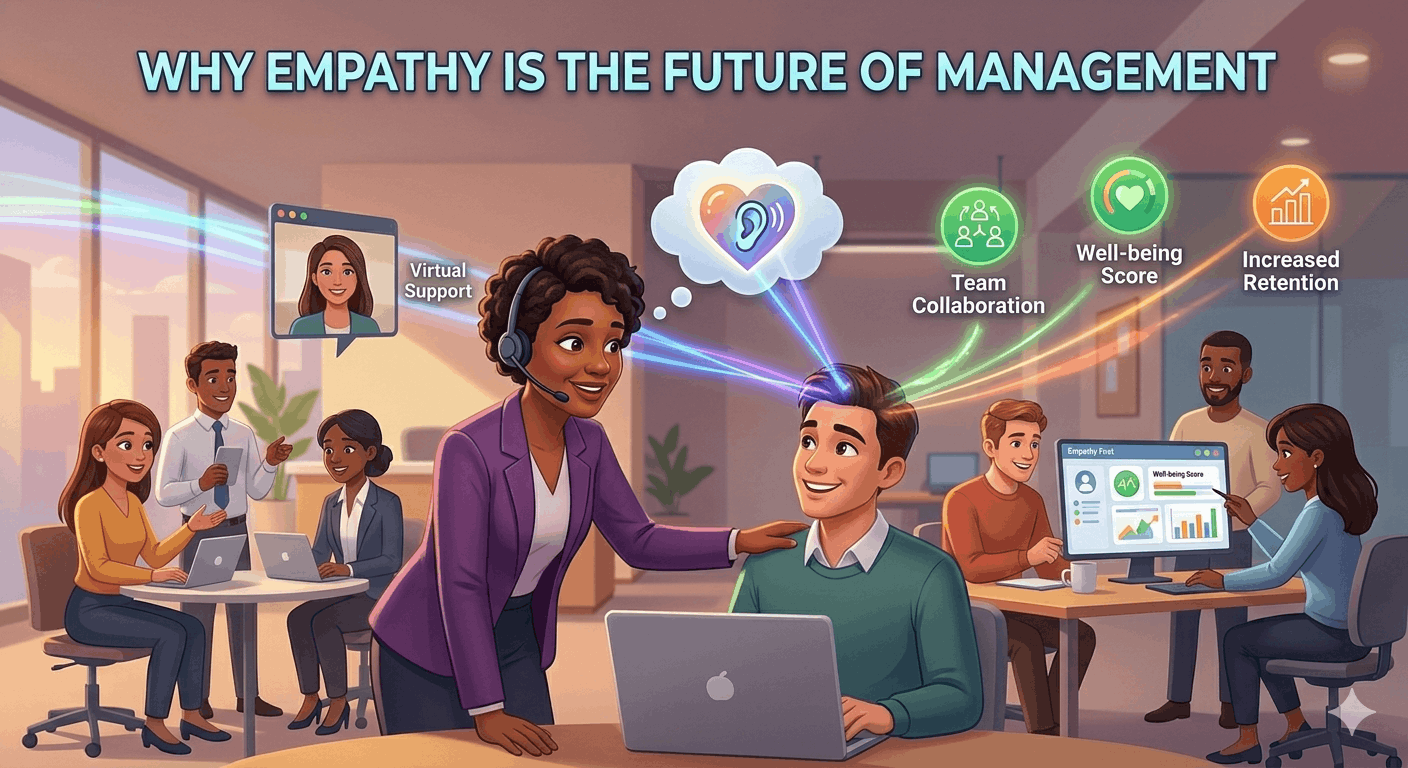
Why Empathy Is the Future of Management
In the rapidly evolving workplace, technical skills and authority alone are no longer enough to lead effectively. Organizations are realizing that empathy in management is a critical driver of employee engagement, performance, and long-term success. Leaders who understand and connect with their teams on a human level are shaping the future of work.
The Rise of Empathetic Leadership
Empathy in leadership refers to the ability to understand, share, and respond to the feelings and perspectives of employees. Modern organizations are shifting from command-based leadership to people-centered approaches.
What Empathy Means in Management
Empathy is not about being overly emotional; it is about understanding employee experiences and responding appropriately to their needs.
Why It Is Becoming Essential
With remote work, digital communication, and diverse teams, leaders must connect on a deeper level to maintain trust and collaboration.
Key Benefits of Empathy in the Workplace
Empathetic leadership has a direct impact on organizational performance and employee satisfaction.
- Improved employee engagement and motivation
- Stronger trust between employees and management
- Reduced workplace stress and burnout
- Higher retention and lower turnover rates
- Better collaboration and teamwork
Why Traditional Management Styles Are Failing
Rigid, top-down management styles are becoming less effective in today's dynamic work environments. Employees now expect understanding, flexibility, and emotional support.
Lack of Emotional Connection
Traditional leadership often ignores the emotional needs of employees, leading to disengagement.
Increased Workplace Stress
Strict management styles can increase pressure, resulting in burnout and reduced productivity.
Low Employee Retention
Employees are more likely to leave organizations where they feel undervalued or unheard.
The Role of Empathy in Employee Performance
Empathy is not just a soft skill; it directly influences how employees perform and contribute to organizational goals.
Building Psychological Safety
When employees feel safe to express themselves, they become more creative and productive.
Enhancing Motivation
Empathetic managers understand individual needs and tailor support, increasing motivation.
Encouraging Innovation
Employees are more likely to share ideas when they feel understood and valued.
Key Insight: Empathy transforms management from controlling people to empowering them to achieve their best potential.
How HRMS Supports Empathetic Management
Modern HRMS platforms help managers understand employee needs and behaviors through data-driven insights and communication tools.
Employee Feedback Systems
Regular feedback mechanisms allow employees to express concerns and share experiences openly.
Sentiment and Engagement Analysis
HRMS tools analyze employee engagement levels to identify stress or dissatisfaction early.
Performance Transparency
Clear performance tracking ensures fairness and builds trust between employees and managers.
How Managers Can Develop Empathy
Empathy is a skill that can be developed with conscious effort and practice. Managers must adopt a people-first mindset.
- Listen actively without interrupting or judging
- Understand individual employee challenges
- Provide constructive and supportive feedback
- Encourage open and honest communication
- Show genuine appreciation for contributions
Challenges in Practicing Empathy
While empathy is powerful, it comes with challenges, especially in high-pressure environments.
Balancing Empathy and Performance
Managers must ensure empathy does not compromise productivity or accountability.
Time Constraints
Busy schedules can make it difficult for leaders to engage deeply with employees.
Bias and Misinterpretation
Without proper awareness, empathy can sometimes lead to biased decisions.
Empathy and Organizational Culture
A culture of empathy creates a positive and inclusive work environment where employees thrive.
Building Trust
Trust is the foundation of any strong workplace relationship and is strengthened through empathy.
Encouraging Inclusion
Empathetic workplaces ensure that every employee feels valued and included.
- Open communication channels
- Employee support programs
- Inclusive decision-making
- Recognition and appreciation systems
- Flexible work arrangements
The Future of Management Is Human-Centered
The future of leadership is moving toward a more human-centered approach. Empathy will be a core leadership competency in modern organizations.
AI and Human Balance
While AI and automation handle technical tasks, human empathy will remain irreplaceable in leadership.
Remote Work Culture
Empathy becomes even more important in remote environments where physical interaction is limited.
Employee-Centric Organizations
Companies are increasingly prioritizing employee experience as a key business strategy.
Conclusion
Empathy is no longer optional in leadership—it is essential. As workplaces become more complex and diverse, managers must adopt a more human-centered approach to leadership.
By integrating empathy, communication, and understanding, organizations can build stronger teams, improve performance, and create a more positive workplace culture.
The future of management is not about controlling people—it is about understanding them and helping them succeed.