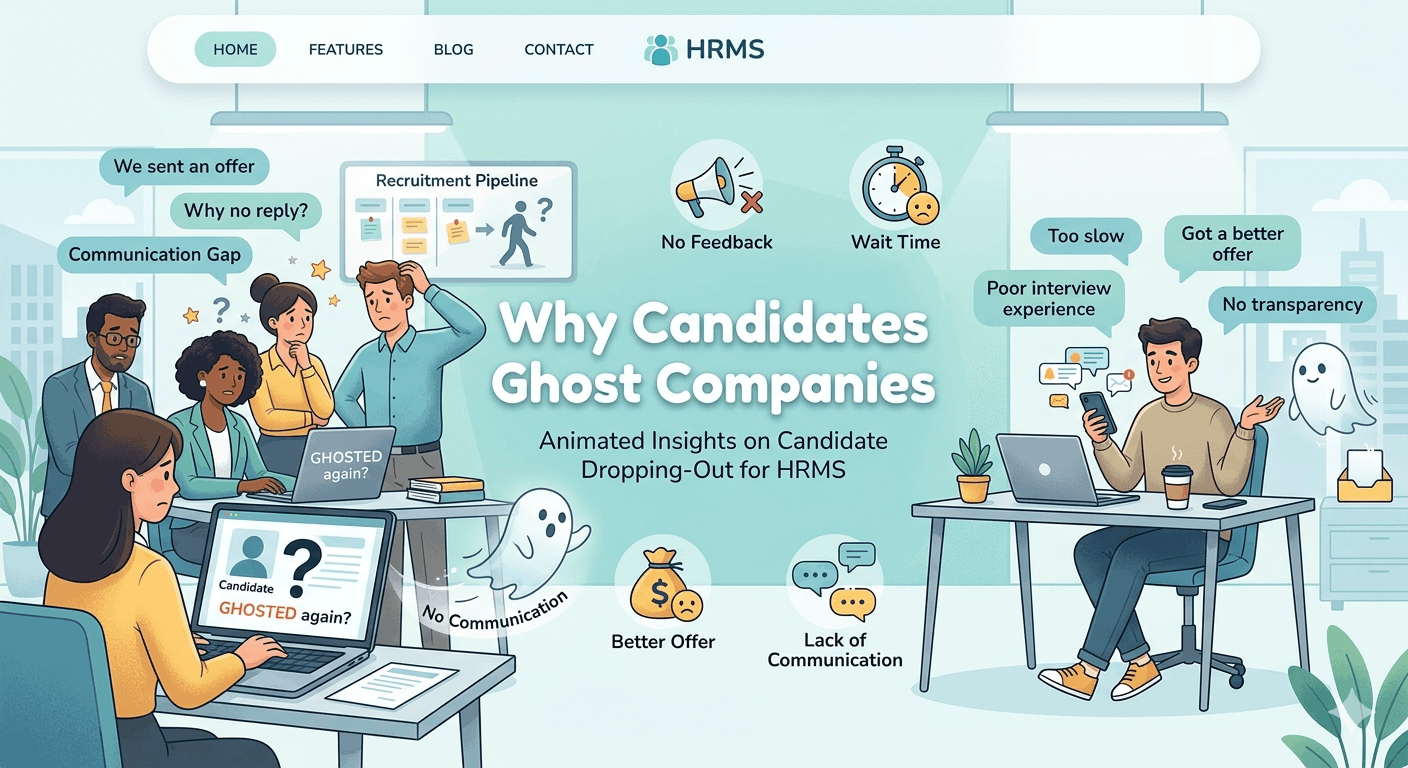
Why Candidates Ghost Companies
In today's competitive job market, candidate ghosting has become a growing concern for recruiters and HR teams. Just as employers have historically ignored applicants, candidates are now reversing the trend—disappearing without notice during interviews, after receiving offers, or even on the first day of work.
This shift signals a deeper issue in the hiring process. Understanding why candidates ghost companies is essential for improving recruitment strategies and building a strong employer brand.
What Is Candidate Ghosting?
Candidate ghosting refers to situations where job applicants suddenly stop responding to communication without any explanation. This can happen at various stages of the hiring process.
Common Ghosting Scenarios
- Not showing up for scheduled interviews
- Ignoring follow-up emails or calls
- Accepting an offer but never joining
- Dropping out mid-process without notice
- Disappearing after initial discussions
This behavior disrupts hiring timelines and increases recruitment costs, making it a serious concern for businesses.
Top Reasons Why Candidates Ghost Companies
Candidate ghosting does not happen randomly. It is often the result of poor experiences, lack of communication, or better opportunities elsewhere.
Poor Communication from Employers
One of the biggest reasons candidates ghost is lack of timely communication. When companies delay responses or fail to provide updates, candidates lose interest.
Lengthy Hiring Processes
Complex and time-consuming recruitment processes can frustrate candidates. In a fast-moving job market, top talent often moves on quickly.
Better Job Offers
Candidates may receive more attractive offers with better compensation, flexibility, or growth opportunities, leading them to disengage silently.
Lack of Transparency
Unclear job roles, vague expectations, or hidden details about salary and responsibilities can erode trust.
Negative Interview Experience
Unprofessional behavior, disorganized interviews, or lack of respect can push candidates away without confrontation.
Key Insight: Candidates ghost companies for the same reason companies used to ghost candidates—lack of respect, communication, and transparency.
The Impact of Candidate Ghosting on Businesses
Ghosting is not just an inconvenience; it has real consequences for organizations. It affects productivity, hiring timelines, and team morale.
Major Business Impacts
- Delayed hiring and project timelines
- Increased recruitment costs
- Reduced team efficiency
- Higher workload on existing employees
- Damage to employer branding
Companies must address the root causes to prevent repeated disruptions in their hiring pipeline.
How HRMS Can Help Reduce Candidate Ghosting
Modern HRMS systems play a crucial role in minimizing ghosting by improving communication, transparency, and candidate experience.
Key HRMS Features That Help
- Automated communication and follow-ups
- Centralized candidate tracking
- Real-time status updates for applicants
- Streamlined interview scheduling
- Data-driven recruitment insights
By using HRMS tools, companies can create a smoother and more engaging hiring process that keeps candidates interested.
Improving Candidate Experience
Enhancing the candidate experience is the most effective way to reduce ghosting. Candidates are more likely to stay engaged when they feel valued and respected.
Best Practices to Engage Candidates
- Communicate clearly and consistently
- Keep the hiring process short and efficient
- Provide timely feedback
- Be transparent about roles and expectations
- Respect candidates' time and effort
Building a positive experience not only reduces ghosting but also strengthens your reputation as an employer of choice.
Strategies to Prevent Candidate Ghosting
Preventing ghosting requires a proactive approach. Companies must rethink their hiring strategies and focus on building trust with candidates.
Effective Prevention Strategies
- Set clear expectations from the beginning
- Maintain regular communication
- Offer competitive compensation and benefits
- Create a respectful and engaging interview process
- Leverage HRMS for automation and tracking
These strategies help create a hiring environment where candidates feel confident and committed.
Conclusion: Building Trust in Recruitment
Candidate ghosting is a reflection of changing workplace dynamics. It highlights the need for companies to evolve their hiring practices and prioritize communication, transparency, and respect.
Organizations that invest in better processes and leverage HRMS technology can significantly reduce ghosting and attract top talent.
Recruitment is no longer just about selecting candidates—it is about creating meaningful connections. Companies that understand this will lead the future of hiring.