The Power of Appreciation in the Workplace
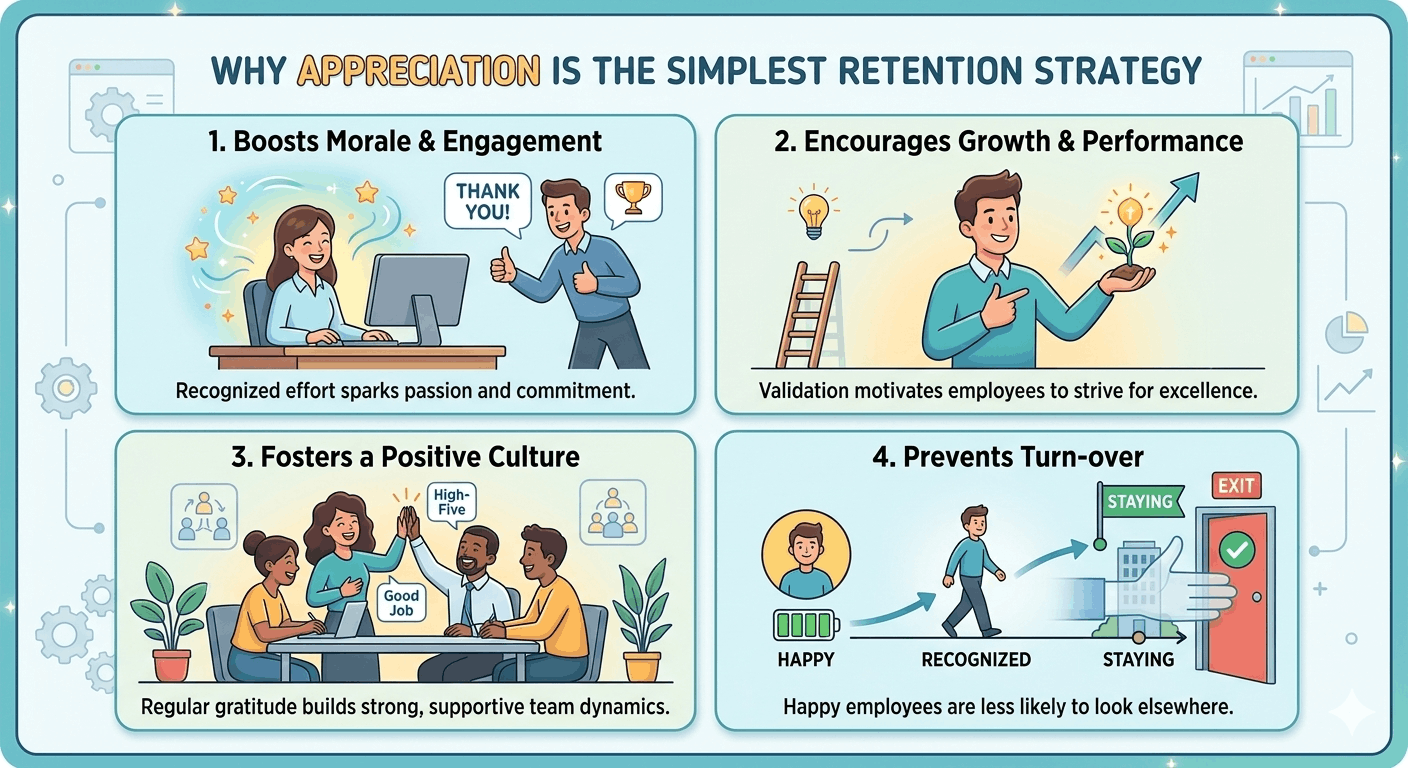
In today's competitive job market, organizations are constantly searching for ways to retain their best talent. While many focus on complex strategies, the truth is that appreciation is one of the simplest and most powerful retention tools.
Employees want to feel valued for their contributions. A simple acknowledgment or recognition can significantly impact morale, engagement, and loyalty. When appreciation becomes part of workplace culture, it creates an environment where employees thrive.
Why Appreciation Matters
Appreciation goes beyond saying thank you—it builds trust, motivation, and emotional connection with the organization.
- Boosts employee morale
- Increases engagement and productivity
- Strengthens workplace relationships
- Reduces turnover rates
- Enhances overall job satisfaction
The Link Between Appreciation and Retention
Employee retention is one of the biggest challenges organizations face today. Appreciation plays a critical role in keeping employees committed and motivated.
Emotional Connection with the Organization
When employees feel appreciated, they develop a strong sense of belonging and loyalty.
Increased Job Satisfaction
Recognition creates a positive work environment where employees feel happy and fulfilled.
Reduced Burnout
Regular appreciation helps employees feel supported, reducing stress and burnout.
Key Insight: Employees who feel appreciated are far more likely to stay, perform better, and contribute positively to organizational success.
Types of Employee Appreciation
Appreciation can take many forms, and organizations should adopt a variety of methods to recognize their employees effectively.
Verbal Recognition
Simple words of appreciation during meetings or one-on-one interactions can have a lasting impact.
Rewards and Incentives
Bonuses, gift cards, or other incentives can reinforce positive behavior and performance.
Public Acknowledgment
Recognizing achievements in front of peers boosts confidence and motivation.
Personalized Appreciation
Tailoring recognition to individual preferences makes it more meaningful and effective.
Popular Appreciation Methods
- Employee of the month programs
- Performance-based rewards
- Team recognition events
- Personal thank-you notes
- Career growth opportunities
The Role of HRMS in Driving Appreciation
A modern HRMS (Human Resource Management System) can help organizations implement structured and consistent appreciation strategies.
Automated Recognition Systems
HRMS platforms enable automated recognition programs, ensuring no achievement goes unnoticed.
Performance Tracking
Data-driven insights help identify top performers and reward them appropriately.
Employee Engagement Tools
Built-in communication and feedback systems enhance interaction and appreciation.
Benefits of HRMS for Appreciation
- Consistent and fair recognition
- Improved employee engagement
- Enhanced transparency
- Better performance management
- Streamlined HR processes
How to Build a Culture of Appreciation
Creating a culture of appreciation requires commitment from leadership and integration into daily practices.
Lead by Example
Leaders should actively recognize and appreciate employees, setting the tone for the organization.
Encourage Peer Recognition
Allowing employees to appreciate each other fosters a supportive and collaborative environment.
Make Appreciation Timely
Recognition should be immediate and relevant to maximize its impact.
Steps to Implement Appreciation Strategies
- Establish clear recognition programs
- Train managers on appreciation techniques
- Use HRMS tools for tracking and rewards
- Encourage continuous feedback
- Celebrate both small and big achievements
Common Mistakes to Avoid
While appreciation is simple, it must be implemented correctly to be effective.
Inconsistent Recognition
Irregular appreciation can make employees feel overlooked.
Generic Praise
Vague or impersonal recognition may not resonate with employees.
Favoritism
Unequal recognition can lead to dissatisfaction and conflict.
Ignoring Employee Preferences
Different employees value different forms of appreciation, making personalization essential.
Common Pitfalls
- Only recognizing top performers
- Delaying appreciation
- Lack of sincerity
- Overlooking team efforts
- Not linking recognition to goals
The Long-Term Impact of Appreciation
Organizations that prioritize appreciation experience significant long-term benefits that go beyond retention.
Stronger Workplace Culture
A culture of appreciation fosters trust, collaboration, and positivity.
Higher Employee Engagement
Engaged employees are more productive and committed to organizational success.
Improved Business Performance
Happy and motivated employees contribute to better overall results and growth.
Conclusion
Appreciation is the simplest retention strategy, yet it is often underestimated. By recognizing and valuing employees, organizations can create a positive and engaging work environment.
With the support of HRMS solutions and a commitment to people-first practices, companies can build a culture where employees feel motivated, respected, and loyal.
Ultimately, appreciation is not just a gesture—it is a powerful strategy that drives long-term success and organizational growth.