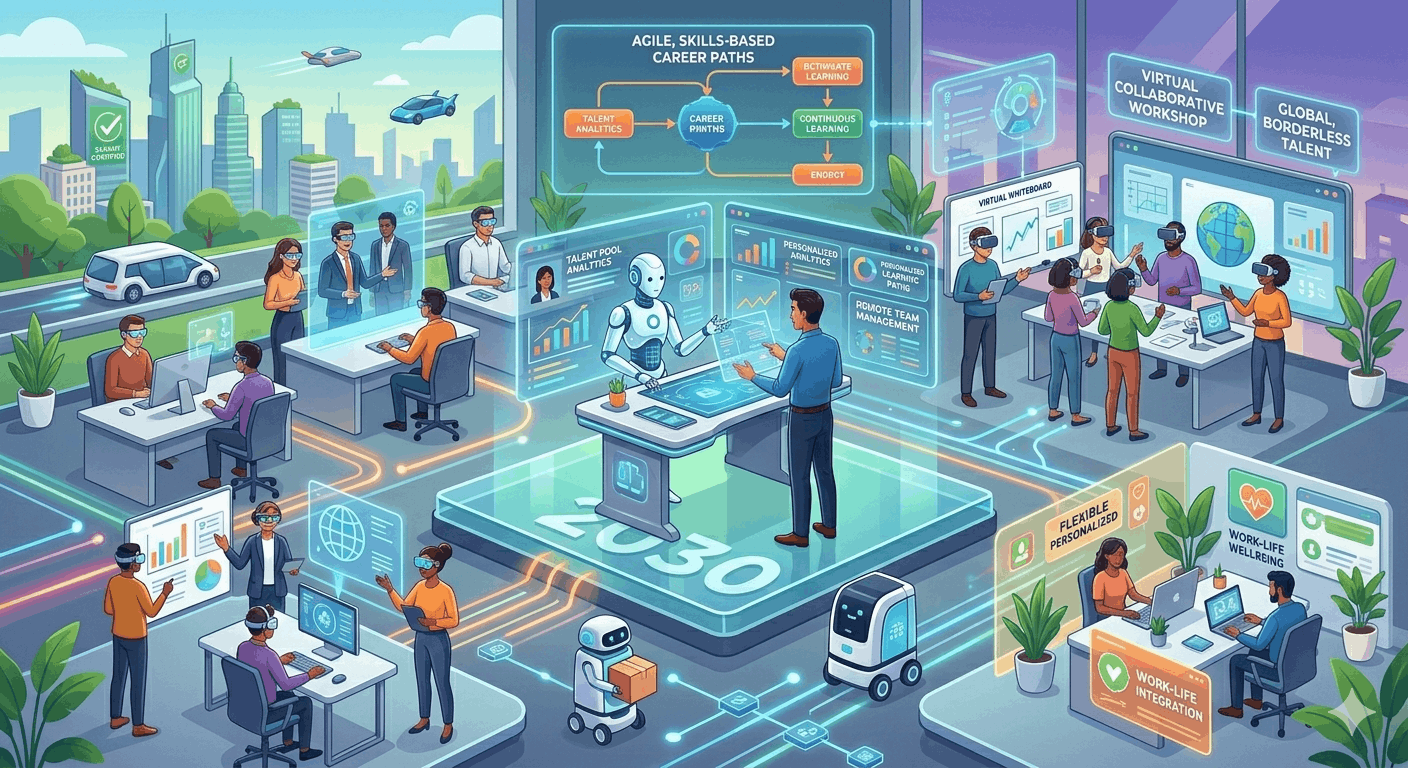
What Work Will Look Like in 2030
The workplace is undergoing a massive transformation driven by technology, globalization, and shifting human priorities. As we approach 2030, the concept of work is no longer confined to offices, fixed schedules, or traditional roles. Instead, it is evolving into a dynamic ecosystem where flexibility, innovation, and human-centric values take center stage.
The Rise of Intelligent Automation
Automation and artificial intelligence are redefining how tasks are performed. Routine and repetitive work is increasingly being handled by machines, allowing humans to focus on creative, strategic, and emotional intelligence-driven roles.
How Automation Will Impact Jobs
- Reduction in repetitive and manual tasks
- Increased demand for tech-savvy professionals
- Growth in AI and machine learning roles
- Shift toward problem-solving and critical thinking skills
- Creation of entirely new job categories
While some fear job displacement, history shows that technological advancements often create more opportunities than they eliminate. The key lies in continuous learning and adaptability.
The Evolution of Workplace Models
By 2030, the traditional 9-to-5 office model will become less dominant. Hybrid and remote work will be the norm, offering employees greater control over their work environments.
Key Workplace Trends
- Hybrid Work Models: Combining remote and in-office work.
- Digital Collaboration: Seamless communication across global teams.
- Flexible Schedules: Work based on outcomes, not hours.
- Decentralized Teams: Talent distributed across locations.
- Smart Offices: Technology-enabled workspaces.
This evolution will empower employees to design their work-life balance while maintaining productivity and engagement.
The Human Skills Revolution
As machines take over technical tasks, human skills will become more valuable than ever. Emotional intelligence, creativity, and communication will define success in the future workplace.
Top Skills for 2030
- Critical thinking and decision-making
- Emotional intelligence and empathy
- Adaptability and resilience
- Creative problem-solving
- Collaboration and leadership
Employers will prioritize individuals who can navigate complexity, build relationships, and innovate in uncertain environments.
Key Insight: In the future, your ability to think, adapt, and connect will matter more than what you know.
The Gig Economy and Freelance Growth
The gig economy will expand significantly by 2030. More professionals will choose freelancing, consulting, and project-based work over traditional employment.
Why Gig Work Is Growing
- Desire for independence and flexibility
- Access to global opportunities
- Technology platforms enabling remote work
- Changing attitudes toward job security
- Focus on skill-based careers
This shift will redefine job stability and career progression, making personal branding and networking essential.
The Role of Technology in Daily Work
Technology will be deeply integrated into everyday tasks. From virtual reality meetings to AI-driven assistants, work will become more efficient and immersive.
Technologies Shaping Work in 2030
- Artificial Intelligence and Machine Learning
- Virtual and Augmented Reality
- Blockchain for secure transactions
- Cloud computing and remote infrastructure
- Advanced data analytics
These tools will not replace humans but will enhance their capabilities, enabling faster decision-making and better outcomes.
Employee Well-being and Purpose
By 2030, organizations will focus more on employee well-being, mental health, and purpose-driven work. Employees will seek meaningful careers that align with their values.
What Employees Will Expect
- Work-life balance and flexibility
- Opportunities for growth and learning
- Inclusive and diverse workplaces
- Recognition and respect
- Purpose-driven roles
Companies that prioritize these aspects will attract and retain top talent in an increasingly competitive market.
Preparing for the Future of Work
To thrive in 2030, individuals and organizations must prepare today. This involves embracing change, investing in skills, and staying ahead of trends.
Steps to Stay Future-Ready
- Continuously upgrade your skills
- Adopt a growth mindset
- Leverage technology effectively
- Build a strong professional network
- Focus on personal development
The future of work is not something to fear but an opportunity to innovate, grow, and redefine success.
Work in 2030 will be more flexible, inclusive, and technology-driven. Those who adapt to these changes will not only survive but thrive in the new world of work.
Ultimately, the future belongs to those who are willing to evolve, learn, and embrace the possibilities that lie ahead.