The Importance of Feeling Valued at Work
In today's evolving workplace, making employees feel valued is no longer optional—it is essential for long-term success. When employees feel recognized and appreciated, they are more likely to stay engaged and contribute meaningfully to organizational goals.
A workplace built on respect, recognition, and trust fosters higher morale and productivity. Companies that prioritize employee value create stronger teams and achieve sustainable growth.
Why Employee Value Matters
Employees who feel valued are more motivated and committed to their work. This directly impacts performance and organizational success.
- Increased productivity and efficiency
- Higher employee retention rates
- Stronger workplace relationships
- Improved company culture
- Greater innovation and creativity
Key Factors That Make Employees Feel Valued
Understanding what employees need is the first step toward creating a positive and supportive work environment.
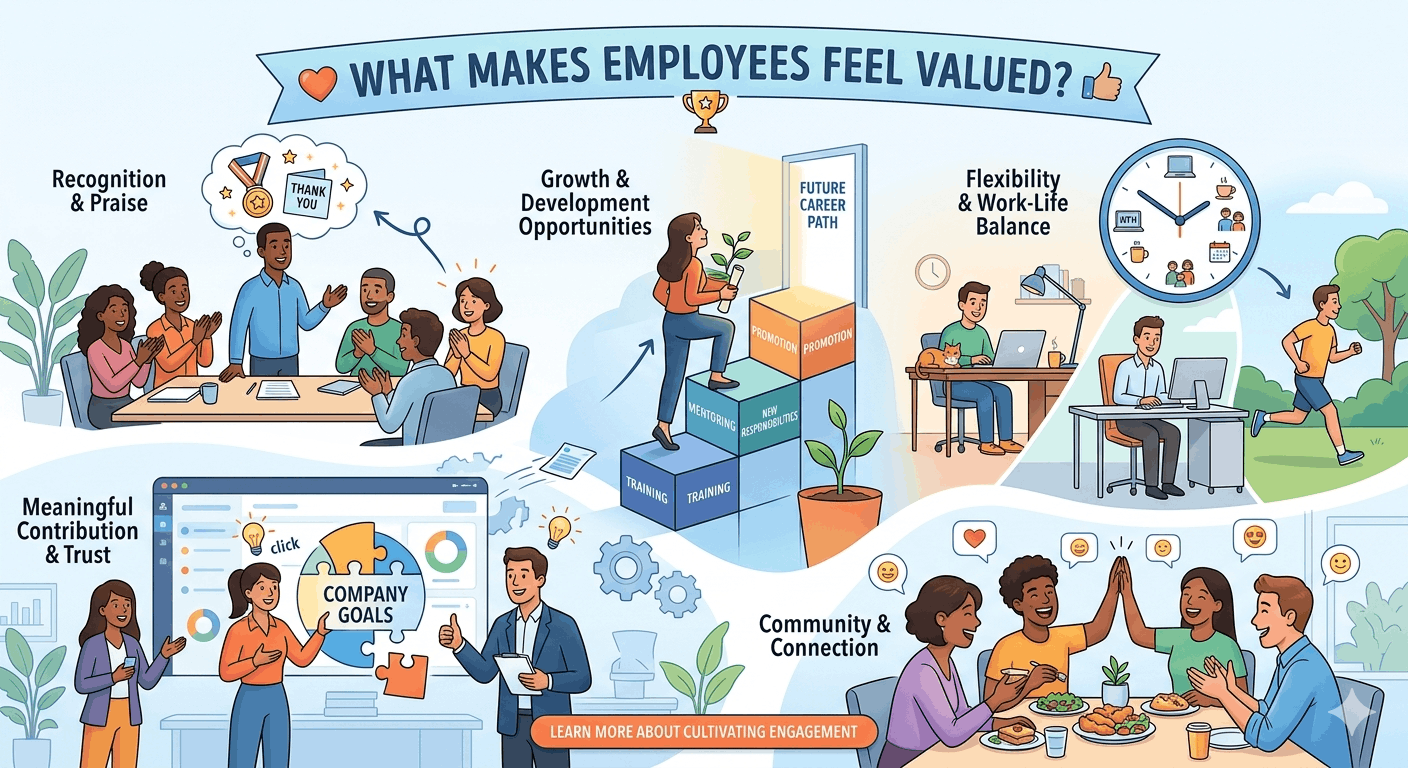
Recognition and Appreciation
Regular acknowledgment of achievements, both big and small, helps employees feel seen and appreciated. Simple gestures can have a powerful impact.
Open Communication
Transparent communication builds trust and ensures employees feel heard. Encouraging feedback creates a sense of belonging.
Growth and Development Opportunities
Employees value organizations that invest in their future. Providing training and career advancement opportunities boosts engagement.
Work-Life Balance
Flexible work arrangements and respect for personal time contribute to overall satisfaction and well-being.
Key Insight: Employees don't just work for salaries—they stay for respect, growth, and meaningful recognition.
The Role of HRMS in Enhancing Employee Value
A modern HRMS (Human Resource Management System) helps organizations implement strategies that make employees feel valued and supported.
Automated Recognition Programs
HRMS platforms can facilitate reward systems, ensuring employees are recognized consistently and fairly.
Transparent Performance Management
Clear performance tracking and feedback systems help employees understand their contributions and growth paths.
Employee Self-Service Portals
Providing easy access to information and services empowers employees and enhances their experience.
Benefits of HRMS in Employee Engagement
- Improved transparency and trust
- Efficient communication channels
- Better performance tracking
- Enhanced employee satisfaction
- Streamlined HR operations
Building a Culture of Appreciation
Creating a culture where employees feel valued requires consistent effort and commitment from leadership.
Encouraging Team Collaboration
Fostering teamwork and collaboration helps employees feel connected and appreciated.
Providing Constructive Feedback
Regular, meaningful feedback supports growth and demonstrates that the organization cares about employee development.
Recognizing Individual Contributions
Personalized recognition ensures employees feel uniquely valued for their efforts.
Steps to Build a Valuing Workplace
- Implement regular recognition programs
- Promote open and honest communication
- Invest in employee development
- Encourage work-life balance
- Create inclusive and supportive policies
Common Mistakes That Make Employees Feel Undervalued
Even well-meaning organizations can unintentionally create environments where employees feel overlooked.
Lack of Recognition
Failing to acknowledge achievements can lead to disengagement and decreased motivation.
Poor Communication
Inconsistent or unclear communication can create confusion and reduce trust.
Ignoring Employee Feedback
When employees feel their opinions are not valued, it can negatively impact morale.
Limited Growth Opportunities
Without opportunities for advancement, employees may feel stuck and unappreciated.
Common Workplace Pitfalls
- Micromanagement
- Lack of transparency
- Unfair treatment
- Ignoring work-life balance
- Inadequate support from leadership
The Long-Term Impact of Valuing Employees
Organizations that prioritize employee value see significant long-term benefits that go beyond immediate productivity.
Stronger Employee Loyalty
Employees who feel valued are more likely to stay with the company and contribute to its growth.
Enhanced Employer Branding
A positive workplace reputation attracts top talent and improves hiring outcomes.
Sustainable Business Growth
Engaged and motivated employees drive innovation and long-term success.
Conclusion
Understanding what makes employees feel valued is essential for building a successful and sustainable organization. It goes beyond compensation and focuses on creating a supportive, respectful, and growth-oriented environment.
By leveraging HRMS solutions and implementing people-first strategies, companies can foster a culture where employees feel appreciated and motivated.
Ultimately, when employees feel valued, they are more engaged, productive, and committed—driving success for both themselves and the organization.