The Importance of First Impressions in Interviews
When it comes to interviews, most employers focus on evaluating candidates. However, what many organizations overlook is that candidates are also evaluating the company from the very first moment.
First impressions are formed within seconds and can significantly influence a candidate's decision to accept or reject an offer. From communication style to workplace culture, every detail matters in shaping perception.
Why First Impressions Matter
A strong first impression sets the tone for the entire interview process and reflects the company's professionalism.
- Builds trust and credibility
- Influences candidate decisions
- Enhances employer branding
- Improves candidate experience
- Increases offer acceptance rates
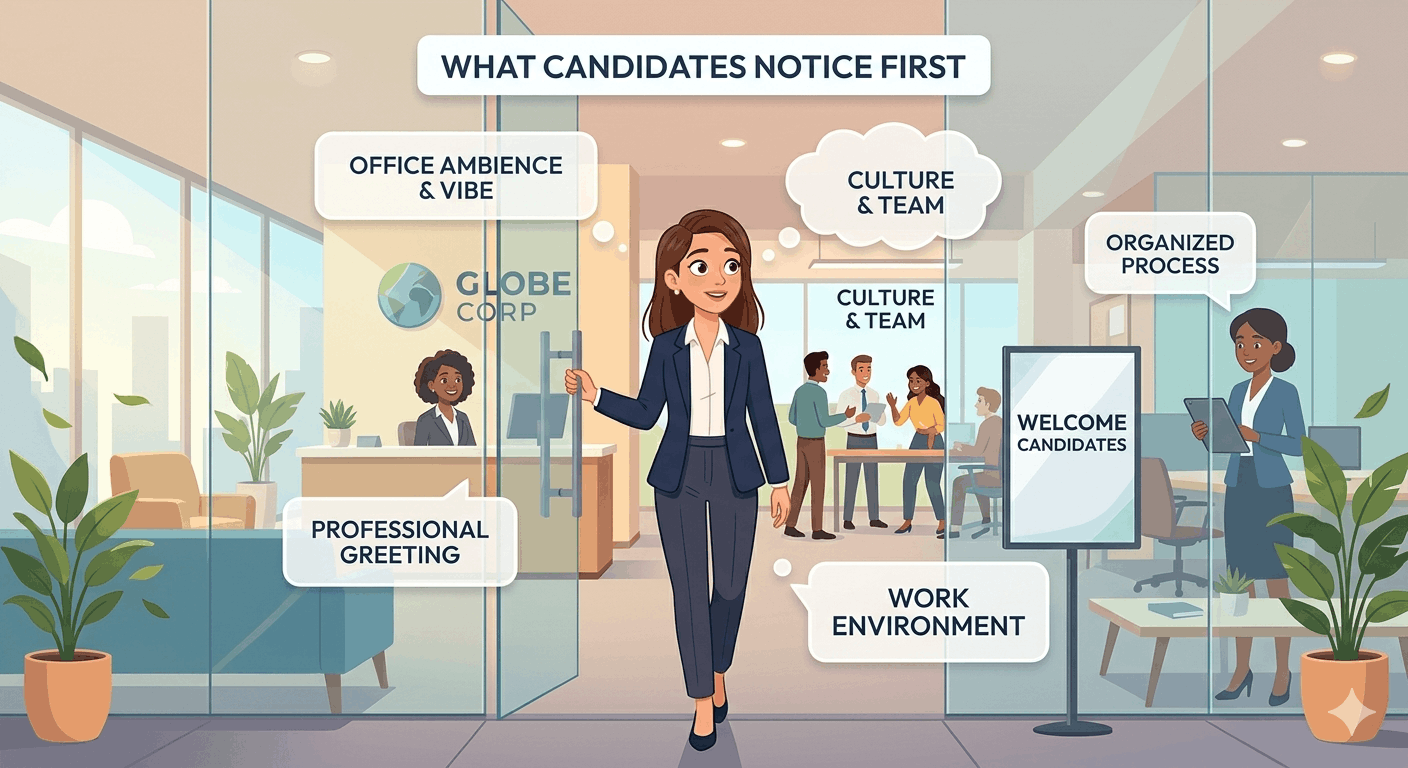
What Candidates Notice Immediately
From the moment candidates interact with your organization, they start forming opinions. Understanding these key factors can help improve your hiring process.
Communication and Responsiveness
Clear, timely communication is often the first thing candidates notice. Delayed responses or vague instructions can create a negative impression.
Professionalism of the Interviewer
The interviewer's behavior, attitude, and preparedness play a crucial role in shaping perceptions. Candidates expect respectful and structured interactions.
Company Culture and Environment
Whether the interview is virtual or in-person, candidates assess the company's culture through interactions and surroundings.
Clarity of Role Expectations
Candidates value transparency regarding job responsibilities, expectations, and growth opportunities.
Key Insight: Candidates often decide whether they want to work for a company within the first few minutes of the interview experience.
The Role of HRMS in Enhancing Interview Experience
A modern HRMS (Human Resource Management System) helps streamline the recruitment process and ensures a consistent and professional experience for candidates.
Automated Communication
HRMS tools enable timely updates, interview scheduling, and reminders, ensuring candidates stay informed throughout the process.
Structured Interview Processes
Standardized workflows ensure that every candidate is evaluated fairly and consistently.
Centralized Candidate Data
All candidate information is easily accessible, allowing interviewers to prepare effectively and engage meaningfully.
Benefits of Using HRMS in Interviews
- Improved candidate experience
- Consistent communication
- Better interviewer preparation
- Enhanced collaboration among hiring teams
- Reduced hiring delays
Common Mistakes That Create Negative Impressions
Even well-intentioned organizations can make mistakes that negatively impact candidate perceptions.
Lack of Preparation
Interviewers who are not familiar with the candidate's profile can appear disorganized and unprofessional.
Poor Time Management
Starting interviews late or rushing through them shows a lack of respect for the candidate's time.
Unclear Communication
Ambiguous job descriptions or inconsistent messaging can confuse candidates.
Overly Formal or Cold Behavior
While professionalism is important, being too rigid can make candidates uncomfortable.
Common Interview Pitfalls
- Interrupting candidates frequently
- Failing to provide feedback
- Asking irrelevant questions
- Not explaining next steps
- Ignoring candidate questions
Best Practices to Create a Positive Interview Experience
Organizations that focus on candidate experience can significantly improve their ability to attract top talent.
Be Prepared and Organized
Review candidate profiles in advance and structure the interview to ensure a smooth flow.
Communicate Clearly
Provide detailed information about the role, process, and expectations to avoid confusion.
Showcase Company Culture
Use the interview as an opportunity to highlight your organization's values and work environment.
Respect Candidate Time
Start and end interviews on time, and keep candidates informed about timelines.
Steps to Improve Interview Experience
- Prepare structured interview questions
- Train interviewers on communication skills
- Use HRMS tools for scheduling and tracking
- Provide timely feedback
- Maintain transparency throughout the process
The Impact on Employer Branding
The interview experience directly affects your employer brand. Candidates who have a positive experience are more likely to recommend your company, even if they are not selected.
Word-of-Mouth Influence
Candidate experiences are often shared on social platforms and review sites, impacting your reputation.
Long-Term Talent Attraction
A strong employer brand attracts high-quality candidates and reduces hiring costs over time.
Conclusion
Understanding what candidates notice first in an interview is essential for building a strong and effective hiring process. First impressions can make or break a candidate's perception of your organization.
By leveraging HRMS solutions, improving communication, and focusing on candidate experience, organizations can create a positive and lasting impact.
Ultimately, successful hiring is not just about selecting the right candidate—it is about ensuring that candidates choose you as their employer.