The Strategic Role of HR in Modern Companies
Human Resources has undergone a massive transformation over the past decade. Once seen as an administrative function, HR is now a strategic driver of business success. Modern organizations rely on HR not just for hiring and payroll, but for shaping culture, driving performance, and enabling growth.
The Evolution of HR: From Administrative to Strategic
Traditionally, HR focused on routine tasks such as recruitment, payroll, and compliance. However, the demands of the modern workplace have pushed HR into a more influential role.
Traditional HR Responsibilities
Earlier, HR departments were primarily responsible for employee records, attendance, and policy enforcement. These tasks were essential but limited in scope.
The Shift to Strategic HR
Today, HR is deeply involved in business strategy. It aligns workforce planning with organizational goals, ensuring that the right talent is in place to drive success.
Key Strategic Functions of Modern HR
Modern HR departments perform a wide range of strategic functions that directly impact business outcomes.
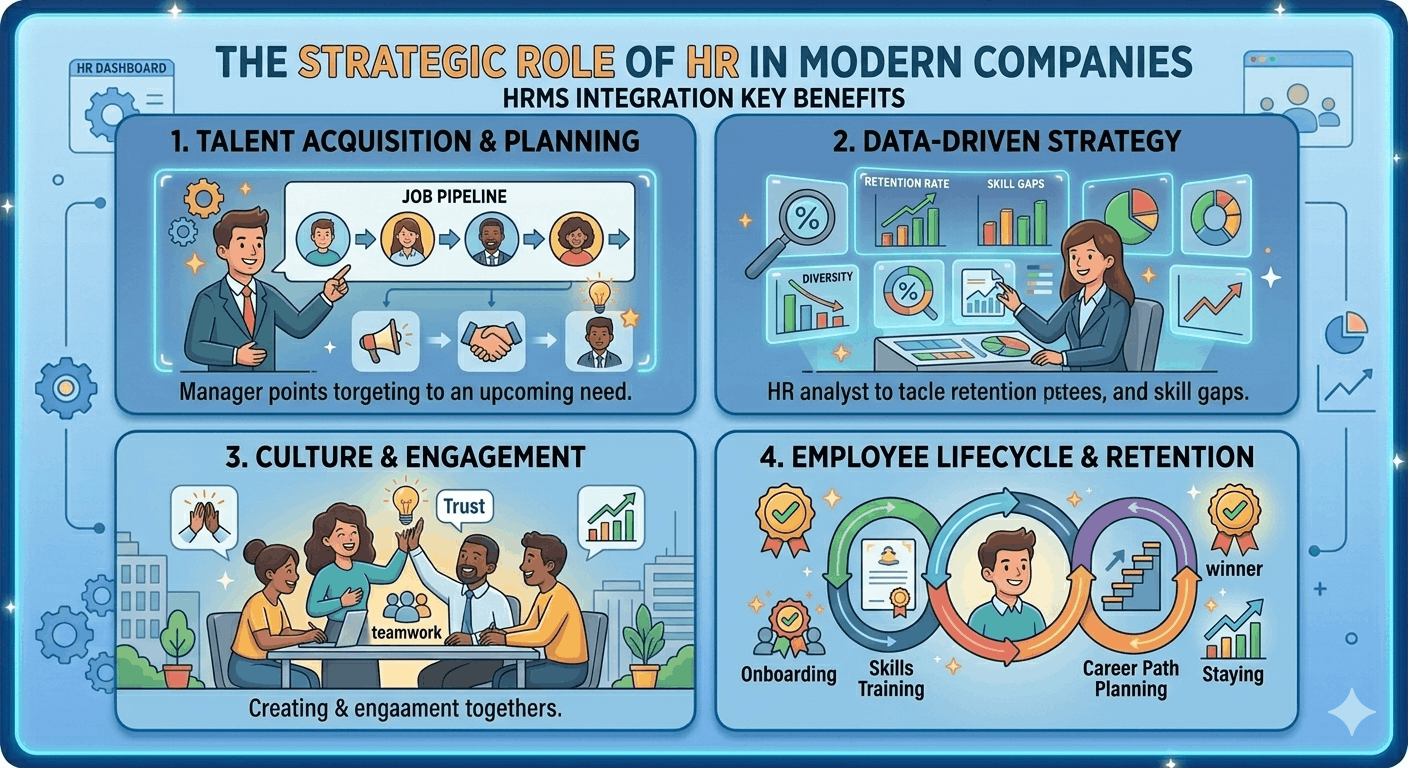
Talent Acquisition and Workforce Planning
HR ensures that organizations attract and retain top talent. Strategic hiring decisions help build a strong and capable workforce.
Employee Engagement and Culture Building
Creating a positive workplace culture is a core responsibility of HR. Engaged employees are more productive and committed.
Performance Management
HR designs performance management systems that align individual goals with organizational objectives.
Learning and Development
Continuous learning is essential in today's fast-paced environment. HR facilitates training programs and skill development initiatives.
The Role of HRMS in Strategic HR
Technology has played a significant role in transforming HR. HRMS platforms enable data-driven decision-making and streamline operations.
Data-Driven Insights
HRMS tools provide valuable insights into employee performance, engagement, and retention trends.
Automation of Routine Tasks
By automating administrative processes, HR professionals can focus on strategic initiatives.
Enhanced Employee Experience
Modern HRMS systems improve communication, transparency, and overall employee satisfaction.
Benefits of Strategic HR for Organizations
When HR operates strategically, organizations experience significant benefits.
- Improved productivity through engaged employees
- Better decision-making using data analytics
- Stronger organizational culture
- Higher employee retention rates
- Enhanced business performance
These advantages highlight the importance of integrating HR into business strategy.
How HR Drives Business Growth
HR plays a crucial role in driving sustainable growth by aligning people strategies with business objectives.
Aligning Talent with Goals
HR ensures that employees understand and contribute to organizational goals, creating a unified direction.
Fostering Innovation
By encouraging creativity and collaboration, HR helps organizations stay competitive in a rapidly changing market.
Managing Change Effectively
HR leads change management initiatives, helping employees adapt to new processes and technologies.
Key Insight: Modern HR is not just about managing people; it is about empowering them to drive business success and innovation.
Strategies for Building a Strong HR Function
Organizations must invest in strengthening their HR capabilities to stay competitive.
- Adopt advanced HRMS tools for efficiency and insights
- Focus on employee engagement and well-being
- Develop leadership and management skills
- Encourage continuous learning and development
- Use data analytics for informed decision-making
These strategies help HR teams deliver maximum value to the organization.
Challenges Faced by Modern HR
Despite its strategic importance, HR faces several challenges in today's dynamic environment.
Managing Remote and Hybrid Workforces
Balancing productivity and engagement in remote settings requires innovative approaches.
Keeping Up with Technology
Rapid technological advancements demand continuous adaptation and learning.
Ensuring Employee Well-Being
HR must address mental health and work-life balance to maintain a healthy workforce.
- Adapting to changing workforce expectations
- Maintaining employee engagement remotely
- Implementing new technologies effectively
- Balancing productivity with well-being
- Managing diverse teams
Future Trends in Strategic HR
The role of HR will continue to evolve as organizations adapt to new challenges and opportunities.
AI and Automation in HR
Artificial intelligence is transforming recruitment, performance management, and employee engagement.
Focus on Employee Experience
Organizations are prioritizing holistic employee experiences to improve satisfaction and retention.
Data-Driven HR Strategies
Analytics will play a key role in shaping HR decisions and strategies.
Conclusion
The strategic role of HR in modern companies cannot be overstated. It is a critical function that drives organizational success by aligning people, processes, and technology.
By embracing innovation, leveraging HRMS tools, and focusing on employee engagement, HR can create a strong foundation for sustainable growth. Organizations that recognize the value of strategic HR will be better positioned to thrive in an increasingly competitive landscape.
In the modern workplace, HR is not just a support function—it is a strategic partner in building the future of business.