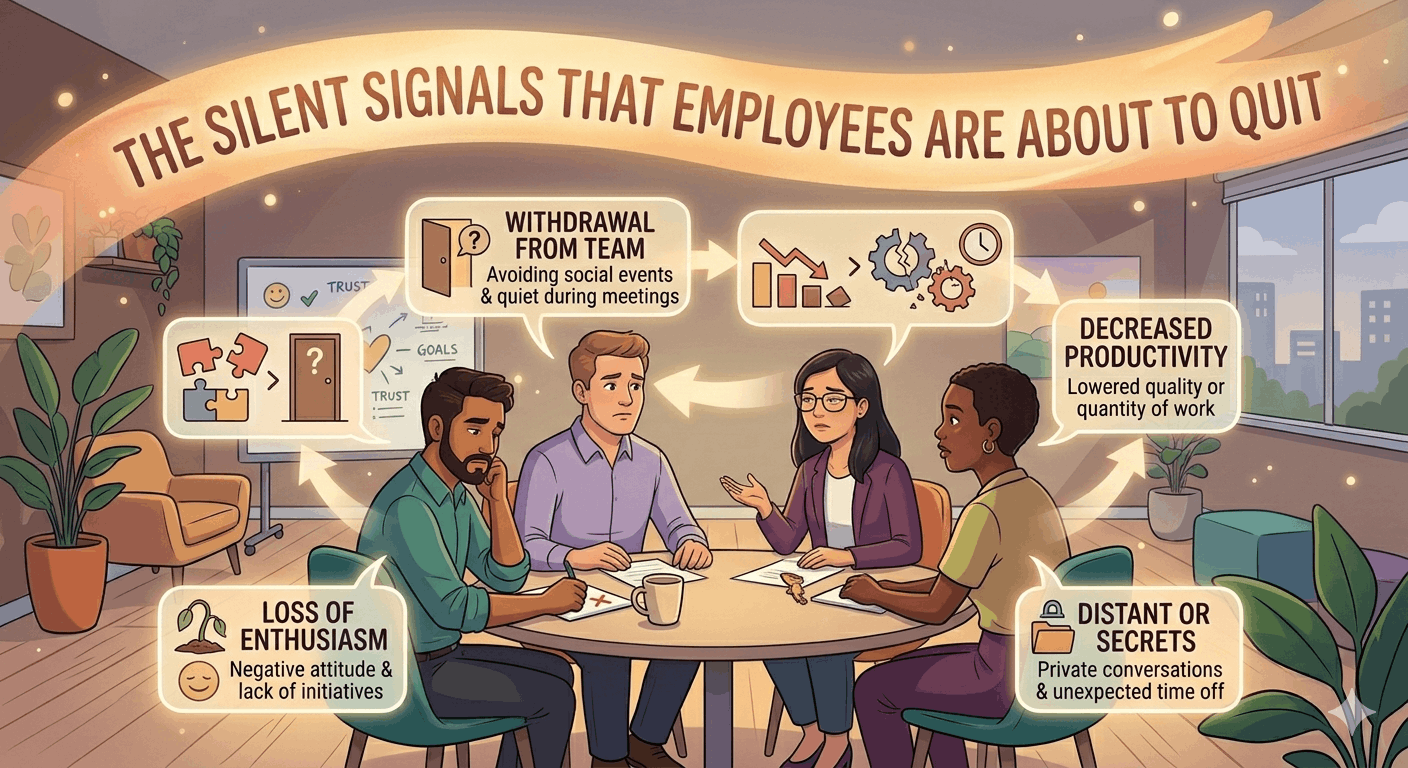
The Silent Signals That Employees Are About to Quit
Employee turnover is one of the most significant challenges facing modern organizations. When a valuable team member decides to leave, it disrupts operations, lowers morale, and increases recruitment and training costs.
While some resignations seem sudden, most employees leave behind subtle warning signs long before submitting their notice.
Recognizing these silent signals allows organizations to take proactive steps, retain talent, and build a more stable workplace.
1. A Sudden Drop in Engagement and Participation
One of the earliest signs of disengagement is a noticeable decline in participation.
Employees who were once active may:
- Stop contributing in meetings
- Avoid brainstorming sessions
- Withdraw from discussions
This behavior often indicates they have mentally checked out of the organization.
What to Do:
- Initiate one-on-one conversations
- Encourage open feedback
- Identify underlying concerns early
2. Decreased Productivity and Missed Deadlines
A consistent drop in performance is a major red flag.
Signs include:
- Missed deadlines
- Lower quality work
- Lack of attention to detail
This shift often means the employee is no longer emotionally invested in their role.
What to Do:
- Provide constructive feedback
- Offer support and resources
- Recognize past contributions
3. Disconnection from Team Activities and Social Events
Strong workplace relationships increase retention. A sudden withdrawal signals detachment.
Warning signs include:
- Skipping team lunches
- Avoiding social gatherings
- Reduced interaction with colleagues
This isolation often happens before an employee decides to leave.
4. Minimizing Communication and Avoiding Long-term Projects
Employees planning to leave often avoid long-term commitments.
They may:
- Decline major projects
- Avoid strategic discussions
- Communicate only when necessary
If employees avoid talking about future plans, it’s a strong indicator they don’t see themselves staying.
5. A Shift in Attitude and Increased Cynicism
A change in attitude is one of the most visible signs.
Look for:
- Frequent complaints
- Negative outlook
- Cynicism toward leadership
This often reflects unresolved frustration.
Tip: Treat complaints as feedback, not negativity.
6. Frequent Use of Paid Time Off
A sudden increase in leave usage can indicate job searching.
Employees may use time off for:
- Job interviews
- Meeting recruiters
- Handling career transitions
While not always conclusive, this pattern should not be ignored.
7. The End of Suggestions and Constructive Feedback
Engaged employees contribute ideas. Disengaged ones stop caring.
Signs include:
- No new suggestions
- Lack of feedback
- Silence in improvement discussions
This indicates apathy—a critical warning sign.
8. Visible Changes in Professional Appearance
Subtle behavioral shifts can reflect internal detachment.
Examples:
- Less effort in appearance
- Reduced professionalism
- Casual attitude toward work norms
While not definitive alone, combined with other signs, it can be meaningful.
9. Sudden Requests for Recommendation Letters
This is one of the clearest indicators.
Watch for:
- Requests for references
- LinkedIn updates
- Recommendation letters
This usually means the employee is actively preparing to leave.
Conclusion: How to Respond to These Signals
Recognizing these signals allows leaders to act before it’s too late.
Organizations should focus on:
- Improving workplace culture
- Offering career growth opportunities
- Enhancing employee engagement
- Providing fair compensation
Key warning signs to monitor:
- Sudden disengagement
- Decline in productivity
- Social withdrawal
- Frequent unexplained absences
The cost of losing talent is far higher than retaining it.
Start building a supportive workplace today where employees feel valued, heard, and excited about their future.