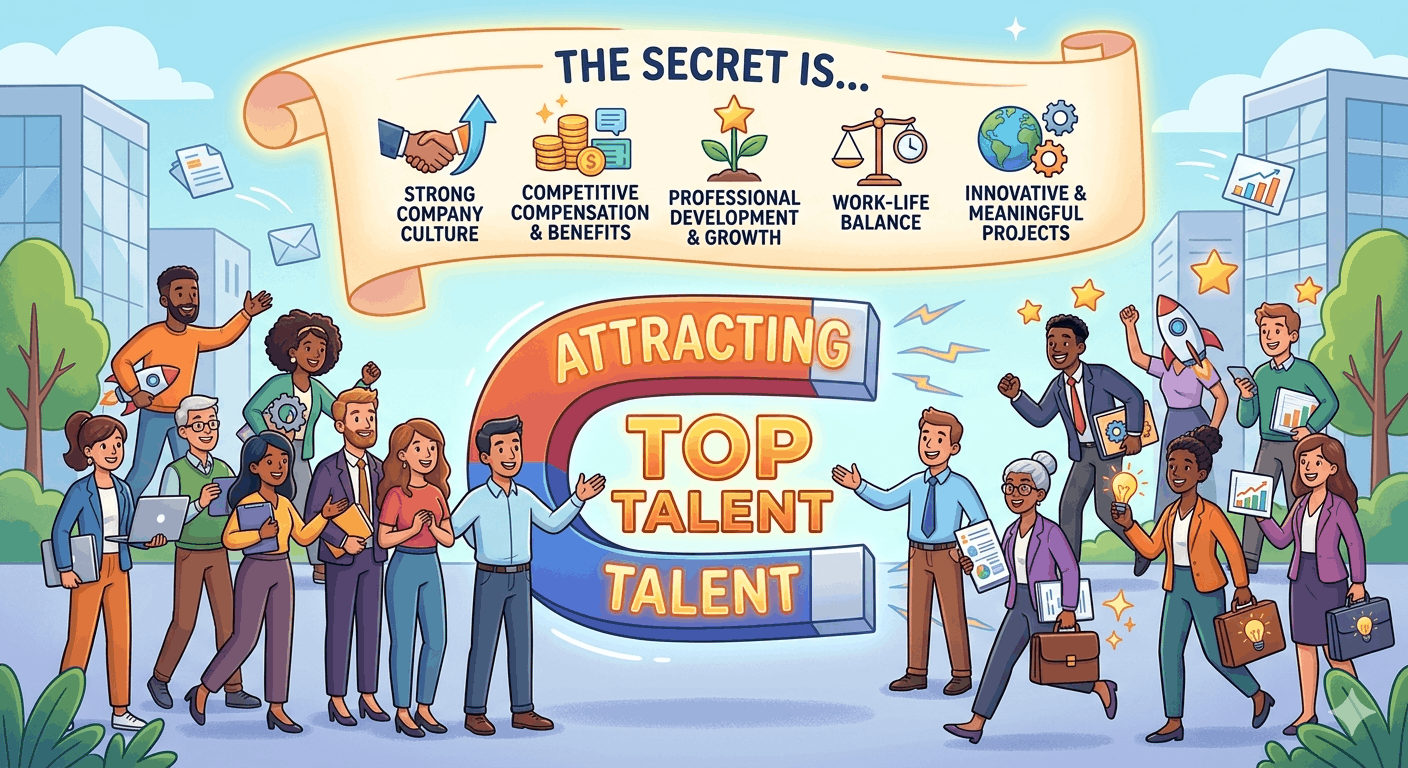
Understanding What Top Talent Really Wants
Attracting top talent in today's competitive market is no longer just about offering high salaries or flashy perks. Modern professionals are looking for deeper value in their careers, including purpose, flexibility, and growth opportunities.
Organizations must recognize that the best candidates evaluate companies just as much as companies evaluate them. This shift in power means employers must evolve their strategies to remain appealing and relevant.
Key Expectations of Modern Professionals
Today's workforce has clear priorities that go beyond traditional compensation packages.
- Meaningful work and purpose-driven roles
- Flexible working arrangements
- Opportunities for growth and learning
- Positive workplace culture
- Recognition and respect
Why Traditional Hiring Approaches Fall Short
Many organizations still rely on outdated recruitment methods that fail to attract high-quality candidates. These approaches often focus too much on job requirements and not enough on employee experience.
Lack of Employer Branding
Without a strong employer brand, companies struggle to stand out. Top talent is naturally drawn to organizations that demonstrate credibility, culture, and vision.
Overemphasis on Qualifications
Focusing solely on degrees and experience can cause businesses to overlook candidates with potential and adaptability.
Poor Candidate Experience
A slow or unorganized hiring process can discourage skilled professionals from continuing with an application.
Key Insight: Top talent chooses companies that value people, not just performance. Building trust and transparency is essential for attracting the best candidates.
The Role of HRMS in Talent Attraction
A modern HRMS (Human Resource Management System) is a powerful tool that helps organizations streamline recruitment and enhance candidate experience.
Smart Recruitment Automation
HRMS platforms automate job postings, resume screening, and interview scheduling, ensuring a smooth and efficient hiring process.
Data-Driven Insights
With analytics and reporting, companies can identify what attracts candidates and refine their strategies accordingly.
Enhanced Candidate Engagement
Automated communication and real-time updates create a professional and engaging experience for applicants.
Benefits of Using HRMS for Talent Acquisition
- Faster hiring cycles without compromising quality
- Improved candidate experience
- Centralized data management
- Better collaboration among HR teams
- Increased hiring accuracy
Building a Strong Employer Brand
Your employer brand is one of the most critical factors in attracting top talent. It reflects your company's culture, values, and reputation.
Showcase Company Culture
Highlighting workplace environment, employee stories, and achievements helps candidates connect with your organization.
Promote Transparency
Being open about company values, expectations, and growth opportunities builds trust with potential hires.
Leverage Digital Platforms
Using social media and career pages effectively can significantly enhance your brand visibility.
Steps to Strengthen Employer Branding
- Define your company's mission and values
- Share authentic employee experiences
- Maintain consistent communication
- Highlight growth opportunities
- Engage with candidates actively
Creating a Workplace That Attracts Talent
Beyond recruitment strategies, organizations must create an environment where employees want to work and grow.
Flexible Work Policies
Offering remote or hybrid work options is essential in today's evolving work culture.
Focus on Employee Well-Being
Supporting mental and physical health improves overall job satisfaction and productivity.
Continuous Learning and Development
Providing training and career development opportunities ensures long-term engagement.
Key Elements of an Attractive Workplace
- Inclusive and diverse culture
- Clear career progression paths
- Supportive leadership
- Recognition and rewards
- Work-life balance initiatives
Leveraging Technology for Competitive Advantage
Technology plays a crucial role in attracting and retaining top talent. Companies that adopt innovative tools gain a significant edge.
AI-Powered Recruitment
Artificial intelligence helps identify the best candidates quickly and efficiently.
Digital Collaboration Tools
Modern tools enable seamless communication and teamwork, even in remote environments.
Personalized Employee Experience
Technology allows organizations to tailor experiences based on individual employee needs.
Conclusion
The secret to attracting top talent lies in understanding what modern professionals truly value. It is not just about compensation but about creating a meaningful and engaging work experience.
By leveraging advanced HRMS systems, building a strong employer brand, and fostering a positive workplace culture, organizations can position themselves as employers of choice.
Ultimately, success comes from putting people first, embracing innovation, and continuously adapting to the evolving workforce landscape.