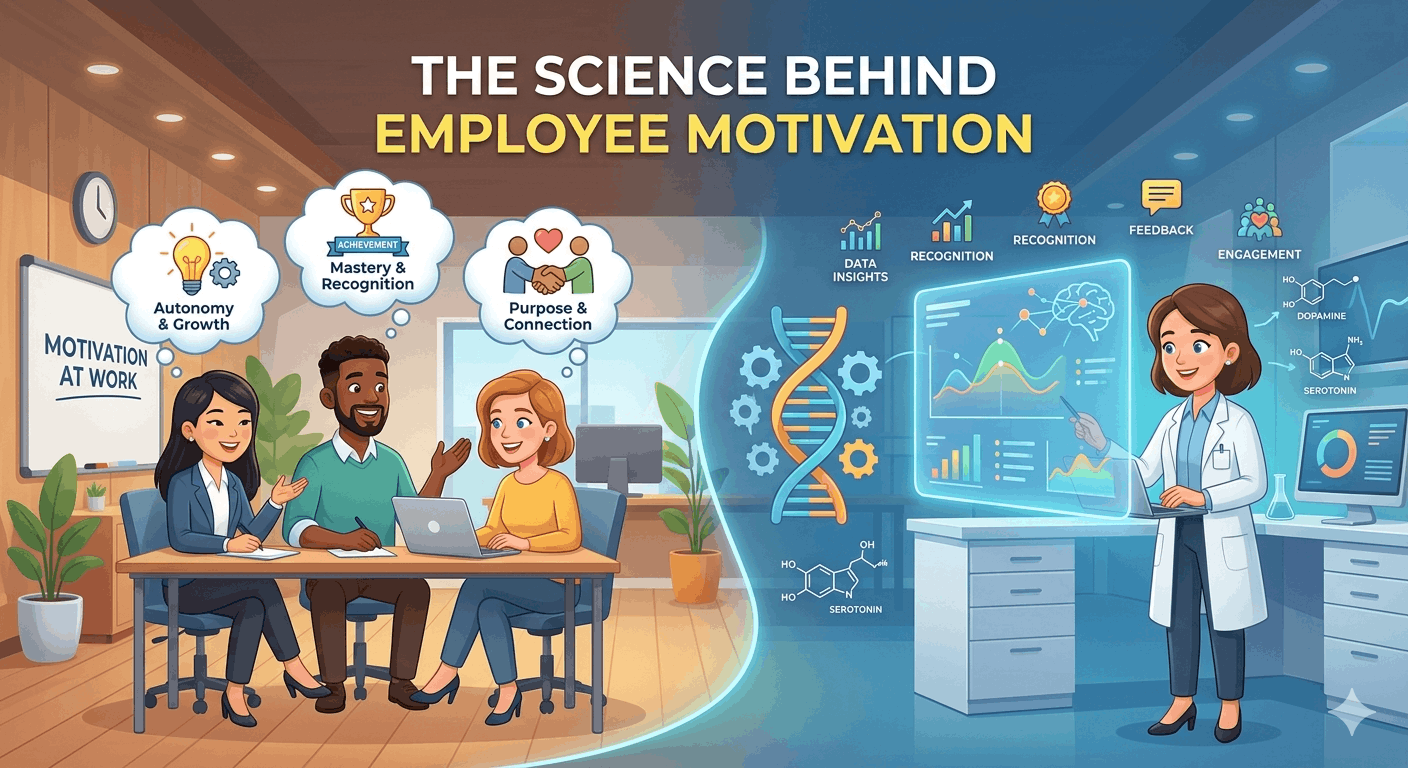
The Science Behind Employee Motivation
Employee motivation is one of the most critical factors that drive organizational success. It directly influences productivity, engagement, and overall workplace satisfaction. Understanding the science behind motivation helps organizations create environments where employees feel inspired to perform at their best.
What is Employee Motivation?
Employee motivation refers to the internal and external factors that stimulate individuals to take action and achieve goals. It is not just about financial rewards but also about emotional, psychological, and social influences.
Intrinsic vs Extrinsic Motivation
Intrinsic motivation comes from within, driven by personal satisfaction and passion for work. Extrinsic motivation, on the other hand, involves external rewards such as salary, bonuses, and recognition.
Why Motivation Matters
Motivated employees are more productive, creative, and committed. They contribute positively to company culture and help organizations achieve long-term success.
The Psychological Theories Behind Motivation
Several theories explain how motivation works in the workplace. These theories provide valuable insights for HR professionals and managers.
Maslow's Hierarchy of Needs
This theory suggests that individuals are motivated by a hierarchy of needs, starting from basic physiological needs to self-actualization. Employees must feel secure and valued before they can reach their full potential.
Herzberg's Two-Factor Theory
According to this theory, motivation is influenced by two factors: hygiene factors and motivators. While hygiene factors prevent dissatisfaction, motivators such as recognition and achievement drive satisfaction.
Self-Determination Theory
This theory emphasizes autonomy, competence, and relatedness as key drivers of motivation. Employees perform better when they feel in control and connected to their work.
Key Factors That Influence Employee Motivation
Understanding what motivates employees is essential for building effective HR strategies. Several factors play a significant role:
- Recognition and appreciation for achievements
- Opportunities for career growth and development
- A positive and inclusive work environment
- Fair compensation and benefits
- Work-life balance and flexibility
Organizations that address these factors create a motivated and high-performing workforce.
The Role of HRMS in Enhancing Motivation
Modern HRMS systems are powerful tools for improving employee motivation. They provide insights, streamline processes, and support employee engagement initiatives.
Performance Tracking and Feedback
HRMS platforms enable continuous performance tracking and real-time feedback, helping employees understand their progress and areas for improvement.
Learning and Development
These systems offer training programs and skill development opportunities, allowing employees to grow and stay motivated.
Recognition and Rewards
Automated recognition systems ensure that employees are acknowledged for their contributions, boosting morale and motivation.
Strategies to Boost Employee Motivation
Organizations must adopt practical strategies to enhance motivation and engagement.
- Set clear goals and expectations to provide direction
- Encourage open communication and transparency
- Provide regular feedback and recognition
- Invest in employee development programs
- Create a positive and inclusive workplace culture
These strategies help build trust and encourage employees to perform at their best.
The Impact of Motivation on Business Success
Employee motivation has a direct impact on organizational performance. Motivated employees are more engaged, productive, and committed to their roles.
Improved Productivity
Motivated employees work more efficiently and deliver higher-quality results.
Higher Employee Retention
When employees feel valued and motivated, they are less likely to leave the organization.
Enhanced Innovation
A motivated workforce is more creative and willing to explore new ideas and solutions.
Key Insight: True motivation goes beyond financial rewards; it is about creating an environment where employees feel valued, empowered, and inspired to achieve their best.
Future Trends in Employee Motivation
The future of employee motivation is evolving with changing workplace dynamics. Organizations are adopting new approaches to keep employees engaged.
Personalized Employee Experiences
Companies are tailoring motivation strategies to individual preferences and needs.
Technology-Driven Engagement
Digital tools and HRMS platforms are enabling more effective communication and engagement.
Focus on Well-Being
Employee well-being is becoming a top priority, with organizations offering wellness programs and mental health support.
- Flexible work arrangements
- Remote work opportunities
- Wellness and mental health programs
- Continuous learning platforms
- Employee engagement tools
Conclusion
Understanding the science behind employee motivation is essential for building a successful organization. By focusing on psychological principles, addressing key factors, and leveraging modern HRMS tools, companies can create a motivated and engaged workforce.
Motivation is not a one-time effort but an ongoing process that requires attention and adaptation. Organizations that prioritize employee motivation will not only achieve better results but also build a positive and sustainable workplace culture.
In the end, motivated employees are the driving force behind every successful organization.