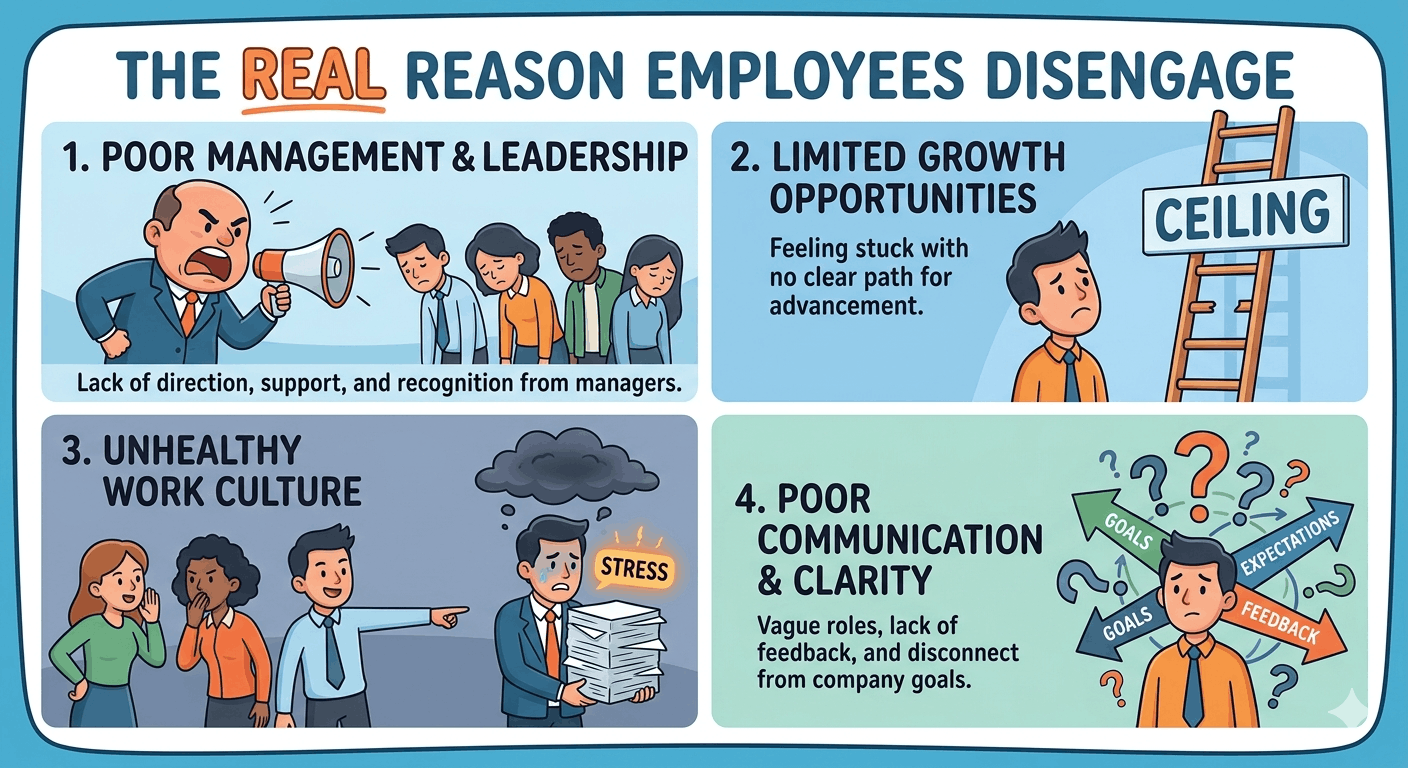
The Real Reason Employees Disengage
Employee disengagement is one of the most silent yet damaging challenges organizations face today. While companies invest heavily in perks, bonuses, and incentives, they often overlook the deeper issues that truly impact employee engagement and motivation.
The reality is simple: disengagement is rarely about money. It is about how employees feel, how they are treated, and whether they see a future within the organization.
Understanding Employee Disengagement
Disengaged employees are those who lack emotional connection with their work and the organization. They may complete tasks but without enthusiasm, creativity, or commitment.
Signs of Disengaged Employees
- Decreased productivity and performance
- Lack of initiative and creativity
- Frequent absenteeism or lateness
- Minimal participation in team activities
- Higher likelihood of leaving the company
Recognizing these signs early is crucial for preventing long-term damage to team morale and business outcomes.
The Root Causes of Disengagement
Employee disengagement is not caused by a single factor. It is usually the result of multiple issues that build up over time.
Lack of Recognition
Employees want to feel valued. When their efforts go unnoticed, it leads to frustration and decreased motivation. Recognition is a powerful driver of engagement.
Poor Management and Leadership
Managers play a critical role in shaping employee experience. Lack of support, unclear communication, and micromanagement can push employees away.
No Clear Growth Path
When employees do not see opportunities for growth, they lose interest in their roles. Career development is essential for long-term engagement.
Work-Life Imbalance
Excessive workload and lack of flexibility can lead to burnout. Employees need balance to stay productive and motivated.
Lack of Purpose
Employees want to understand how their work contributes to the bigger picture. Without purpose, tasks feel meaningless.
Key Insight: Employees don't disengage from companies—they disengage from poor experiences, lack of recognition, and uninspiring leadership.
The Impact of Disengagement on Organizations
Disengagement affects more than just individual performance. It has a ripple effect across the entire organization.
Major Consequences
- Reduced productivity and efficiency
- Higher employee turnover rates
- Negative impact on team morale
- Increased absenteeism
- Lower customer satisfaction
Ignoring disengagement can lead to significant financial and operational losses.
How HRMS Can Improve Employee Engagement
Modern HRMS systems provide tools to monitor, analyze, and improve employee engagement effectively.
Key HRMS Features for Engagement
- Performance tracking and feedback systems
- Employee recognition programs
- Learning and development modules
- Real-time communication tools
- Analytics for engagement insights
By leveraging HRMS technology, organizations can create a more connected and motivated workforce.
Strategies to Re-Engage Employees
Re-engaging employees requires a proactive and consistent approach. Companies must focus on creating a positive and supportive work environment.
Effective Engagement Strategies
- Recognize and reward employee achievements
- Provide clear career growth opportunities
- Encourage open communication
- Promote work-life balance
- Build a strong company culture
These strategies help rebuild trust and motivate employees to contribute their best.
The Role of Leadership in Engagement
Leadership plays a crucial role in shaping employee engagement. Leaders must inspire, support, and guide their teams effectively.
What Great Leaders Do
- Communicate clearly and consistently
- Provide constructive feedback
- Empower employees to make decisions
- Show empathy and understanding
- Lead by example
Strong leadership creates an environment where employees feel valued and motivated.
Conclusion: Building a Culture of Engagement
Employee disengagement is not inevitable—it is preventable. Organizations must focus on people, purpose, and processes to create a thriving workplace.
By addressing the root causes and leveraging HRMS solutions, companies can transform disengaged employees into motivated contributors.
Engagement is not about perks—it is about respect, recognition, and meaningful work. Companies that understand this will build stronger, more successful teams.
Ultimately, engaged employees are the foundation of long-term business success, innovation, and growth.