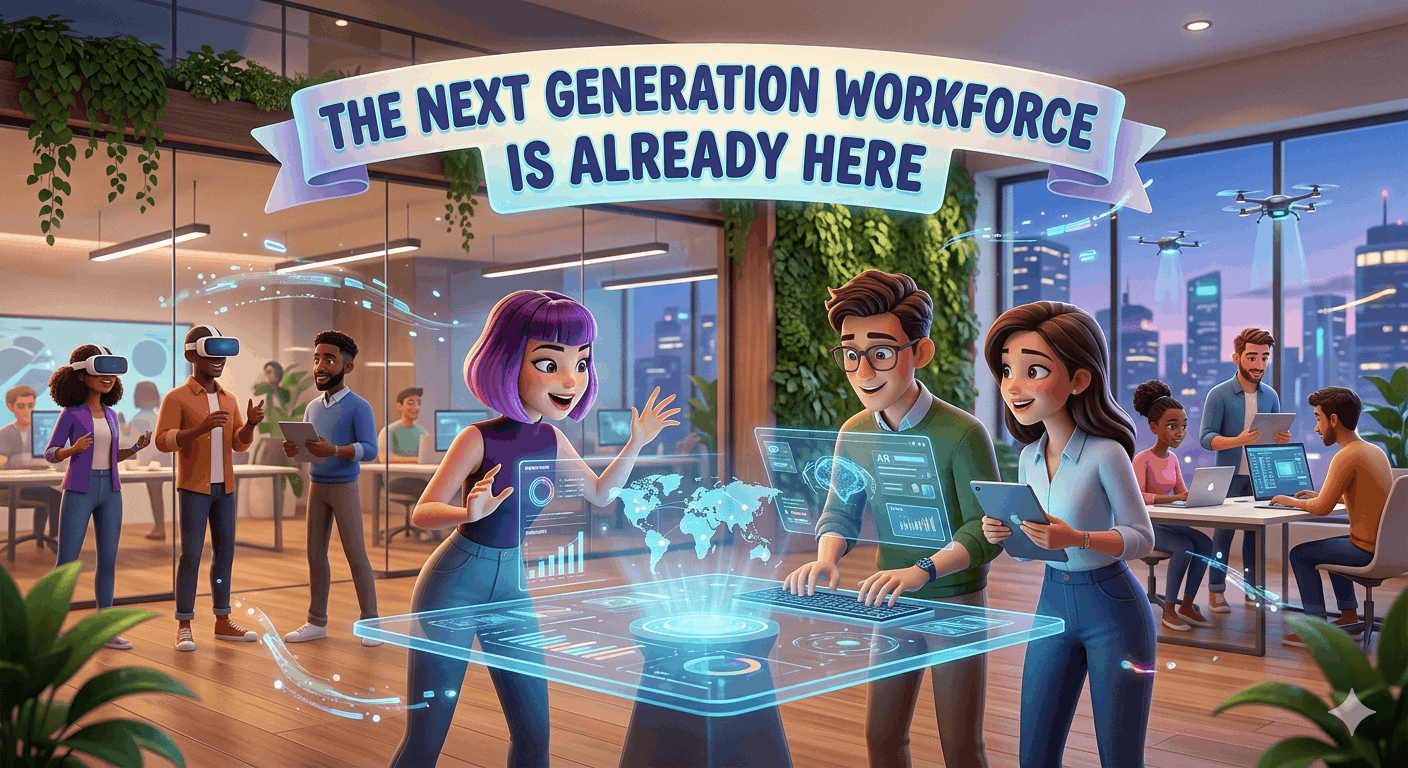
The Rise of the Next Generation Workforce
The next generation workforce is no longer a future concept—it is already shaping organizations across the globe. With Gen Z entering the workplace alongside millennials, companies are experiencing a shift in expectations, communication styles, and work preferences.
This new workforce values purpose, flexibility, and technology-driven environments. Traditional HR practices are no longer sufficient, and organizations must evolve to remain competitive and relevant.
Who Are the Next Generation Employees?
Gen Z and younger millennials are digital natives who have grown up with technology at their fingertips. They bring fresh perspectives and demand a more inclusive, flexible, and engaging workplace culture.
- Tech-savvy mindset with high digital adaptability
- Strong preference for flexibility and remote work
- Focus on purpose-driven careers
- Desire for continuous feedback
- Emphasis on mental health and well-being
Why Traditional Work Models Are Failing
Legacy systems and outdated workplace structures struggle to meet the expectations of modern employees. The next generation seeks dynamic, agile, and employee-centric environments.
Rigid Work Structures
The fixed 9-to-5 model does not align with the flexible mindset of younger professionals. They prefer outcome-based performance rather than time-based tracking.
Lack of Real-Time Feedback
Annual reviews are no longer enough. Employees expect continuous feedback and recognition to stay motivated and engaged.
Outdated Technology
Using outdated HR systems can frustrate tech-savvy employees. Modern workplaces require advanced HRMS solutions that streamline processes and enhance user experience.
Key Insight: Organizations that fail to adapt to the expectations of the next generation workforce risk losing top talent and innovation opportunities.
The Role of HRMS in Supporting the New Workforce
An advanced Human Resource Management System (HRMS) plays a critical role in bridging the gap between traditional practices and modern expectations.
Automation and Efficiency
HRMS platforms automate repetitive tasks such as payroll, attendance, and leave management, allowing HR teams to focus on strategic initiatives.
Data-Driven Decision Making
With real-time analytics, HR professionals can make informed decisions that improve employee engagement and productivity.
Enhanced Employee Experience
Modern HRMS systems provide self-service portals, mobile accessibility, and seamless communication tools that align with the expectations of digital-native employees.
Key Benefits of HRMS for Modern Workforces
- Streamlined HR operations
- Improved employee engagement
- Real-time performance tracking
- Enhanced communication and collaboration
- Better compliance and data security
Adapting to Changing Workforce Expectations
To attract and retain the next generation workforce, organizations must rethink their strategies and embrace innovation.
Flexible Work Policies
Offering remote and hybrid work options is essential. Flexibility improves employee satisfaction and retention.
Continuous Learning Opportunities
Modern employees seek growth and development. Providing training programs and upskilling opportunities is crucial.
Inclusive Workplace Culture
Diversity and inclusion are not optional—they are expectations. Companies must foster an environment where every employee feels valued.
Steps to Build a Future-Ready Workforce
- Invest in modern HRMS technology
- Promote flexible work environments
- Encourage continuous feedback
- Focus on employee well-being
- Adopt data-driven HR strategies
Challenges Organizations Must Overcome
While the benefits are clear, transitioning to a modern workforce model comes with its own set of challenges.
Resistance to Change
Some organizations struggle to move away from traditional practices due to cultural and operational inertia.
Technology Integration
Implementing new HRMS systems requires investment and proper training to ensure smooth adoption.
Maintaining Work-Life Balance
Flexible work can blur boundaries, making it important to establish clear guidelines and expectations.
The Future of HR and Workforce Management
The future of work will be defined by innovation, flexibility, and employee-centric strategies. Organizations that embrace these changes will thrive in an increasingly competitive landscape.
Emerging Trends to Watch
As the workforce continues to evolve, several trends are shaping the future of HR and workplace management.
Key Trends
- AI-powered HR solutions
- Personalized employee experiences
- Remote-first organizations
- Focus on mental health initiatives
- Advanced workforce analytics
Conclusion
The next generation workforce is already here, bringing new expectations and opportunities for organizations. Companies must adapt quickly to stay ahead in this rapidly changing environment.
By leveraging advanced HRMS systems and embracing flexible, inclusive, and technology-driven practices, businesses can create a workplace that attracts top talent and drives long-term success.
Ultimately, the organizations that succeed will be those that prioritize people, innovation, and adaptability in their workforce strategies.