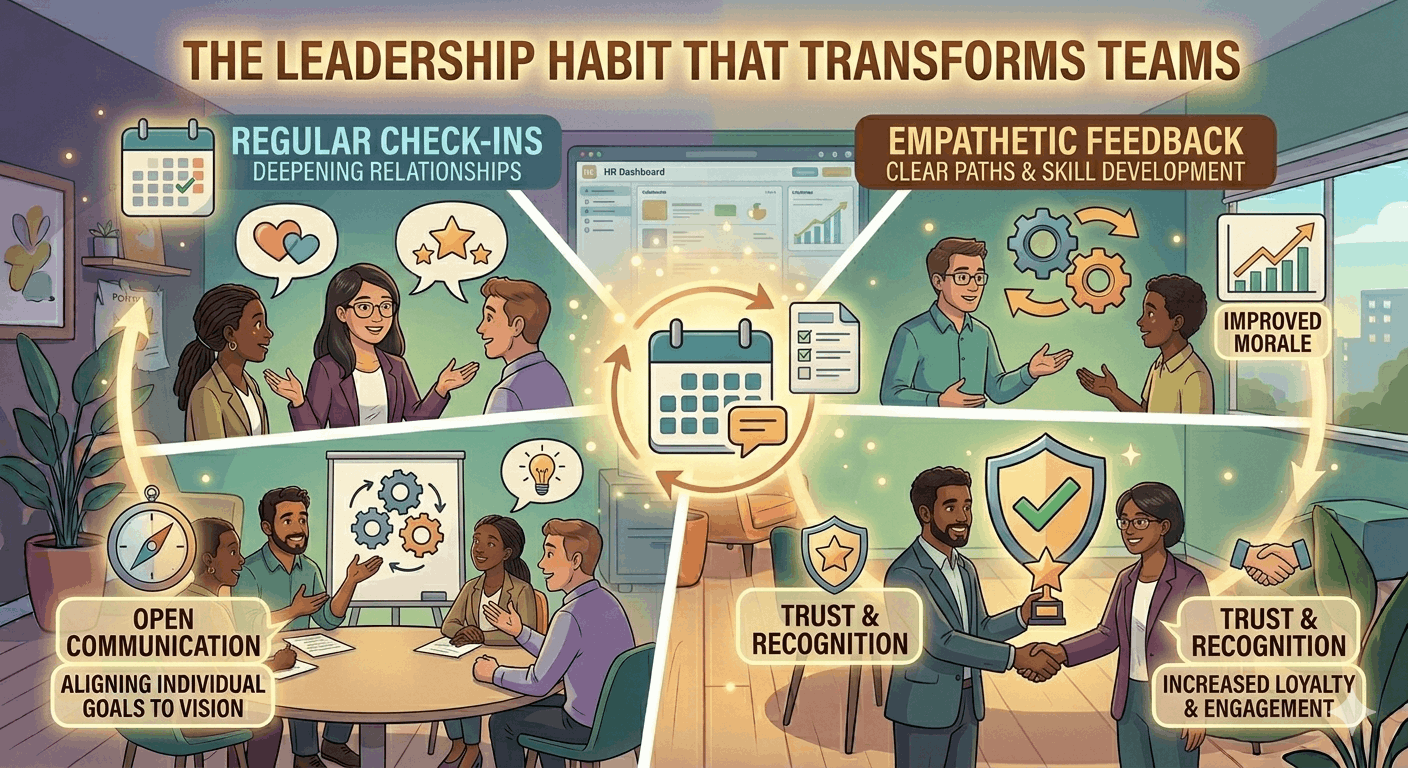
The Leadership Habit That Transforms Teams
Great leadership is not defined by a single action but by consistent behaviors practiced over time. Among all leadership traits, one habit stands out as truly transformative: consistent, intentional communication. This habit builds trust, strengthens relationships, and aligns teams toward shared goals.
Leaders who master this habit create environments where employees feel heard, valued, and motivated. In contrast, leaders who neglect it often struggle with disengagement and confusion within their teams.
Why Leadership Habits Matter More Than Occasional Effort
Leadership is not about occasional bursts of inspiration. It is about daily consistency. Small, repeated actions shape team culture far more than one-time gestures.
The Power of Consistency
When leaders communicate regularly and clearly, employees develop a sense of stability and trust. This consistency removes uncertainty and fosters confidence in leadership.
- Builds long-term trust
- Creates clarity in expectations
- Encourages open dialogue
- Strengthens team alignment
Moving Beyond Reactive Leadership
Reactive leadership focuses on solving problems as they arise. Transformational leadership, however, focuses on preventing issues through proactive communication and engagement.
The Core Habit: Intentional Communication
At the heart of high-performing teams is intentional communication. This means not just talking, but communicating with purpose, clarity, and empathy.
What Intentional Communication Looks Like
It involves more than giving instructions. It includes listening actively, providing feedback, and ensuring everyone understands the bigger picture.
- Setting clear expectations
- Providing timely feedback
- Actively listening to concerns
- Sharing vision and goals
- Encouraging collaboration
Great teams are built on conversations, not commands.
The Role of Active Listening
Listening is often overlooked but is a critical part of communication. Leaders who listen create psychological safety, allowing employees to share ideas and concerns freely.
How This Habit Transforms Team Culture
When leaders consistently communicate with intention, the entire team dynamic shifts. Employees feel more connected, engaged, and empowered.
Improved Trust and Transparency
Open communication eliminates guesswork. Employees understand what is expected and feel confident in their roles.
Higher Employee Engagement
Engaged employees are more productive and committed. They contribute ideas, collaborate effectively, and take ownership of their work.
- Increased motivation
- Better collaboration
- Stronger accountability
- Enhanced job satisfaction
Reduced Conflict and Misunderstandings
Clear communication prevents misinterpretations and reduces workplace tension. Teams operate more smoothly when everyone is aligned.
Practical Ways to Build This Leadership Habit
Developing intentional communication requires practice and discipline. Leaders must commit to making it part of their daily routine.
Daily and Weekly Practices
Simple, consistent actions can make a significant difference over time.
- Start meetings with clear objectives
- Check in with team members regularly
- Provide constructive feedback promptly
- Encourage questions and discussions
- Reflect on communication effectiveness
Leveraging Feedback for Growth
Feedback should not be a one-way process. Leaders should actively seek input on their communication style and adjust accordingly.
Key Feedback Strategies
- Conduct anonymous surveys
- Hold open forums for discussion
- Encourage honest conversations
- Act on feedback consistently
Overcoming Common Challenges
Building a new leadership habit is not without obstacles. Time constraints, distractions, and existing habits can make consistency difficult.
Managing Time Effectively
Leaders often feel they do not have enough time to communicate consistently. However, prioritizing communication actually saves time by preventing misunderstandings.
Breaking Old Habits
Changing leadership behavior requires self-awareness and commitment. Leaders must identify gaps in their communication and take deliberate steps to improve.
The Long-Term Impact of Transformational Leadership
The effects of intentional communication extend far beyond immediate team performance. Over time, this habit shapes a culture of trust, collaboration, and continuous improvement.
Stronger Organizational Culture
Organizations with strong communication practices experience higher retention rates and better overall performance.
Sustainable Team Success
Teams led by effective communicators are more resilient and adaptable. They can navigate challenges and seize opportunities with confidence.
Leadership is not about authority; it is about influence built through consistent, meaningful interactions.
Conclusion: Small Habits, Big Transformation
The leadership habit of intentional communication may seem simple, but its impact is profound. By consistently engaging with their teams, leaders can transform workplace culture, improve performance, and build lasting success.
When leaders communicate with purpose, teams thrive. This single habit has the power to turn average teams into exceptional ones, making it one of the most valuable skills any leader can develop.