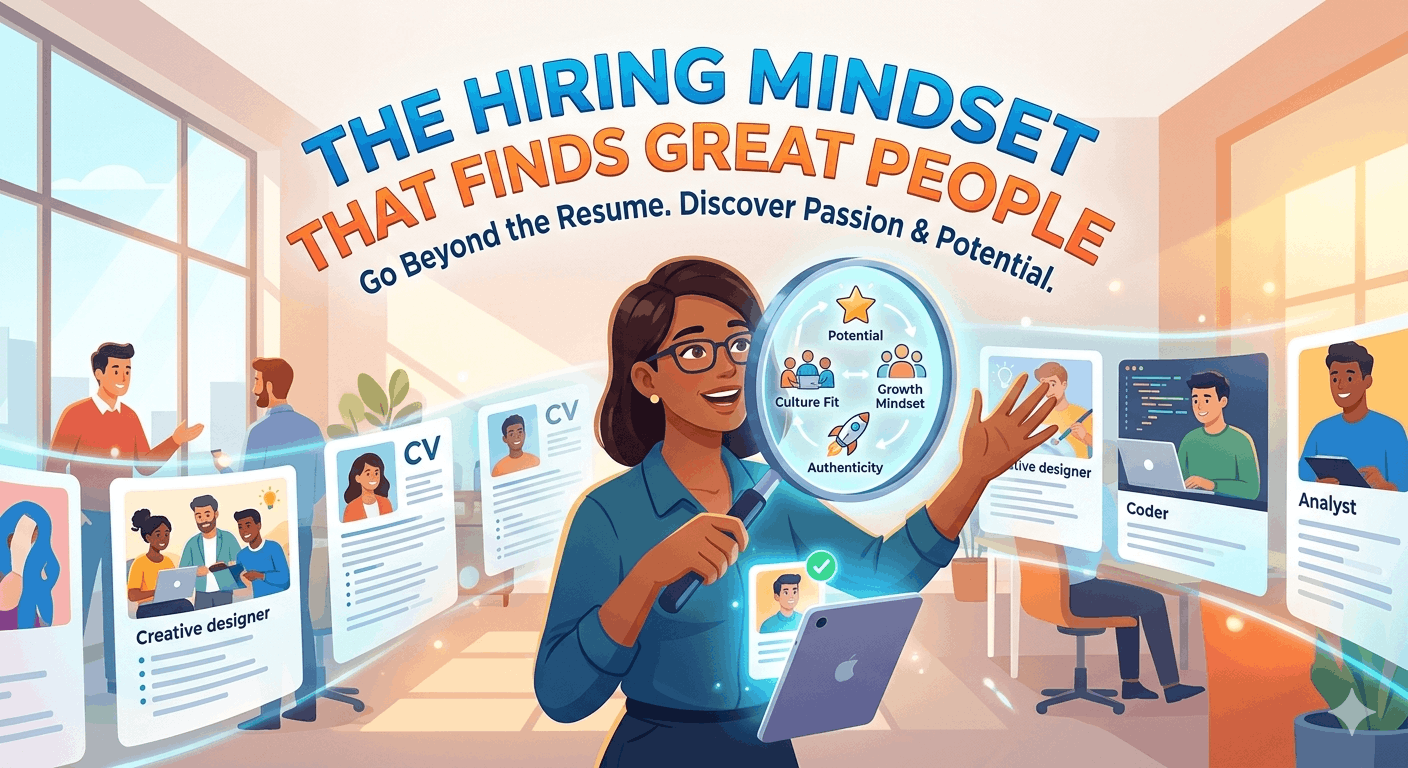
Introduction: Hiring Beyond Resumes
In today's competitive talent landscape, hiring the right people is more critical than ever. Yet many organizations still rely on outdated methods that prioritize resumes over real potential. The truth is, great hiring begins with the right mindset.
Modern HR leaders understand that finding exceptional talent requires looking beyond qualifications. It involves identifying individuals who align with the company's values, demonstrate adaptability, and possess the ability to grow. This shift in thinking is what separates average hiring from extraordinary talent acquisition.
What Is the Right Hiring Mindset?
The right hiring mindset focuses on long-term value rather than short-term fit. It emphasizes potential, cultural alignment, and continuous growth over rigid criteria.
Core Principles of a Strong Hiring Mindset
- Prioritizing skills and potential over degrees
- Evaluating cultural fit and values alignment
- Focusing on long-term growth and adaptability
- Encouraging diversity and inclusion
- Using data-driven insights for better decisions
Why Traditional Hiring Approaches Fall Short
Conventional hiring methods often fail to identify truly great candidates because they focus on surface-level indicators.
Overemphasis on Experience
Years of experience do not always translate into capability or innovation. Many high-potential candidates are overlooked due to lack of traditional experience.
Bias in Decision-Making
Unconscious bias can influence hiring decisions, leading to missed opportunities and lack of diversity.
Ignoring Cultural Fit
Hiring based solely on skills without considering cultural alignment can lead to poor team integration.
Static Evaluation Methods
Resumes and interviews alone do not provide a complete picture of a candidate's capabilities.
The Role of HRMS in Modern Hiring Mindset
Human Resource Management Systems are transforming how organizations approach hiring by providing data-driven insights and structured processes.
Data-Driven Recruitment
HRMS tools analyze candidate data, helping recruiters make informed decisions based on performance and skills.
Competency-Based Evaluation
Organizations can assess candidates based on competencies rather than just qualifications.
Enhanced Candidate Experience
Streamlined processes improve the overall experience, making organizations more attractive to top talent.
- Improved hiring accuracy
- Reduced bias in recruitment
- Better alignment with organizational goals
- Faster decision-making
- Enhanced talent retention
Key Traits to Look for in Great Candidates
Adopting the right mindset means identifying qualities that truly matter in the long run.
Adaptability
In a rapidly changing world, the ability to adapt is more valuable than static knowledge.
Learning Agility
Great candidates are eager to learn and continuously improve their skills.
Emotional Intelligence
Strong interpersonal skills enable better collaboration and leadership potential.
Problem-Solving Ability
Employees who can think critically and solve problems add significant value to organizations.
Mindset Shift: From Hiring for Roles to Hiring for Potential
The most successful organizations hire not just for current roles but for future possibilities.
Key Differences
- Traditional hiring focuses on roles; modern hiring focuses on potential
- Traditional hiring values experience; modern hiring values adaptability
- Traditional hiring is reactive; modern hiring is proactive
- Traditional hiring fills gaps; modern hiring builds teams
- Traditional hiring is short-term; modern hiring is long-term
Hire for attitude, train for skill, and build for the future.
Strategies to Develop the Right Hiring Mindset
Organizations must take intentional steps to transform their hiring approach.
1. Redefine Success Metrics
Measure hiring success based on long-term performance and employee growth.
2. Implement Structured Interviews
Use standardized questions and evaluation criteria to reduce bias.
3. Focus on Candidate Experience
Create a positive and engaging hiring process that reflects the company's values.
4. Leverage Technology
Use HRMS and AI tools to enhance recruitment efficiency and accuracy.
5. Promote Continuous Learning
Encourage a culture where employees are supported in their professional development.
Challenges in Adopting a New Hiring Mindset
Shifting from traditional hiring practices to a modern mindset requires effort and commitment.
Resistance to Change
Organizations may struggle to move away from established hiring practices.
Skill Assessment Complexity
Evaluating potential and soft skills can be more challenging than assessing qualifications.
Time Investment
Developing a deeper understanding of candidates requires more time and resources.
The Future of Hiring
The future of recruitment lies in embracing a mindset that prioritizes people over processes.
Integration of AI and Analytics
Advanced technologies will further refine hiring decisions and reduce bias.
Focus on Diversity and Inclusion
Organizations will continue to prioritize diverse talent to drive innovation.
Continuous Talent Development
Hiring will be closely linked with ongoing learning and growth opportunities.
Conclusion: Building Teams That Last
Finding great people is not about luck—it is about adopting the right mindset. By focusing on potential, adaptability, and cultural alignment, organizations can build teams that thrive in the long term.
In a world where change is constant, the ability to identify and nurture talent will define organizational success.