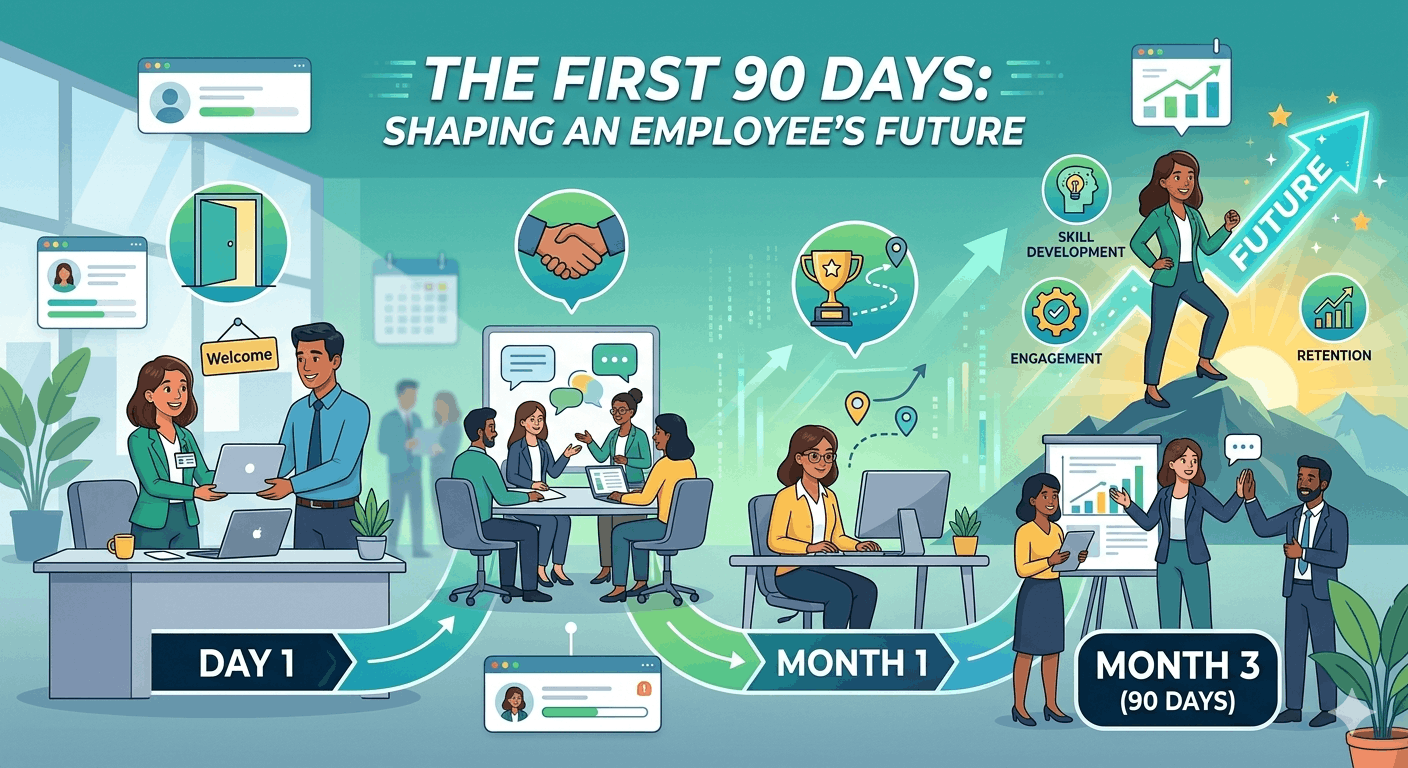
The First 90 Days That Decide an Employee's Future
The first 90 days of a new employee's journey are often the most critical phase in their career within an organization. This period sets the tone for performance, engagement, and long-term success. Companies that invest in structured onboarding and employees who actively adapt during this phase often see remarkable results.
Why the First 90 Days Matter So Much
The initial phase of employment is more than just orientation. It is a time when employees form opinions about the company culture, leadership, and their future role. First impressions created during this time can have a lasting impact.
Building Confidence and Clarity
New hires need clarity about their roles, expectations, and responsibilities. When organizations provide structured guidance, employees feel more confident and productive.
Establishing Workplace Relationships
The early days are crucial for building relationships with managers and team members. Strong connections lead to better collaboration and trust.
Key Challenges Faced by New Employees
Despite excitement, the first 90 days can be overwhelming. Employees often struggle to adjust to new environments, expectations, and workflows.
- Information overload during onboarding sessions
- Unclear job expectations and responsibilities
- Difficulty adapting to company culture
- Lack of immediate feedback from managers
- Pressure to prove their value quickly
Organizations must address these challenges proactively to ensure a smooth transition.
The Role of HRMS in Successful Onboarding
Modern HRMS platforms have transformed how companies manage the first 90 days. These systems provide structured onboarding, track progress, and ensure consistent communication.
How HRMS Supports New Employees
HRMS tools streamline documentation, training schedules, and performance tracking, allowing employees to focus on learning and adapting.
Benefits for Organizations
Companies benefit from improved retention, better engagement, and data-driven decision-making during the onboarding process.
A Structured 90-Day Plan for Success
Breaking down the first 90 days into phases helps both employees and employers stay aligned and focused.
Phase 1: The First 30 Days
This phase focuses on learning and observation. Employees should understand company policies, tools, and team dynamics.
Phase 2: Days 31–60
During this period, employees start contributing to projects and taking ownership of tasks. Active participation becomes essential.
Phase 3: Days 61–90
This phase emphasizes performance and results. Employees are expected to demonstrate their capabilities and align with organizational goals.
Best Practices for Employers
Organizations play a crucial role in shaping an employee's experience during the first 90 days. Implementing the right strategies can significantly improve outcomes.
- Provide a structured onboarding plan with clear milestones
- Assign mentors or buddies for guidance
- Offer regular feedback and performance reviews
- Encourage open communication and questions
- Track progress using HRMS tools
These practices help employees feel supported and valued from the beginning.
What Employees Should Focus On
While organizations provide support, employees must also take responsibility for their growth during this period.
Adapting Quickly to the Environment
Understanding company culture and workflows is essential for success. Employees should observe, learn, and adapt efficiently.
Building Strong Relationships
Networking within the organization helps employees gain insights and support. Collaboration is key to long-term success.
Demonstrating Initiative
Taking initiative and showing enthusiasm can leave a strong impression on managers and peers.
- Ask questions and seek clarity
- Volunteer for tasks and projects
- Stay proactive and solution-oriented
- Continuously learn and improve
- Maintain a positive attitude
Key Insight: The first 90 days are not just about learning a job; they are about building a foundation for long-term success and growth.
The Impact on Employee Retention
Studies have shown that employees who have a positive onboarding experience are more likely to stay with the company. A well-structured first 90 days can significantly reduce turnover rates.
Creating a Positive Experience
Organizations that invest in employee engagement during this period build loyalty and commitment.
Reducing Early Attrition
Clear expectations, regular feedback, and strong support systems help prevent early resignations.
Future Trends in Onboarding
The future of onboarding is evolving with technology and changing workplace dynamics. Companies are adopting digital tools, remote onboarding strategies, and personalized learning paths.
Technology-Driven Onboarding
HRMS platforms and AI-driven tools are making onboarding more efficient and engaging.
Personalized Employee Journeys
Organizations are tailoring onboarding experiences to individual roles and learning styles.
Conclusion
The first 90 days are a defining period in an employee's journey. They determine not only immediate performance but also long-term engagement and retention. Both employers and employees must work together to make this phase successful.
By focusing on clear communication, structured onboarding, and continuous learning, organizations can create a strong foundation for their workforce. Similarly, employees who take initiative and adapt quickly can set themselves up for lasting success.
In the end, the first 90 days are not just a beginning—they are the blueprint for an employee's future.