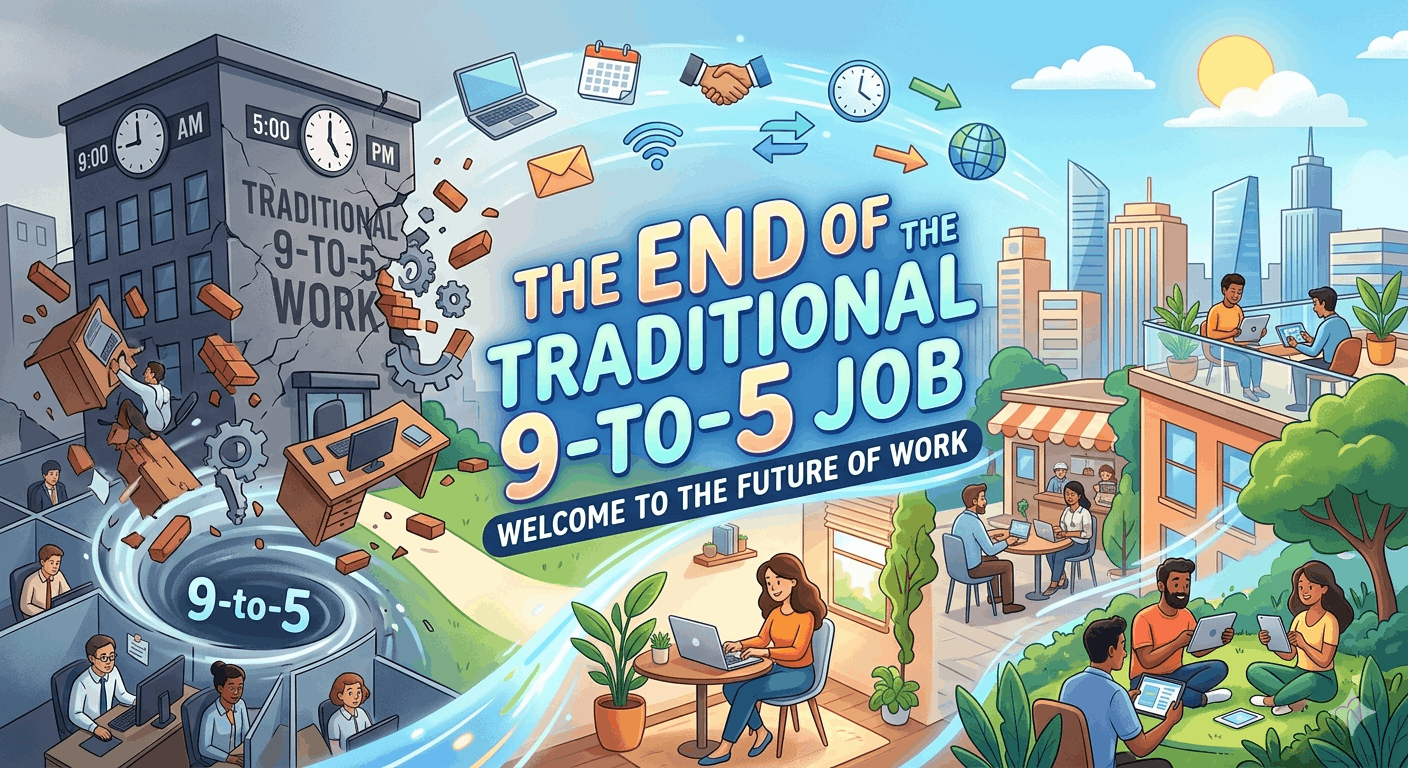
The Evolution of Work Culture
The traditional 9-to-5 job has long been considered the backbone of professional life. For decades, employees followed a fixed schedule, commuting daily to offices and working within rigid timeframes. However, the modern workforce is undergoing a massive transformation.
Driven by technology, globalization, and changing employee expectations, companies are beginning to realize that productivity does not depend on fixed hours. Instead, flexibility, autonomy, and trust are becoming the new pillars of success.
What Triggered This Shift?
The shift away from the 9-to-5 model didn't happen overnight. It was influenced by several key factors that reshaped the way organizations operate.
- Advancements in technology enabling remote work
- Changing employee expectations for better work-life balance
- Global competition requiring flexible operations
- Rise of freelance and gig economy
- Focus on productivity over presence
Why the 9-to-5 Model Is Becoming Obsolete
The traditional work schedule was designed during the industrial era when manual labor dominated. In today's knowledge-driven economy, this model often limits creativity and efficiency.
Lack of Flexibility
Employees today value flexibility more than ever. A rigid schedule can lead to burnout and reduced motivation. Allowing individuals to work during their most productive hours can significantly improve performance.
Commuting Challenges
Daily commuting consumes time and energy, often leading to stress. Eliminating or reducing commuting has proven to boost both mental health and overall productivity.
Mismatch with Global Workflows
With teams spread across different time zones, the 9-to-5 schedule no longer aligns with global collaboration needs. Businesses now require asynchronous work environments.
Key Insight: The future of work is not about when you work, but how effectively you deliver results.
The Rise of Flexible Work Models
As organizations move away from rigid schedules, several alternative work models are gaining popularity. These models focus on outcomes rather than hours spent.
Remote Work
Remote work has revolutionized the workplace by allowing employees to operate from anywhere. This approach fosters independence and accountability.
Hybrid Work
The hybrid model combines the best of both worlds—office collaboration and remote flexibility. Employees can choose when and where they work, leading to improved satisfaction.
Freelancing and Gig Economy
More professionals are choosing freelance careers, valuing freedom over stability. The gig economy promotes skill-based earning rather than time-based compensation.
Top Benefits of Flexible Work
- Improved work-life balance
- Higher productivity levels
- Reduced operational costs for companies
- Access to a global talent pool
- Enhanced employee satisfaction
How Companies Are Adapting
Forward-thinking organizations are redesigning their work structures to stay competitive in this evolving landscape.
Outcome-Based Performance
Instead of tracking hours, companies are focusing on results and deliverables. This shift encourages employees to work smarter, not longer.
Digital Collaboration Tools
Tools like project management software and communication platforms enable seamless collaboration without physical presence.
Employee-Centric Policies
Organizations are prioritizing employee well-being by offering flexible hours, mental health support, and remote work options.
Steps Businesses Can Take
- Adopt flexible working hours
- Invest in remote work technology
- Measure performance based on output
- Encourage open communication
- Provide continuous learning opportunities
Challenges of Moving Beyond 9-to-5
While the benefits are clear, transitioning away from traditional schedules also comes with challenges that must be addressed.
Communication Barriers
Remote and asynchronous work can lead to misunderstandings if communication is not managed effectively.
Work-Life Boundaries
Without clear boundaries, employees may struggle to disconnect, leading to overwork and burnout.
Management Adaptation
Managers need to shift from supervision to trust-based leadership, which requires a cultural change.
The Future of Work
The decline of the 9-to-5 job does not mean the end of structure—it signals a move toward smarter, more adaptive systems. The future workplace will prioritize flexibility, inclusivity, and innovation.
What Lies Ahead?
As businesses continue to evolve, we can expect a more personalized work experience where employees have greater control over their schedules and environments.
Emerging Trends
- Four-day workweeks
- Fully remote organizations
- AI-driven productivity tools
- Decentralized teams
- Focus on mental wellness
Conclusion
The end of the traditional 9-to-5 job marks a significant turning point in the professional world. It reflects a shift toward a more human-centric approach to work, where flexibility and productivity go hand in hand.
Organizations that embrace this change will not only attract top talent but also foster a culture of innovation and growth. For employees, it opens up new possibilities to achieve a better balance between personal and professional life.
Ultimately, the future of work is about freedom, efficiency, and purpose—not just clocking in and out.