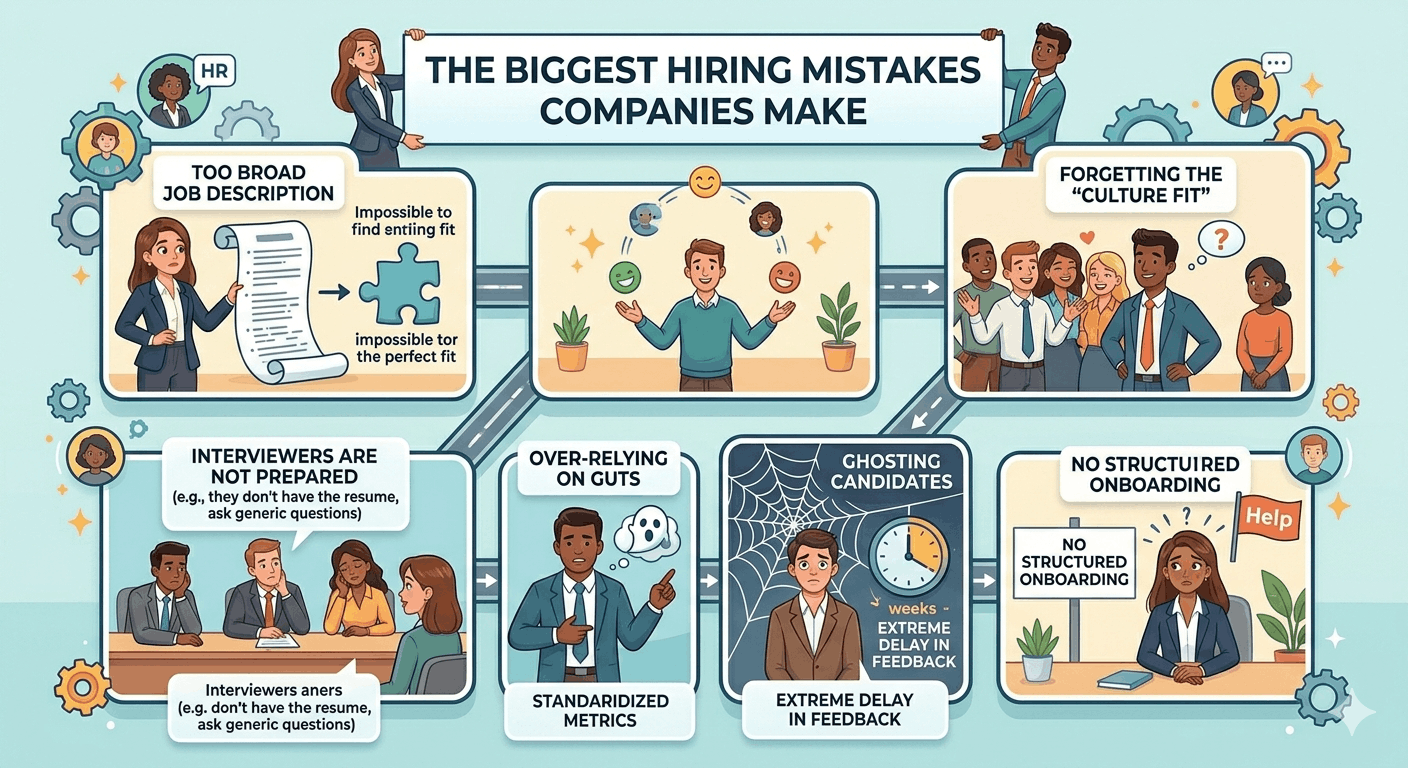
The Biggest Hiring Mistakes Companies Make
Hiring is one of the most important decisions any organization makes. The success of a company depends heavily on the quality of its workforce. However, many organizations continue to make critical hiring mistakes that lead to poor performance, high turnover, and wasted resources.
In today's competitive landscape, businesses must adopt smarter hiring practices and leverage HRMS technology to streamline recruitment and improve decision-making.
Lack of Clear Job Descriptions
One of the most common hiring mistakes is not having a well-defined job description. Without clarity, companies attract the wrong candidates, leading to mismatched expectations.
Why Job Clarity Matters
- Helps attract the right candidates
- Sets clear expectations from the start
- Reduces confusion during interviews
- Improves employee performance
- Aligns hiring with business goals
An effective HRMS system can standardize job descriptions and ensure consistency across roles.
Rushing the Hiring Process
Many companies rush to fill positions quickly, often overlooking critical evaluation steps. This urgency can result in hiring candidates who are not the best fit.
Consequences of Rushed Hiring
- Poor cultural fit within the organization
- Increased employee turnover
- Lower productivity and engagement
- Higher training and replacement costs
- Negative impact on team morale
Using an HRMS platform helps automate screening processes, allowing recruiters to make informed decisions without unnecessary delays.
Ignoring Cultural Fit
Skills and experience are important, but ignoring cultural fit can be a costly mistake. Employees who do not align with company values often struggle to integrate.
Signs of Poor Cultural Fit
- Difficulty collaborating with team members
- Lack of alignment with company values
- Low engagement and motivation
- Frequent conflicts in the workplace
- Early resignation or dissatisfaction
Modern HRMS tools can include behavioral assessments and feedback systems to evaluate cultural compatibility effectively.
Key Insight: Hiring for skills may fill a position, but hiring for culture builds a strong and lasting organization.
Overlooking Candidate Experience
The hiring process is not just about evaluating candidates; it is also about creating a positive experience. A poor candidate experience can damage employer branding.
Common Candidate Experience Mistakes
- Long and complicated application processes
- Lack of communication or feedback
- Unstructured interviews
- Delays in decision-making
- Unprofessional interactions
An HRMS system can streamline communication, automate updates, and ensure a smooth recruitment journey for candidates.
Relying Only on Resumes
Resumes provide limited insight into a candidate's true capabilities. Over-reliance on resumes can lead to poor hiring decisions.
Better Evaluation Methods
- Skill-based assessments
- Structured interviews
- Real-world task simulations
- Behavioral evaluations
- Reference checks
HRMS platforms often integrate assessment tools that help evaluate candidates beyond their resumes.
Lack of Data-Driven Decision Making
Many organizations still rely on intuition rather than data when making hiring decisions. This approach increases the risk of bias and errors.
Benefits of Data-Driven Hiring
- Improved accuracy in candidate selection
- Reduced hiring bias
- Better workforce planning
- Enhanced recruitment efficiency
- Measurable hiring outcomes
HRMS systems provide analytics and insights that enable recruiters to make smarter, evidence-based decisions.
Not Leveraging HRMS Technology
Failing to use modern HRMS solutions is a major mistake in itself. Manual processes are time-consuming, error-prone, and inefficient.
How HRMS Improves Hiring
- Automates candidate screening
- Centralizes recruitment data
- Enhances collaboration among hiring teams
- Provides real-time analytics
- Improves compliance and documentation
By adopting HRMS tools, companies can transform their hiring processes and achieve better outcomes.
Conclusion: Hiring Smarter for the Future
Avoiding common hiring mistakes is essential for building a strong and successful workforce. Companies must focus on clarity, strategy, and technology to improve their recruitment processes.
By leveraging HRMS systems and adopting best practices, organizations can reduce errors, enhance efficiency, and hire the right talent every time.
Smart hiring is not just about filling positions—it is about building the future of your organization.