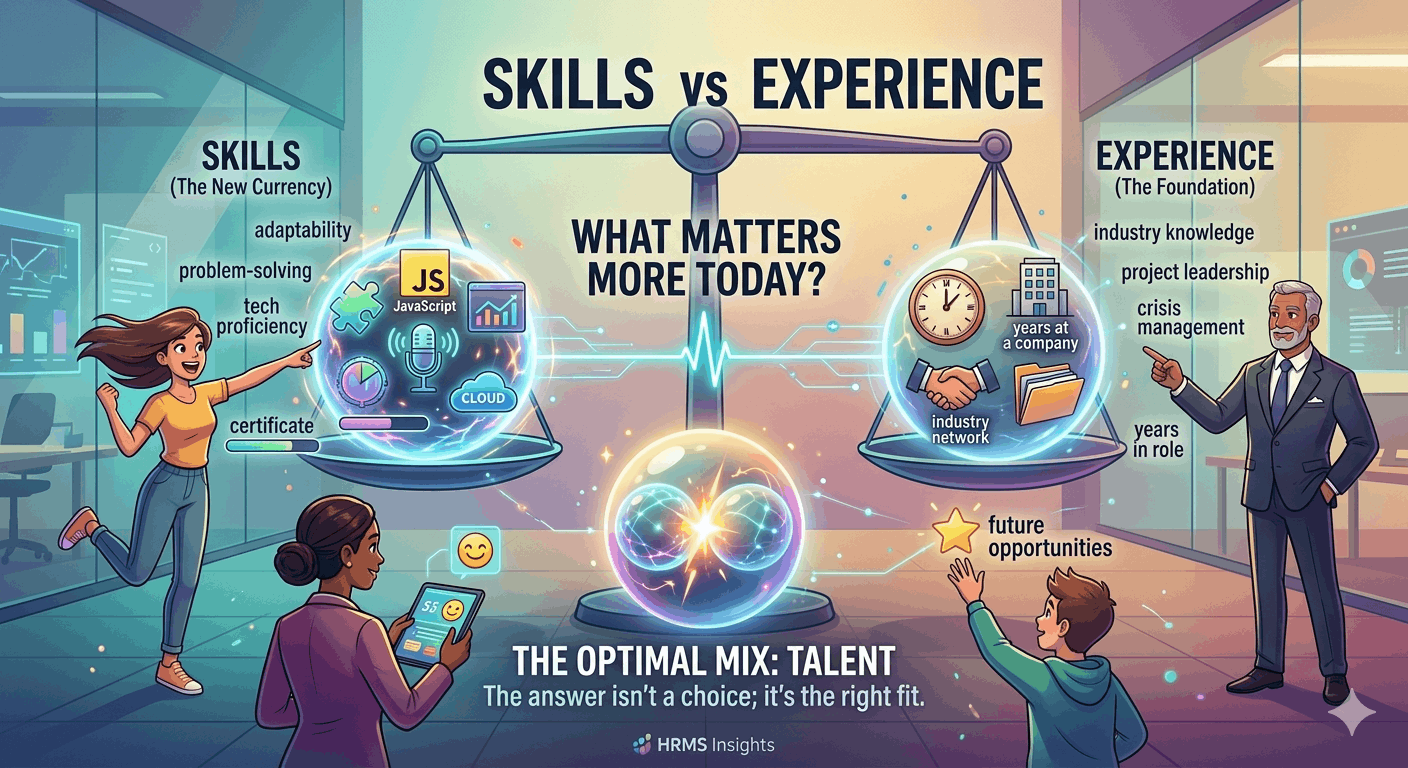
Skills vs Experience: What Matters More Today?
In today's fast-changing professional landscape, the debate between skills and experience has become more relevant than ever. Organizations are no longer relying solely on traditional hiring methods, and employees are redefining how they build their careers. The real question is: what truly matters more today?
The Traditional Importance of Experience
For decades, experience was considered the gold standard in hiring. Employers believed that the more years a person had worked, the more capable they were.
Why Experience Was Valued
Experience provided proof that a candidate had been exposed to real-world challenges. It demonstrated reliability, consistency, and the ability to perform under pressure.
Limitations of Experience
However, relying solely on experience can sometimes limit innovation. An experienced employee may be deeply rooted in traditional methods and less open to change.
The Rise of Skills in the Modern Workplace
With the rapid advancement of technology and changing business models, skills have taken center stage. Companies now prioritize what a candidate can do rather than how long they have done it.
Types of Skills That Matter
- Technical skills such as coding, data analysis, and automation
- Soft skills like communication, teamwork, and leadership
- Adaptability to learn and grow quickly
- Problem-solving capabilities
- Digital literacy in modern tools and platforms
Why Skills Are Gaining Priority
Employers are focusing on performance and results. A candidate with the right skill set can often outperform someone with years of outdated experience.
Skills vs Experience: A Practical Comparison
Let's break down how skills and experience compare in real-world scenarios:
- Adaptability: Skilled individuals adapt faster to new tools and technologies.
- Efficiency: Skills enable immediate productivity, while experience may require adjustment.
- Innovation: Skill-driven professionals often bring fresh perspectives.
- Reliability: Experience ensures consistency and risk management.
- Growth Potential: Skills can be updated, while experience is fixed in time.
The Ideal Balance Between Skills and Experience
Rather than choosing one over the other, modern organizations are now seeking a balanced combination. The ideal employee is someone who has both practical experience and up-to-date skills.
When Experience Matters More
Experience is crucial in roles that require deep industry knowledge, strategic decision-making, and leadership responsibilities.
When Skills Matter More
Skills take priority in technical roles, creative industries, and fast-evolving sectors where continuous learning is essential.
How HRMS Systems Help Bridge the Gap
Modern HRMS platforms play a key role in balancing skills and experience. They help organizations track employee performance, identify skill gaps, and plan training programs effectively.
Key Benefits of HRMS in Talent Management
- Skill tracking and performance analytics
- Automated training and development programs
- Better hiring decisions based on data
- Employee growth and career planning
- Enhanced workforce productivity
The Shift Towards Skill-Based Hiring
Many organizations are now adopting skill-based hiring practices. This approach focuses on evaluating candidates through tests, projects, and real-world simulations rather than just resumes.
Advantages of Skill-Based Hiring
This method ensures that candidates are selected based on their actual capabilities, reducing hiring risks and improving overall team performance.
Key Takeaway: In today's dynamic work environment, skills may open the door, but experience helps sustain success. The smartest approach is to continuously build both.
Future Trends: What Lies Ahead?
The future of work will likely blur the lines between skills and experience even further. With AI, automation, and remote work reshaping industries, employees must stay agile.
What Professionals Should Focus On
- Continuous learning and upskilling
- Gaining hands-on project experience
- Building a strong professional portfolio
- Networking and collaboration
- Embracing new technologies
Conclusion
The debate between skills vs experience is not about choosing one over the other. Instead, it is about understanding how both complement each other in today's evolving workplace.
While experience provides stability and insight, skills drive innovation and adaptability. Organizations that recognize this balance will build stronger, more future-ready teams. Similarly, professionals who invest in both will remain competitive and relevant in the years to come.
Ultimately, success belongs to those who never stop learning, regardless of how much experience they already have.