Remote Work: Freedom or Productivity Trap?
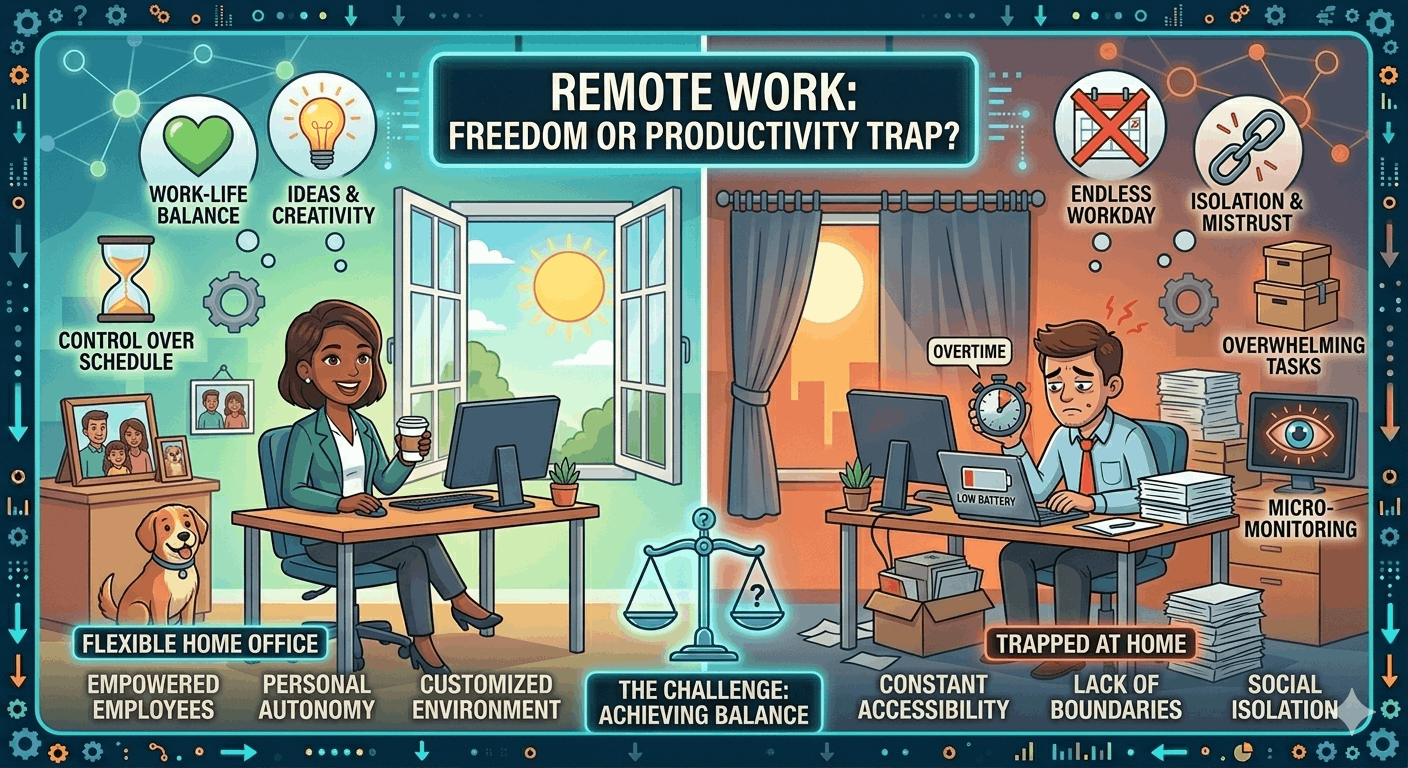
In recent years, remote work has transformed from a rare perk into a global standard. With companies embracing flexibility and employees enjoying the comfort of working from home, the question arises: is remote work truly a path to freedom, or does it quietly turn into a productivity trap?
The Rise of Remote Work Culture
The digital revolution, coupled with global events, has accelerated the adoption of remote work. Organizations realized that productivity doesn't always depend on office presence. Employees began to value flexibility, autonomy, and work-life balance more than ever.
However, this shift also introduced new challenges that were previously unnoticed in traditional office setups.
Why Companies Embrace Remote Work
- Reduced operational costs and office expenses
- Access to a global talent pool
- Improved employee satisfaction and retention
- Increased focus on results rather than attendance
- Scalability without geographic limitations
The Freedom Factor: Benefits of Remote Work
Remote work provides a sense of control over one's schedule. Employees can design their day around peak productivity hours, family needs, and personal commitments.
Key Advantages of Working Remotely
- Flexible Schedule: Work when you are most productive.
- No Commute: Save time and reduce stress.
- Improved Work-Life Balance: Spend more time with family.
- Customized Workspace: Create a comfortable environment.
- Cost Savings: Reduce expenses on travel and meals.
For many, this flexibility leads to higher job satisfaction and improved mental well-being. It allows individuals to integrate work into life rather than structuring life around work.
The Hidden Productivity Trap
While remote work promises freedom, it also brings hidden pitfalls. Without clear boundaries, work can spill into personal time, leading to burnout and decreased efficiency.
Common Challenges of Remote Work
- Lack of structured routine
- Increased distractions at home
- Difficulty in communication and collaboration
- Feelings of isolation and disconnection
- Overworking due to blurred boundaries
Many professionals struggle with staying focused without direct supervision. The absence of a defined workspace can make it harder to switch between work mode and personal mode.
Key Insight: Freedom without discipline often leads to chaos. Remote work requires self-management to truly succeed.
Striking the Right Balance
The key to making remote work successful lies in balance. It is not about choosing between freedom and productivity, but rather aligning both effectively.
Strategies to Stay Productive Remotely
- Set a fixed daily schedule and stick to it
- Create a dedicated workspace
- Use productivity tools and time trackers
- Take regular breaks to avoid burnout
- Communicate proactively with your team
By implementing these strategies, employees can maintain a healthy structure while enjoying the flexibility remote work offers.
The Role of Employers in Remote Work Success
Organizations play a crucial role in ensuring remote work does not become a productivity trap. Companies must provide the right tools, culture, and support systems.
How Companies Can Support Remote Teams
- Encourage clear communication channels
- Promote mental health and well-being
- Set realistic expectations and goals
- Provide training for remote collaboration tools
- Foster a culture of trust and accountability
When employees feel supported, they are more likely to stay engaged and productive, regardless of their physical location.
Future of Remote Work
The future of work is likely to be hybrid, combining the best of both worlds. Companies and employees are learning to adapt and evolve, creating a more flexible and sustainable work environment.
What Lies Ahead
As technology continues to advance, remote work will become more efficient and integrated. However, the responsibility to maintain productivity will always rest on both individuals and organizations.
Remote work is neither purely freedom nor entirely a trap. It is a powerful tool that, when used wisely, can redefine how we work and live.
Ultimately, success in remote work depends on discipline, structure, and the ability to adapt. Those who master these elements will thrive in this new era of work.