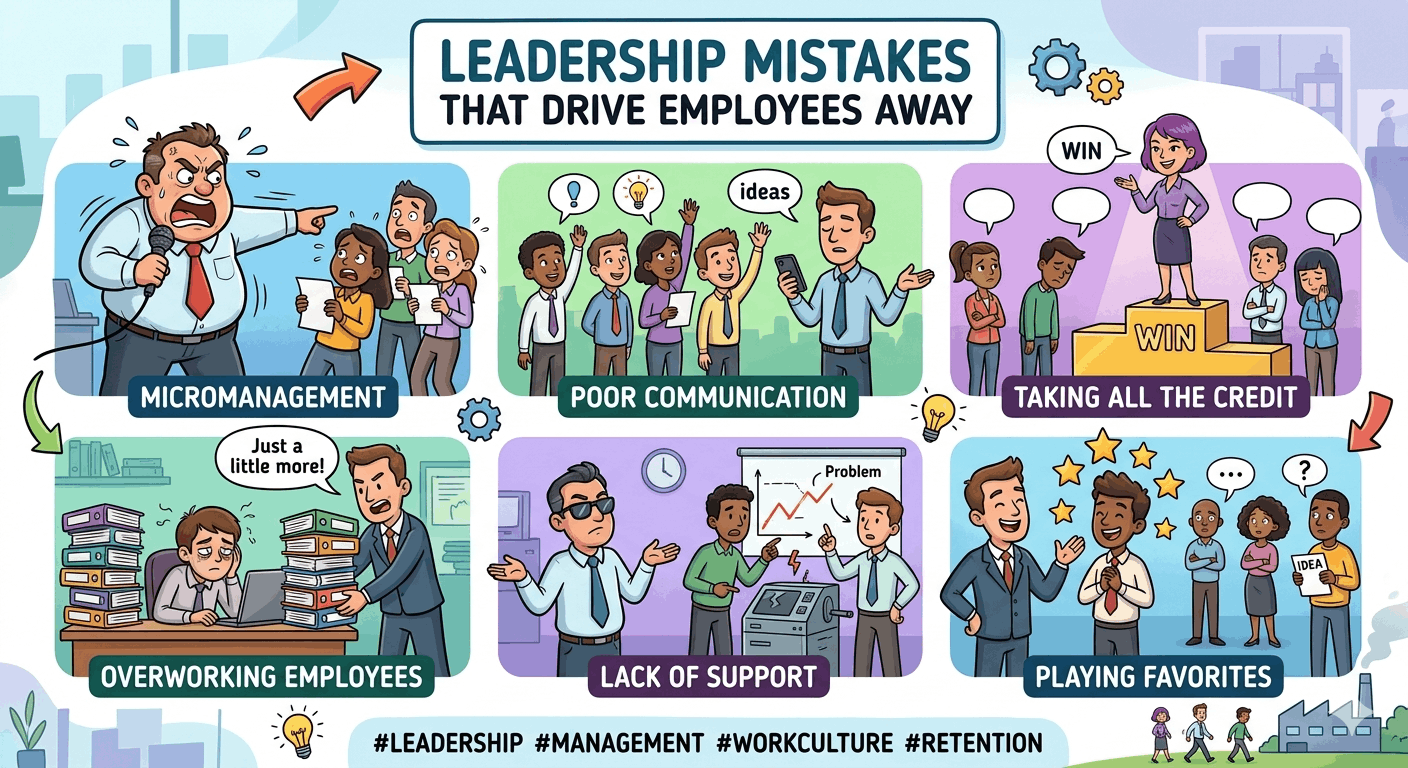
Leadership Mistakes That Drive Employees Away
In today's competitive workplace, retaining top talent is more challenging than ever. While compensation and benefits play a role, the quality of leadership often determines whether employees stay or leave. Poor leadership decisions can quietly erode trust, morale, and engagement, leading to high turnover rates.
This article explores the most common leadership mistakes that drive employees away and offers actionable insights to help leaders foster a more positive, productive work environment.
The Hidden Cost of Poor Leadership
Many organizations underestimate the impact of ineffective leadership. Employees rarely leave jobs solely because of the work itself—they leave because of how they are treated. Leadership behavior directly influences workplace culture, and even small missteps can accumulate into major dissatisfaction.
Lack of Communication
One of the most common complaints employees have is poor communication. When leaders fail to clearly articulate goals, expectations, or feedback, confusion and frustration grow.
- Unclear instructions lead to mistakes
- Lack of updates creates uncertainty
- Silence fosters distrust
- Employees feel disconnected from the mission
Micromanagement
Micromanaging signals a lack of trust. Employees who feel constantly monitored often lose confidence and motivation. Over time, this behavior stifles creativity and independence.
Top Leadership Mistakes That Push Employees Away
Understanding these critical mistakes is the first step toward avoiding them. Effective leaders are self-aware and continuously improve their management style.
Ignoring Employee Feedback
Employees want to feel heard. When leaders dismiss feedback or fail to act on it, it sends a clear message: their opinions don't matter.
Employees may forget what you said, but they will never forget how you made them feel.
Failure to Recognize Contributions
Recognition is a powerful motivator. A lack of appreciation can make employees feel undervalued and invisible.
- Decreases morale
- Reduces productivity
- Encourages disengagement
- Increases turnover risk
- Weakens team loyalty
Inconsistent Decision-Making
Leaders who frequently change direction or apply rules inconsistently create confusion and frustration. Employees thrive in environments where expectations are stable and predictable.
Poor Conflict Management
Avoiding or mishandling conflicts can damage team dynamics. Effective leaders address issues promptly and fairly, ensuring a respectful workplace.
Emotional Intelligence: A Missing Leadership Skill
Emotional intelligence is critical for effective leadership. Leaders who lack empathy or self-awareness often struggle to connect with their teams.
Signs of Low Emotional Intelligence
- Difficulty understanding employee concerns
- Overreacting to minor issues
- Lack of empathy in decision-making
- Inability to handle criticism constructively
Leaders who develop emotional intelligence can build stronger relationships, enhance trust, and create a more supportive work environment.
The Impact of Toxic Work Culture
Leadership sets the tone for workplace culture. When leaders tolerate negativity, favoritism, or unethical behavior, it creates a toxic environment.
Common Cultural Red Flags
These warning signs often indicate deeper leadership issues:
- High employee turnover
- Frequent complaints without resolution
- Lack of collaboration
- Low morale and engagement
Addressing these issues requires intentional effort and a commitment to positive leadership practices.
How to Become a Leader Employees Want to Follow
Avoiding mistakes is important, but great leadership goes beyond that. It involves actively creating an environment where employees feel valued, respected, and motivated.
Practical Steps for Better Leadership
- Communicate clearly and consistently
- Recognize and reward achievements
- Encourage open feedback
- Lead by example
- Invest in employee growth
Building Trust and Respect
Trust is the foundation of any successful team. Leaders who act with integrity, transparency, and fairness earn the respect of their employees.
When employees trust their leaders, they are more engaged, productive, and loyal to the organization.
Conclusion: Leadership Defines Retention
Leadership mistakes are often the hidden reason behind employee turnover. By recognizing and addressing these issues, leaders can create a workplace where employees feel supported and motivated.
Strong leadership is not about authority—it is about influence, empathy, and consistency. Organizations that prioritize effective leadership will not only retain talent but also build a thriving, resilient workforce.