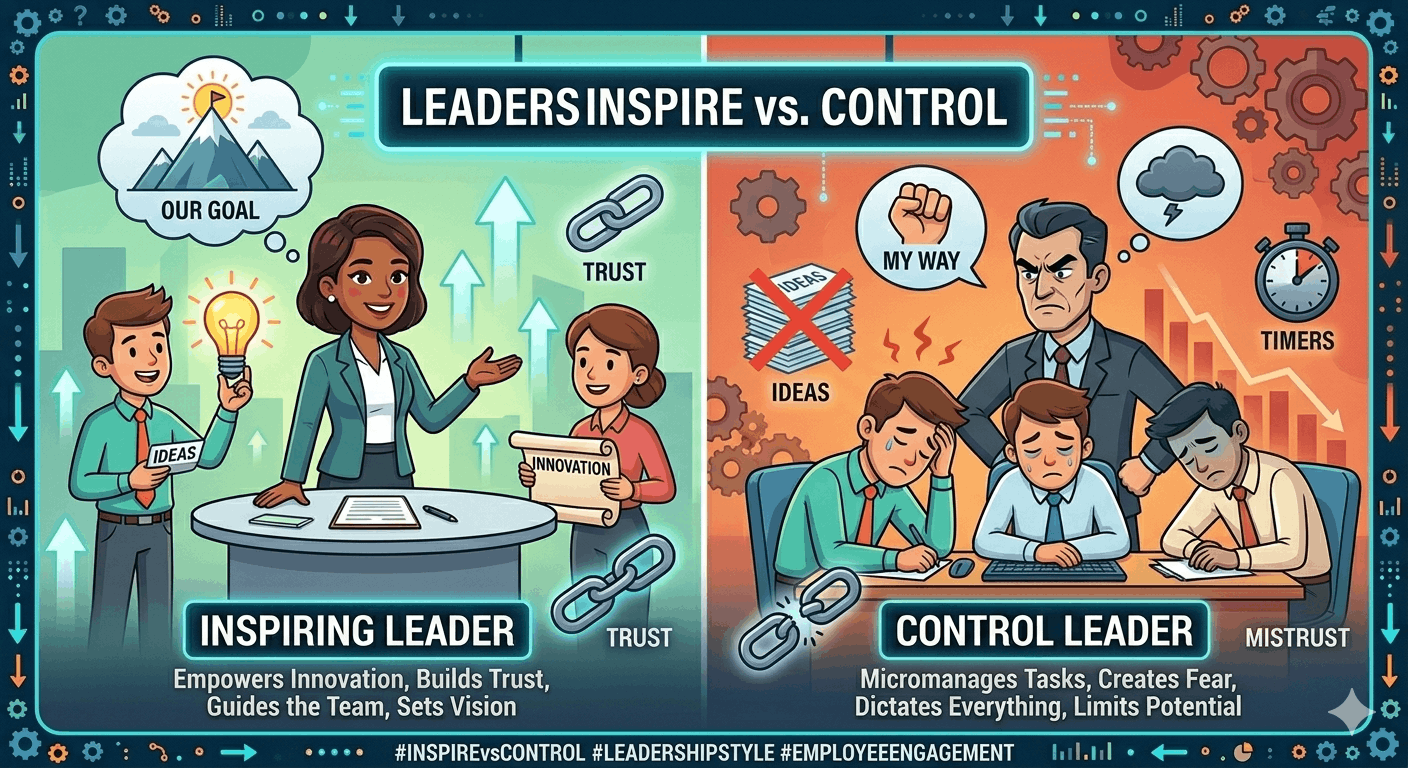
Leaders Who Inspire vs Leaders Who Control
Leadership style plays a crucial role in shaping workplace culture, employee motivation, and overall success. While some leaders focus on inspiring their teams, others rely on control and authority. The difference between these approaches can determine whether a team thrives or merely survives. Inspiring leadership builds trust and innovation, whereas controlling leadership often limits growth and creativity.
Understanding these contrasting styles helps organizations and individuals cultivate better leadership practices that encourage engagement and long-term success.
Understanding Inspiring Leadership
Inspiring leaders focus on empowering their teams. They lead by example, communicate a clear vision, and motivate employees to achieve their full potential. Rather than enforcing strict rules, they encourage collaboration and innovation.
These leaders build strong relationships based on trust and respect. Employees feel valued and are more willing to contribute ideas and take initiative.
Characteristics of Inspiring Leaders
- Vision-driven: They provide clear direction and purpose.
- Empathetic: They understand and support their team's needs.
- Encouraging: They motivate employees to grow and improve.
- Trust-building: They create a safe and open environment.
- Collaborative: They value teamwork and shared success.
The Nature of Controlling Leadership
Controlling leaders rely heavily on authority and strict oversight. They often micromanage tasks and expect employees to follow instructions without question. While this approach may ensure short-term efficiency, it can negatively impact morale and creativity.
Employees under controlling leadership may feel restricted and undervalued, leading to disengagement and reduced productivity over time.
Traits of Controlling Leaders
- Frequent micromanagement of tasks.
- Limited trust in employee capabilities.
- Focus on rules over innovation.
- Minimal employee involvement in decision-making.
- Emphasis on authority rather than collaboration.
True leadership is not about control, but about inspiring others to achieve more than they thought possible.
Key Differences Between Inspiring and Controlling Leaders
The contrast between inspiring and controlling leadership lies in their approach to people and performance. Inspiring leaders prioritize growth and engagement, while controlling leaders focus on compliance and authority.
This difference significantly affects team dynamics, innovation, and long-term organizational success.
Impact on Employee Motivation
Inspiring leaders foster intrinsic motivation by aligning work with purpose. Employees feel energized and committed. In contrast, controlling leaders often rely on fear or pressure, which can lead to burnout and dissatisfaction.
Effect on Team Collaboration
Teams led by inspiring leaders tend to collaborate openly and share ideas freely. Controlling leadership, however, can create silos and discourage communication.
Influence on Innovation
Innovation thrives in environments where employees feel safe to experiment. Inspiring leaders encourage creativity, while controlling leaders may unintentionally suppress new ideas.
Why Inspiring Leadership Drives Long-Term Success
Organizations that embrace inspiring leadership often experience higher employee retention, better performance, and stronger workplace culture. Employees are more engaged and willing to go the extra mile when they feel supported and valued.
Inspiring leaders also adapt more effectively to change, as they encourage flexibility and continuous learning within their teams.
Benefits of Inspiring Leadership
- Higher employee engagement and satisfaction.
- Improved team performance and productivity.
- Stronger workplace relationships.
- Increased innovation and creativity.
- Better employee retention rates.
How to Transition from Controlling to Inspiring Leadership
Shifting from a controlling style to an inspiring one requires self-awareness and a willingness to change. Leaders must focus on building trust, improving communication, and empowering their teams.
This transition not only benefits employees but also enhances the leader's effectiveness and influence.
Steps to Become an Inspiring Leader
- Develop strong communication and listening skills.
- Encourage employee input and participation.
- Provide constructive feedback and recognition.
- Delegate responsibilities and trust your team.
- Focus on growth and development opportunities.
Building a Culture of Trust
Trust is the foundation of inspiring leadership. Leaders must demonstrate consistency, fairness, and transparency. When employees trust their leaders, they are more likely to take initiative and contribute meaningfully.
Conclusion
The difference between leaders who inspire and those who control is profound. While controlling leadership may deliver short-term results, it often comes at the cost of employee engagement and innovation. Inspiring leadership, on the other hand, creates a positive and empowering environment where individuals and teams can thrive.
By adopting an inspiring approach, leaders can unlock their team's full potential and drive sustainable success. Ultimately, leadership is not about authority but about influence, trust, and the ability to inspire others.