Introduction: A Shift That Redefined Work
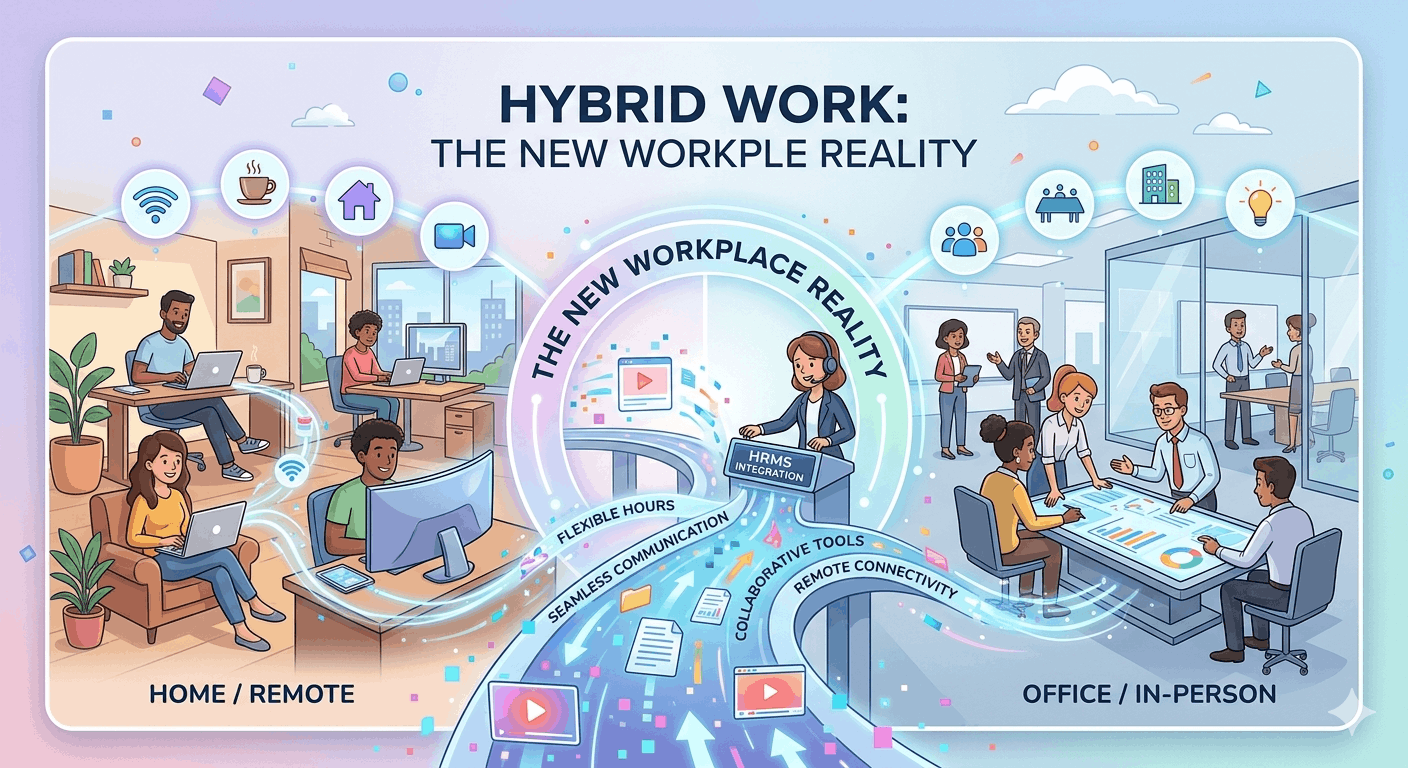
The modern workplace has undergone a massive transformation in recent years. What was once considered a temporary adjustment has now become a permanent strategy. Hybrid work, which combines remote and in-office work, is no longer a trend—it is the new reality.
Organizations across the globe are adopting flexible work models to improve productivity, employee satisfaction, and operational efficiency. As this shift continues, understanding its impact becomes essential for both leaders and employees.
What Is Hybrid Work?
Hybrid work is a flexible model where employees split their time between working remotely and working from a physical office. It offers the best of both worlds—flexibility and collaboration.
Key Characteristics of Hybrid Work
- Flexible schedules and work locations
- Combination of remote and in-office tasks
- Use of digital collaboration tools
- Focus on results rather than presence
- Increased autonomy for employees
Why Hybrid Work Is Here to Stay
The adoption of hybrid work is driven by multiple factors, including technological advancements and changing employee expectations.
1. Improved Work-Life Balance
Employees gain more control over their schedules, allowing them to balance personal and professional responsibilities effectively.
2. Increased Productivity
Many employees perform better in flexible environments where they can choose their most productive work setting.
3. Access to a Wider Talent Pool
Organizations can hire talent from different locations without geographical limitations.
4. Cost Efficiency
Reduced need for large office spaces leads to significant cost savings for businesses.
Challenges of Hybrid Work
While hybrid work offers many benefits, it also introduces new challenges that organizations must address.
Communication Gaps
Maintaining clear communication across remote and in-office teams can be difficult without proper systems in place.
Maintaining Company Culture
Building a strong organizational culture becomes more complex when teams are not physically together.
Performance Tracking
Measuring productivity based on output rather than hours requires new management approaches.
Technology Dependence
Reliable digital tools and infrastructure are essential for seamless collaboration.
Hybrid work is not just about where we work, but how we work smarter together.
Hybrid Work vs Traditional Work Models
Understanding the differences between hybrid and traditional work models helps organizations adapt effectively.
Key Differences
- Traditional work requires physical presence; hybrid work offers flexibility
- Traditional work focuses on hours; hybrid work focuses on outcomes
- Traditional work limits hiring; hybrid work expands talent access
- Traditional work has fixed schedules; hybrid work allows customization
- Traditional work relies on face-to-face interaction; hybrid work uses digital tools
Best Practices for Managing Hybrid Teams
To succeed in a hybrid environment, leaders must adopt new strategies and approaches.
1. Establish Clear Communication Channels
Use reliable tools and ensure everyone stays informed regardless of location.
2. Set Measurable Goals
Define clear objectives and evaluate performance based on results.
3. Foster Inclusivity
Ensure remote employees feel equally valued and included in decision-making.
4. Invest in Technology
Provide the necessary tools to enable seamless collaboration and productivity.
5. Encourage Regular Check-Ins
Frequent meetings and updates help maintain alignment and engagement.
The Future of Hybrid Work
Hybrid work will continue to evolve as organizations experiment with new models and technologies.
Greater Flexibility
Companies will offer more personalized work arrangements to meet individual needs.
Enhanced Digital Collaboration
Advanced tools will improve virtual communication and teamwork.
Focus on Employee Well-Being
Organizations will prioritize mental health and work-life balance.
Conclusion: Embracing the New Workplace Reality
Hybrid work represents a fundamental shift in how organizations operate. It offers flexibility, efficiency, and opportunities for growth.
By embracing hybrid work models, businesses can create a more dynamic, inclusive, and productive workplace for the future.