Introduction: The Evolution of Human Resources
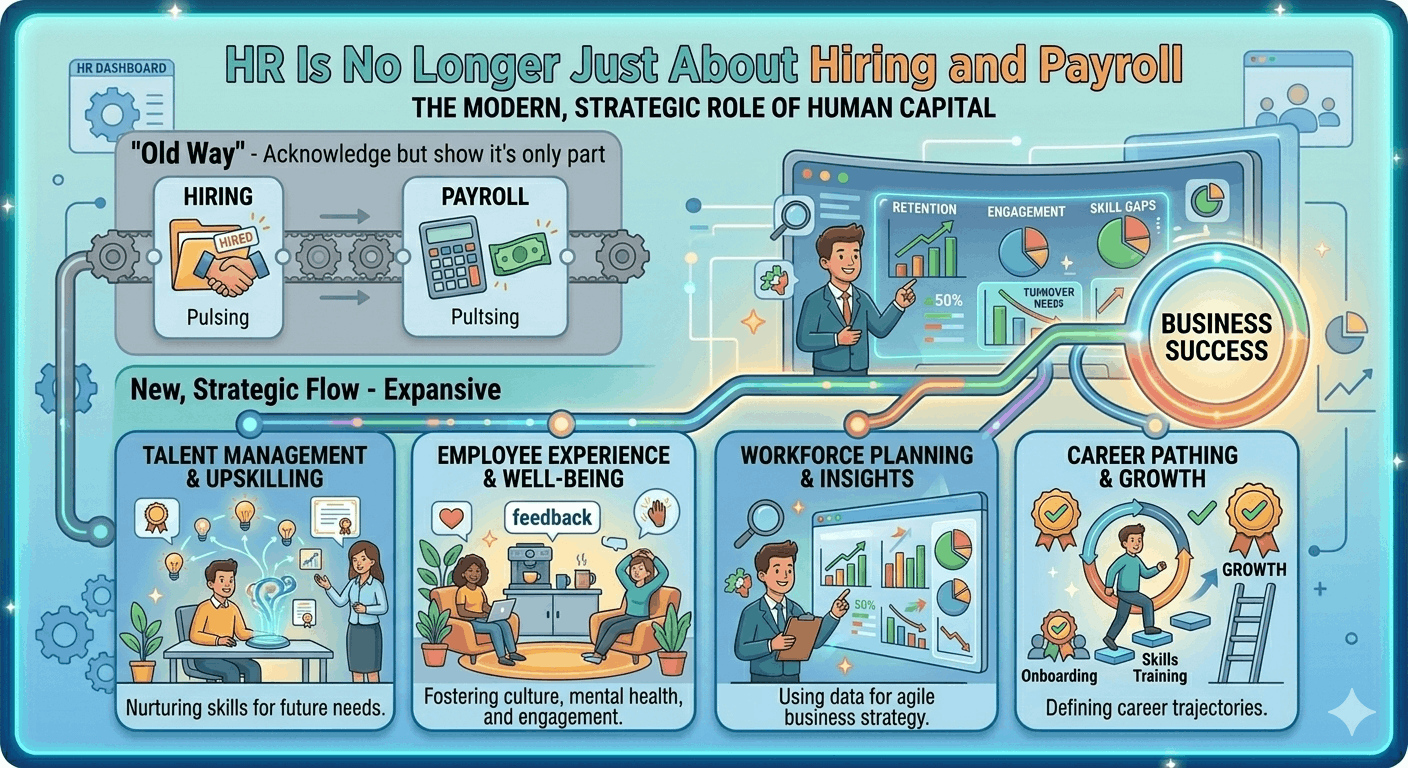
Human Resources was once seen as a purely administrative function focused on hiring employees and processing payroll. However, the modern workplace has transformed this perception entirely. Today, HR plays a strategic role in shaping organizational success.
With the integration of advanced HRMS tools and evolving workforce expectations, HR is now responsible for driving culture, engagement, performance, and innovation. It is no longer just about managing people—it is about empowering them.
From Administrative to Strategic: The HR Transformation
The role of HR has shifted significantly over the past decade, moving from routine operations to strategic leadership.
Traditional HR Responsibilities
- Recruitment and hiring
- Payroll processing
- Attendance management
- Compliance and documentation
- Employee record maintenance
Modern HR Responsibilities
- Employee engagement and experience
- Talent development and training
- Performance management
- Organizational culture building
- Strategic workforce planning
Why HR's Role Has Expanded
Several factors have contributed to the transformation of HR into a strategic function.
Changing Workforce Expectations
Employees today expect more than just salaries. They seek purpose, growth, and a positive work environment.
Technological Advancements
HRMS systems automate routine tasks, allowing HR professionals to focus on strategic initiatives.
Globalization and Remote Work
Managing a diverse and distributed workforce requires advanced HR strategies and tools.
Focus on Employee Experience
Organizations recognize that employee satisfaction directly impacts productivity and retention.
The Role of HRMS in Modern HR
Human Resource Management Systems are at the core of this transformation, enabling HR teams to operate efficiently and strategically.
Automation of Routine Tasks
HRMS tools handle payroll, attendance, and compliance, reducing manual effort and errors.
Data-Driven Decision Making
Analytics provide insights into employee performance, engagement, and workforce trends.
Enhanced Employee Experience
Digital platforms improve communication, onboarding, and overall employee interactions.
- Improved efficiency and accuracy
- Better workforce insights
- Enhanced employee engagement
- Streamlined HR operations
- Stronger organizational alignment
Key Areas Where HR Adds Strategic Value
Modern HR contributes to multiple aspects of business success beyond administrative functions.
Talent Development
HR designs training programs that help employees grow and adapt to changing roles.
Performance Management
Continuous feedback and evaluation systems ensure alignment with organizational goals.
Employee Engagement
HR initiatives foster motivation, satisfaction, and a sense of belonging.
Leadership Development
HR identifies and nurtures future leaders within the organization.
HR vs Traditional Perception: A New Perspective
The evolution of HR highlights the difference between old and new approaches.
Key Differences
- Traditional HR focuses on processes; modern HR focuses on people
- Traditional HR is reactive; modern HR is proactive
- Traditional HR manages tasks; modern HR drives strategy
- Traditional HR handles compliance; modern HR builds culture
- Traditional HR supports business; modern HR shapes business
HR is no longer a support function—it is a strategic partner in business success.
Challenges Faced by Modern HR
As HR evolves, it also encounters new challenges that require innovative solutions.
Managing Change
Adapting to new technologies and workforce trends can be complex.
Balancing Strategy and Operations
HR must manage both day-to-day tasks and long-term initiatives effectively.
Ensuring Employee Well-Being
Supporting mental and emotional health has become a critical responsibility.
Data Privacy and Security
Handling sensitive employee data requires robust security measures.
How Organizations Can Empower HR
To maximize HR's impact, organizations must provide the right support and resources.
1. Invest in HR Technology
Implement advanced HRMS systems to streamline operations and enhance insights.
2. Encourage Strategic Thinking
Enable HR professionals to participate in business decision-making.
3. Focus on Employee Experience
Create a workplace environment that prioritizes employee satisfaction and growth.
4. Promote Continuous Learning
Support HR teams in developing new skills and staying updated with trends.
5. Align HR with Business Goals
Ensure HR strategies are integrated with organizational objectives.
The Future of HR
The role of HR will continue to evolve as organizations adapt to new challenges and opportunities.
Integration of AI and Automation
Advanced technologies will further enhance HR efficiency and decision-making.
Focus on Human-Centric Workplaces
Organizations will prioritize employee well-being and meaningful work experiences.
Continuous Workforce Development
Learning and development will become a core component of HR strategies.
Conclusion: HR as a Strategic Driver
The modern HR function is far more than hiring and payroll. It is a critical driver of culture, engagement, and business growth. By embracing technology and focusing on people, HR can create lasting impact.
In today's dynamic workplace, organizations that empower their HR teams will be better positioned to succeed and thrive.