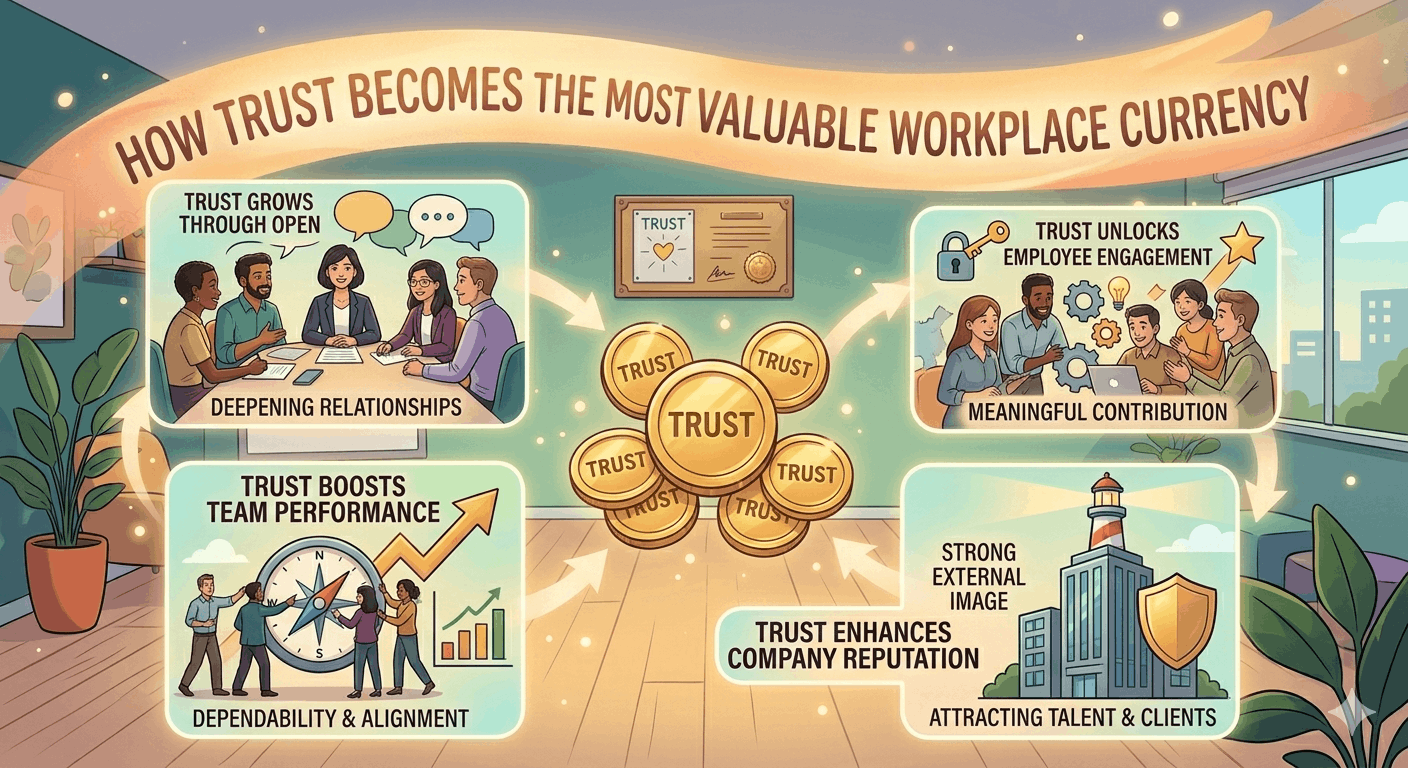
How Trust Becomes the Most Valuable Workplace Currency
In the modern business landscape, organizations often focus on financial capital, technology, and innovation as key drivers of success. However, there is one intangible asset that surpasses all others: workplace trust.
Trust fuels collaboration, drives engagement, and ensures long-term success. When employees trust their leaders and peers, they go beyond basic responsibilities and contribute meaningfully.
On the other hand, a lack of trust creates a toxic environment marked by micromanagement, high turnover, and limited innovation.
The Tangible Value of Trust
Although trust may seem abstract, it has a direct impact on business performance.
High-trust organizations benefit from:
- Lower stress and burnout
- Higher productivity
- Stronger collaboration
- Improved decision-making speed
When employees feel secure and confident, they perform with greater focus and purpose.
Transparency as the Bedrock of Trust
Transparency is essential for building trust.
Leaders who communicate openly—sharing both successes and challenges—create a culture of honesty.
Without transparency, organizations risk:
- Rumors and misinformation
- Employee distrust
- Low morale
To build transparency, companies should:
- Conduct regular town halls
- Encourage open communication
- Provide clear updates on company direction
The Role of Empathetic Leadership
Leadership plays a defining role in building trust.
Empathetic leaders:
- Listen actively
- Understand employee challenges
- Offer support and guidance
They treat employees as individuals, not just resources.
This builds a strong emotional connection and long-term loyalty.
Psychological Safety: Where Trust Thrives
Trust and psychological safety go hand in hand.
In such environments, employees feel safe to:
- Share ideas
- Ask questions
- Admit mistakes
- Challenge existing processes
This openness leads to innovation and continuous improvement.
The Connection Between Trust and Innovation
Innovation thrives where failure is accepted as part of growth.
Organizations that build trust:
- Encourage experimentation
- Reduce fear of failure
- Promote creative thinking
Trust allows employees to take ownership and explore new ideas, leading to breakthrough innovations.
Building Trust in Remote and Hybrid Work
Remote work has reshaped how trust is built.
Instead of monitoring hours, organizations should focus on:
- Results and outcomes
- Flexible schedules
- Employee autonomy
Trust in remote environments leads to higher motivation and productivity.
Trust, Accountability, and Autonomy
Trust enables autonomy, but it must be balanced with accountability.
Effective organizations:
- Set clear expectations
- Define measurable goals
- Encourage ownership of tasks
When employees have control over their work, they become more engaged and committed.
How Trust Fuels Employee Retention
Employees often leave not because of salary, but due to a lack of trust and respect.
High-trust cultures:
- Increase employee loyalty
- Reduce turnover rates
- Preserve organizational knowledge
Trust creates emotional connection that competitors cannot easily replicate.
Overcoming a Crisis of Confidence
When trust is broken, rebuilding it takes time and effort.
Leaders must:
- Acknowledge past mistakes
- Listen to employee concerns
- Take consistent corrective actions
Trust is restored through consistency, honesty, and integrity.
Conclusion: Investing in Trust for the Future
Trust is not optional—it is the foundation of a successful organization.
It determines how effectively teams collaborate, innovate, and grow.
Organizations that prioritize:
- Transparency
- Empathy
- Autonomy
Will build strong, resilient workplaces.
The cost of operating without trust is far greater than the effort required to build it.
Start investing in trust today and create a workplace where employees feel secure, valued, and motivated to succeed.