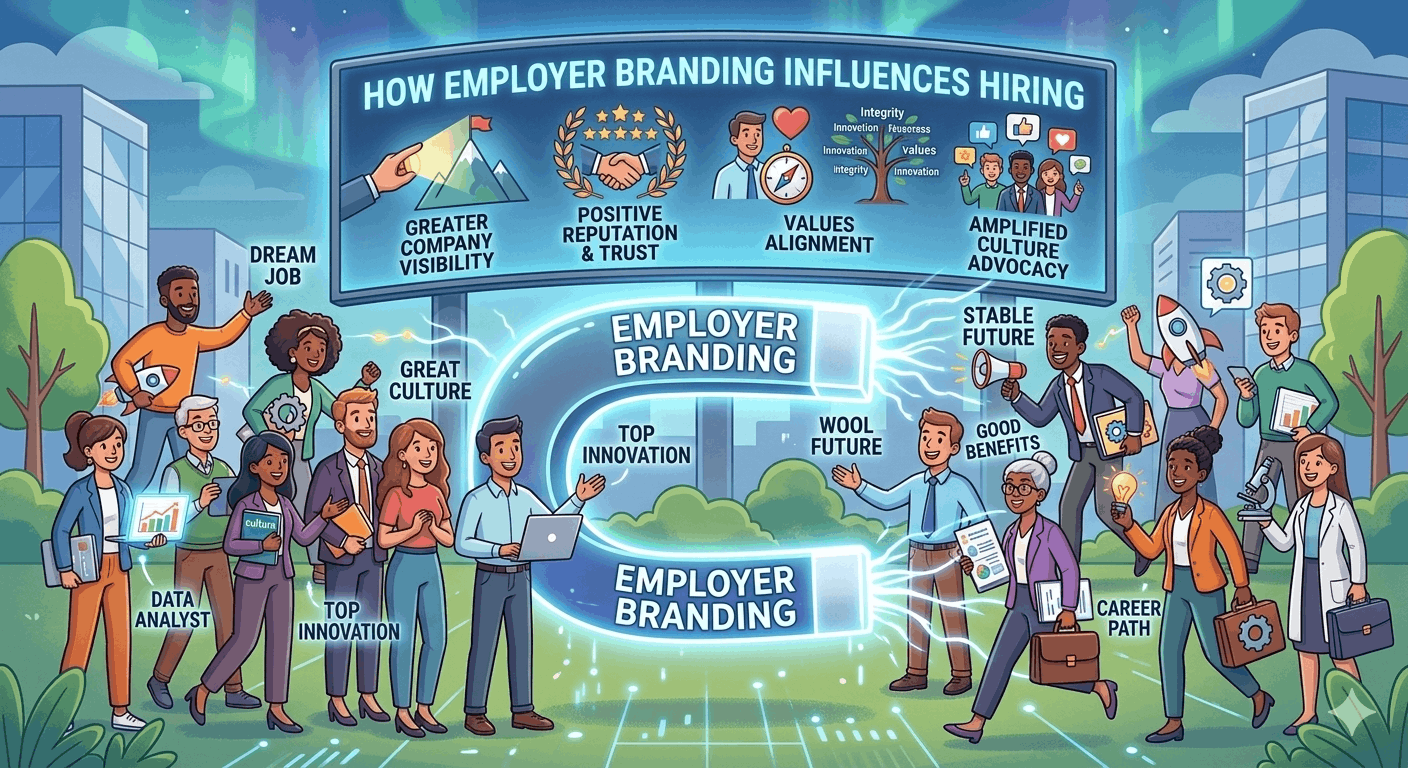
Introduction: The Power of Employer Branding
In today's competitive job market, attracting the right talent is more challenging than ever. Organizations are no longer judged solely by salary packages or job roles. Instead, employer branding has emerged as a key factor influencing hiring decisions.
A strong employer brand communicates a company's values, culture, and work environment. It shapes how potential candidates perceive the organization and directly impacts their willingness to apply. In modern HRMS-driven recruitment strategies, branding is as important as hiring itself.
What Is Employer Branding?
Employer branding refers to the reputation and image of an organization as a workplace. It reflects how current employees and job seekers view the company.
Key Elements of Employer Branding
- Company culture and values
- Employee experience and satisfaction
- Career growth opportunities
- Work-life balance policies
- Leadership and management style
Why Employer Branding Matters in Hiring
Employer branding plays a vital role in shaping recruitment outcomes and overall business success.
1. Attracts Top Talent
Strong employer brands naturally attract high-quality candidates who align with the organization's values and vision.
2. Reduces Hiring Costs
Companies with a positive reputation spend less on recruitment marketing and advertising.
3. Improves Candidate Experience
A well-defined brand creates a consistent and positive experience throughout the hiring process.
4. Enhances Employee Retention
Employees are more likely to stay with organizations that have a strong and authentic brand identity.
The Role of HRMS in Strengthening Employer Branding
Human Resource Management Systems play a crucial role in building and maintaining a strong employer brand.
Data-Driven Insights
HRMS platforms provide valuable insights into employee satisfaction, engagement, and performance.
Consistent Communication
Digital tools ensure that company values and messages are communicated effectively across the organization.
Enhanced Employee Experience
Automated processes improve employee interactions, contributing to a positive workplace image.
- Improved onboarding experiences
- Streamlined communication channels
- Better performance management
- Increased employee engagement
- Stronger organizational culture
How Employer Branding Impacts Candidate Decisions
Job seekers today research companies extensively before applying. Employer branding significantly influences their decisions.
First Impressions Matter
A company's online presence, reviews, and social media activity shape initial perceptions.
Alignment with Values
Candidates prefer organizations whose values align with their personal beliefs and career goals.
Transparency and Trust
Authentic communication builds trust and encourages candidates to engage with the company.
Your employer brand is not what you say it is—it's what your employees and candidates say it is.
Employer Branding vs Traditional Recruitment
The shift from traditional recruitment methods to branding-focused strategies highlights the evolution of hiring practices.
Key Differences
- Traditional recruitment focuses on job postings; employer branding builds relationships
- Traditional recruitment is reactive; branding is proactive
- Traditional recruitment targets candidates; branding attracts them
- Traditional recruitment emphasizes roles; branding highlights culture
- Traditional recruitment is short-term; branding is long-term
Strategies to Build a Strong Employer Brand
Organizations must take deliberate steps to create and maintain a compelling employer brand.
1. Define Company Values Clearly
Establish and communicate core values that reflect the organization's mission and vision.
2. Focus on Employee Experience
Ensure employees have positive experiences at every stage of their journey.
3. Leverage Social Media
Use digital platforms to showcase company culture and employee stories.
4. Encourage Employee Advocacy
Employees can act as brand ambassadors, sharing their experiences with a wider audience.
5. Maintain Transparency
Honest communication builds trust and strengthens credibility.
Challenges in Employer Branding
Building a strong employer brand is not without its challenges.
Consistency Across Channels
Ensuring consistent messaging across all platforms can be difficult.
Managing Negative Feedback
Online reviews and feedback must be handled carefully to protect the brand image.
Aligning Internal and External Perception
The brand image must reflect the actual employee experience.
The Future of Employer Branding
As competition for talent increases, employer branding will continue to evolve and gain importance.
Integration with Technology
Advanced HRMS tools will further enhance branding strategies through data and automation.
Focus on Authenticity
Organizations will prioritize genuine representation of their culture and values.
Employee-Centric Approach
Employee experience will remain at the core of employer branding efforts.
Conclusion: Branding as a Hiring Advantage
Employer branding is no longer optional—it is a strategic necessity. Companies that invest in building a strong brand can attract, engage, and retain top talent more effectively.
By leveraging employer branding strategies and HRMS tools, organizations can create a powerful hiring advantage in today's competitive landscape.